Masculine republics give way to feminine democracies, and feminine democracies give way to tyranny.”
— Aristotle, Politics, 4th century BCE
Kings have risen and fallen. Empires have consumed civilizations whole.
But the most enduring weapon in the arsenal of power was never the sword, it was that ruling classes have historically weaponized masculinity, virtue, and comfort to manufacture obedience — was understood by every serious philosopher from Plato, Plutarch to Machiavelli.
One of the greatest instruments of political domination isn’t force, it is that the engineering of physical and moral softness in a population produces a far more manageable citizenry than any chain ever could.
This was not a conspiracy theory in antiquity.
It was discussed openly — in philosophy classrooms, in Senate chambers, in military academies, in the works of Herodotus, Plato, Aristotle, Seneca, and Tacitus.
The ancient Greeks and Romans did not speak abstractly about masculinity.
They understood it as a biological, psychological, political, and spiritual architecture — one that could be constructed through discipline, or dismantled through pleasure.
They watched civilizations rise on the scaffold of masculine virtue and collapse when that scaffold rotted from within.
And some of them — the sharpest, most dangerous minds in the ancient world — went further still: they described, in precise operational terms, exactly how a ruler could engineer that collapse in his own subjects, converting free men into compliant ones without ever drawing a sword.
The ancient Greeks and Romans understood with razor-edged clarity that the relationship between a man’s inner character and the political health of his civilization was not metaphorical.
It was structural.
A nation of men who could not master their own appetites, who had been softened by luxury, weakened by entertainment, emasculated by comfort — was a nation already conquered, even before the first enemy soldier crossed its borders.
This article follows that thread from its philosophical origins in Athens, through the Stoic resistance of Rome, to the astonishing moment in Herodotus when a defeated king offers a conqueror the ultimate weapon:
Not armies, not gold, but the strategic use of pleasure to pacify an entire people forever.
No ancient thinker was more alarmed by the danger of male softness — or more precise about how it was manufactured — than Plato.
In The Republic, his masterwork of political philosophy written around 380 BCE, Plato constructs a theory of the soul that is, at its core, a theory of political vulnerability.
Plato divides the soul into three parts: logos (reason), thumos (spiritedness, courage, will), and epithumia (appetite, desire, pleasure-seeking). The health of a man — and, by extension, the health of a city — depends entirely on logos governing thumos, and thumos governing epithumia.
When that hierarchy inverts — when appetite rules spirit, and spirit abandons reason — the man becomes what Plato calls malakos: soft, weak, ungovernable by virtue of being ungovernable by himself.
The Greek word malakos is deeply significant: it means simultaneously “soft,” “cowardly,” and “effeminate,” revealing that for the ancient Greek mind, these were not three separate conditions. They were one.
What is most startling — and most relevant to the modern reader — is how Plato identified the mechanism by which this inner collapse was engineered.
It was not physical torture or overt political force.
It was music.
In The Republic, Socrates argues at length that certain musical modes — particularly the “Lydian” harmonies, the “Mixo-Lydian,” and what he calls the “soft modes” — did not merely produce pleasant sounds.
They produced constitutional changes in the soul itself.
Plato writes that music “producing a temper of hardness and ferocity” was to be distinguished absolutely from music “of softness and effeminacy” — and that a state which allowed the wrong music to proliferate was effectively breeding its own destruction.
His prescription was total: ban the Lydian modes, ban complex instruments, restrict music to the Dorian and Phrygian modes suited to warriors and philosophers, and “prevent people from practicing unsuitable arts”.
As one scholar noted, “Plato saw music, and songs, as a form of propaganda to develop a certain kind of character” — the rest, in his view, should be purged.
Plato extended this analysis into the political realm with devastating logic.
In Book VIII of The Republic, he traces the constitutional decay of the soul directly onto the decay of political systems.
The regime that tolerates excessive softness, pleasure, and the abandonment of discipline produces a democratic man — one whose soul is “a mob of appetites, each claiming equality with every other”.
And that democratic man, precisely because he has no inner hierarchy, becomes the perfect raw material for the final stage of political decay: tyranny.
The tyrant emerges, Plato writes, directly from the laxity and love of pleasure of democracy, with Eros — erotic desire — leading “the desires in his soul like a mob leader”.
The path from soft men to enslaved men was, for Plato, not a possibility.
It was the end result.
Where Plato diagnosed the disease, Aristotle dissected its political applications with the cold precision of a military strategist.
Aristotle created the first homerotic playbook for turning men soft and gay for rulers.
A hidden man-u-script that we see in real time today being employed in the so-called modern Western empires of the US and UK.
In Book V of Politics, Aristotle compiles what is effectively a manual for tyrants — not as an endorsement, but as an exposure, laying bare every technique by which a ruler keeps his subjects too weak, too divided, and too feminized to resist.
The tyrant’s playbook, in Aristotle’s account, is not random cruelty.
Aristotle’s chilling summary of this logic: “Slaves and women do not conspire against tyrants, but are in contrast friendly to tyrannies and also to democracies, since under them they have a good time”.
It is a system — and at its center is the strategic feminization of male subjects.
Make them forget who and what they are.
By doing so, you invert their very beings and souls.
Confused, defeated, and emasculated, feminized men become tools and weapons for the state.
A man in those conditions will not rebel.
He will not even think of rebellion.
He will ask only that the entertainment continue.
Instead, they become rabid attack dogs with rabies of the true masculine and wise men of society.
Gay puppets of political espionage who destroy all that is beautiful via the commands from their hidden masters.
A man who does not know himself, his neighbors, who is kept poor and exhausted, and whose household authority has been hollowed out from within by state since boyhood — that man is not free.
He is already a slave, regardless of what his legal status says.
His masculinity and free will have been stolen without him even knowing.
The results are always the same regardless of the time or empire — a tyranny converts free men into the psychological condition of slaves and women, and thereby secures itself without violence.
The tyrant’s methods, as Aristotle catalogues them, include:
Eliminating men of exceptional merit — by execution or exile, preventing any rival center of masculine virtue from forming
Prohibiting independent organizations — “common meals, clubs, and any education likely to produce hostile sentiment”
Keeping subjects poor and overworked — “by impoverishing his subjects and forcing them to keep busy with excessive amounts of work,” the tyrant “prevents political organization” and renders the subject population “servile and politically impotent”
Making war perpetually — so that subjects “have something to do and be always in want of a leader”
Encouraging feminine influence — this is the entry that modern readers find most startling: Aristotle explicitly states that the tyrant depends on “women gaining influence within their families,” thereby “undermining the authority of the men of the family in a way that the tyrant hopes to benefit from”
Using women and slaves as informants — to ensure that men cannot trust each other, cannot organize, and live in permanent suspicion
Preventing people from knowing one another — forcing subjects to live publicly visible while remaining strangers to each other, unable to form the bonds of trust from which resistance is born
Marcus Aurelius, writing from the throne of the Roman Empire itself, took this further.
In his Meditations — a private philosophical journal never intended for publication — he returns obsessively to the same themes that Plato and Aristotle had mapped centuries before: the danger of appetite, the absolute necessity of self-discipline, the relationship between inner order and outer authority.
“Show those qualities which are altogether in thy power,” he writes: “sincerity, gravity, endurance of labour, aversion to pleasure, contentment with thy portion and with few things”.
For Marcus Aurelius — a man who governed the largest empire in the Western world — aversion to pleasure was not an ascetic quirk.
It was the foundational political virtue of a man who cannot be bought, manipulated, or controlled.
Seneca extended the analysis into cultural criticism of devastating precision.
Writing in the era of Nero’s Rome — when Platonic warnings about luxury and soft men seemed to be visibly coming true in the corridors of imperial power — Seneca argued that talis oratio qualis vita: “such is the speech, such is the life”.
A man’s style of writing, his manner of dress, his gait, his tastes in entertainment — all were diagnostic windows into the condition of his soul.
The man who wrote in slack, indulgent sentences was the man who lived in slack, indulgent ways.
The man who moved through life seeking comfort was the man whose soul had already been conquered.
Seneca named his contemporary Maecenas, the celebrated cultural patron of the Augustan age, as his chief exhibit — a man whose prose style, luxurious lifestyle, and cultivation of the arts were, to Seneca’s eye, symptoms of a soul in constitutional collapse.
The irony — which every ancient writer understood perfectly — was that a regime of luxury and softness was, ultimately, self-defeating even for the tyrant who deployed it.
A population of soft men might be easily governed, but it could not defend the empire against those who were not soft.
Rome did not fall because its enemies were strong.
Rome fell, as Gibbon and before him Tacitus argued, because its men had become soft and weak.
The ancient Greeks and Romans left behind a body of knowledge so coherent, so precisely observed, and so practically validated by historical experience that its suppression in modern discourse can only be described as ideologically motivated.
From Plato’s Republic to Aristotle’s Politics, from Herodotus’ tale of Croesus and Cyrus to Seneca’s letters and Marcus Aurelius’ midnight meditations, the ancient world spoke with one voice on this matter:
The softening of men is not a natural process.
It is an engineered one.
And its purpose has always been control.
The question is not whether this weapon exists.
The question is whether we have the self-knowledge — and the courage — to recognize when it is being used.
A man who masters himself cannot be mastered.
A man whose thumos is intact cannot be purchased.
A man educated in aidos will not surrender his city, his family, or his soul for comfort.
This is precisely why every tyrant in the ancient world — and every tyrant in every subsequent world — has intuitively understood that the first and most important battlefield is not geographical.
Academia.edu. “The Tyrant’s Progress: The Meaning of ΤΥΡΑΝΝΟΣ in Plato and Aristotle.” Polis: The Journal for Ancient Greek and Roman Political Thought, 2021. https://www.academia.edu/103604343
Academia.edu. “Effeminacy in the Shadow of Empire: The Politics of Transgressive Gender in Josephus’s Bellum Judaicum.” 2011. https://www.academia.edu/488856
Moe is the founder of GnosticWarrior.com. He is a father, husband, author, martial arts black belt, and an expert in Gnosticism, the occult, and esotericism.
The award-winning former war correspondent, Lara Logan was interviewed on October 2022 by Newsmax host Eric Bolling, who anchors a show called “The Balance.” Logan was asked to be interviewed to discuss global elites and their favoritism toward leftist policies.
When Bolling questioned Logan about the situation along the Mexican border with large groups of undocumented migrants crossing into the United States, she went on to describe how the global elites dine on the blood of children and are the servants of Satan.
Logan said;
“God believes in sovereignty, and national identity, and the sanctity of family, and all the things that we’ve lived with from the beginning of time.”
“And he knows that the open border is Satan’s way of taking control of the world through all of these people who are his stooges and his servants.”
She also claimed: “And they may think that they’re going to become gods. That’s what they tell us. You’ve all known [historian Yuval Noah] Harari and all the rest of them at the World Economic Forum.
“You know, the ones who want us eating insects, cockroaches, and that while they dine on the blood of children?”
Logan added: “Those are the people, right? They’re not gonna win. They’re not going to win.”
After the interview, Newsmax and the rest of the liberal media condemned the award-winning journalist.
“Newsmax condemns in the strongest terms the reprehensible statements made by Lara Logan and her views do not reflect our network.”
Before Logan’s appearance on Newsmax, she was a frequent contributor to the Fox News’ streaming service, Fox Nation, but was no longer brought on the show and dropped by her talent agency after a November 2021 appearance on “Fox News Primetime” when she compared Dr. Anthony Fauci to the infamous German Nazi known as the “Angel of Death,” Dr. Josef Mengele.
Logan said;
“This is what people say to me, is that he doesn’t represent science to them — he represents Josef Mengele, the Nazi doctor who did experiments on Jews during the Second World War and in the concentration camps.”
About a week after all the controversy, Lara Logan was interviewed by former Newsmax anchor, Emerald Robinson’s show called The Absolute Truth where Logan doubled down on her accusations against the global elite.
Robinson kicked off the interview by saying, “the truth has been out there for years” to support Logan’s claim that liberal elites feast on children’s blood.
In the interview, Lara Logan said:
“The reason I believe that people reacted that way is it’s all about the children. The question they don’t want us asking is where are all the missing children?”
“What happens to these children? How can hundreds of thousands of kids go missing in the United States every year and nobody knows where they are? They just vanish? I don’t think so,” she said. “Every sex trafficking ring worldwide knows, bring the kids to the United States that this administration is participating in the trafficking of kids!”
She also stated that Child Protective Services was “directly involved” in kidnapping large numbers of young children for the past 20 years and using them in “sex rings,” “snuff videos” and child pornography.
Logan exclaimed:
“This administration is participating in the trafficking of kids! They’re paying companies, LLCs and non-profits, and church groups. They’re paying them to take these kids and disappear them.”
Referencing a news segment that Robinson presented at the beginning of the interview, Logan claimed that the “blood of young children [is] the secret to anti-aging” before asking, “And why does nobody ask, where does the blood come from?”
“How do you get the blood of young children? And does it matter if the children are younger and younger and younger? So now you’re talking about the blood of babies now? Is that what you’re talking about?”
Moe is the founder of GnosticWarrior.com. He is a father, husband, author, martial arts black belt, and an expert in Gnosticism, the occult, and esotericism.
The world-famous Georgia Guidestones were damaged in a bomb attack early this morning.
According to the Georgia Bureau of Investigation (GBI), security cameras captured the moment the Guidestones were hit with an explosive device at around 4 am on Wednesday morning.
(1/3) The GBI and Elbert County Sheriff’s Office are investigating an explosion that destroyed the Georgia Guidestones near Elberton, GA.
The preliminary information indicates that unknown individuals detonated an explosive device at around 4:00 a.m. on Wednesday, July 6th.
— GA Bureau of Investigation (@GBI_GA) July 6, 2022
The GBI released surveillance video showing a car leaving the scene shortly after the explosion.
Later on Wednesday, Elbert County officials made the decision to take down the remainder of the granite monument at approximately 4:40 p.m. Wednesday.
The Guidestones received national attention on Last Week Tonight with John Oliver during Georgia’s May 24 gubernatorial primary when Republican candidate Kandiss Taylor said the Guidestones were satanic and made demolishing them part of her platform.
“God is God all by Himself. He can do ANYTHING He wants to do. That includes striking down Satanic Guidestones,” Taylor tweeted Wednesday morning.
God is God all by Himself. He can do ANYTHING He wants to do. That includes striking down Satanic Guidestones.
In a campaign video, Ms. Tatlor talks about demonic human sacrifice and the new world order.
“Human sacrifice was a form of demonic worship, we’re still doing it in present day by killing our unborn,” she says, while a graphic about the number of abortions performed worldwide splashes across the screen. “It’s the same demons, the same sacrifice, the same sin, it’s just a different time.”
“The new world order is here and they told us it was coming,” she says.
I am the ONLY candidate willing to stand up to the Satanic Cabal. Time is running out to support my fight.
The Georgia Guidestones were created by a man and a secret group who remains shrouded in mystery and intrigue. The only name we know for the author is R.C. Christian, which is said to be a pseudonym.
They are located at the top of a hill on the north-western brow of the Elberton Granite Finishing Company, about 5 miles (8.0 km) northeast of Elberton, Georgia, United States.
This is the third time the monument has been attacked. The first was in 2008, when graffiti was painted on the stones with slogans such as “Death to the new world order”. Then again, in September 2014, the stones were vandalized with paint stating, “I Am Isis, goddess of love”.
The massive stones have been at the center of a conspiracy for what is written on them.
Moe is the founder of GnosticWarrior.com. He is a father, husband, author, martial arts black belt, and an expert in Gnosticism, the occult, and esotericism.
Apple is the most popular and recognizable brand in the world. Their computers and smartphone technology have both changed and taken over our lives. Today, approximately 45% of the U.S. population owns an Apple iPhone.
Almost everyone today recognizes the Apple logo. To me and other people, it looks like it represents the Biblical story of the Devil, serpent, and the apple from the Adam and Eve story.
Apple even capitalized on the story with their first advertisements, such as this one.
Hell, maybe me and my tin-foil hat wearing conspiracy friends are not so crazy after all…
But the occult references and conspiracy clues do not end there.
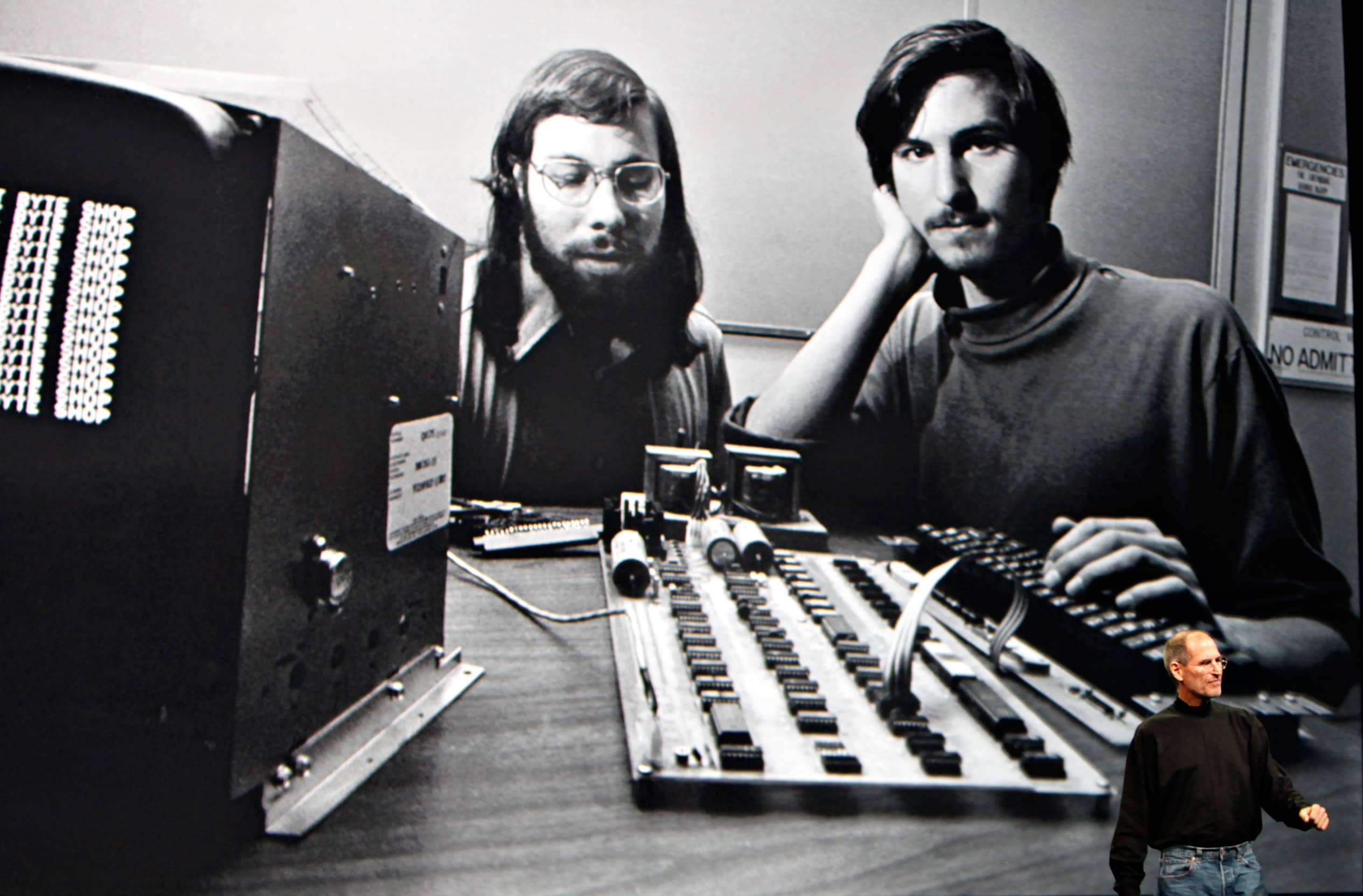
The original Apple I computers were hand built by Apple co-founder Steve Wozniak, Jobs and other friends in Wozniak’s garage with parts purchased from a local electronics store called The Byte Shop in Mountain View California (now called Fry’s Electronics) or scavenged from broken machines at their college dorms.
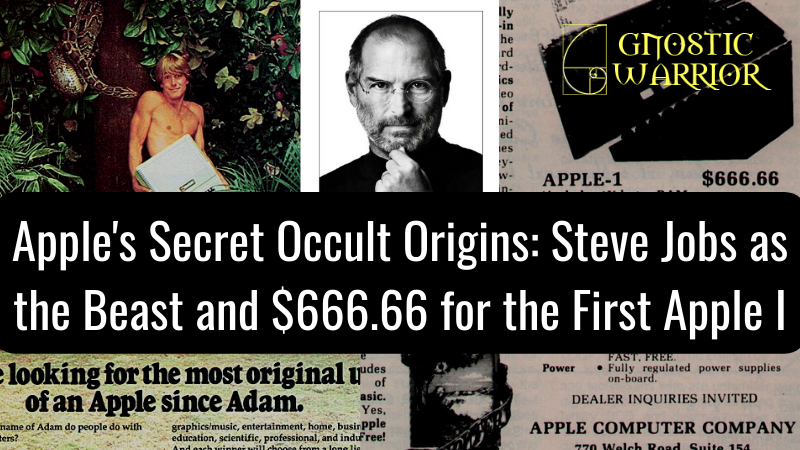
The first Apple 1 computer that cost about $1,533 to build, but Jobs and Wozniak decided to sell them for $666.66 each with the slogan “Byte into an Apple.”
Some people say that Jobs purposely chose the apples with a bite out of it and selling the first computers for $666.66 to honor the Mark of the Beast, and that it was Satanic because in the Bible, the Beast is identified with the number, 666.
In Revelation 13:18, it says, “This calls for wisdom. If anyone has insight, let him calculate the number of the beast, for it is man’s number. His number is 666.”
As if Jobs and Wozniak were summoning the Devil to ritualistically assist him in this new demonic venture, and this was the machine that would do it.
Then you have Apple’s slogan, “Think Different,” which glorifies the crazy ones, misfits, rebels and trouble makers.
“Here’s to the crazy ones. The misfits. The rebels. The troublemakers. The round pegs in the square holes. The ones who see things differently. They’re not fond of rules. And they have no respect for the status quo. You can quote them, disagree with them, glorify or vilify them.
About the only thing you can’t do is ignore them. Because they change things. They push the human race forward. And while some may see them as the crazy ones, we see genius. Because the people who are crazy enough to think they can change the world, are the ones who do.”
This can’t all be a coincidence, could it?
According to Steve Jobs, “Apple was so named because Jobs was coming back from an apple farm, and he was on a fruitarian diet. He thought the name was “fun, spirited and not intimidating.”
And as for the price of $666.66, Steve Wozniak says it became $666.66 because Wozniak “liked repeating digits” and because of a one-third markup on the $500 wholesale price.
Do you believe these stories or could there be something more occult going on here?
It seems to depend on who you ask.
For example, when Jean Louis Gassée, an executive at Apple Computer from 1981 to 1990, was asked about his thoughts on the Apple logo, he answered:
“One of the deep mysteries to me is our logo, the symbol of lust and knowledge, bitten into, all crossed with the colors of the rainbow in the wrong order. You couldn’t dream of a more appropriate logo: lust, knowledge, hope, and anarchy.”
When it comes to Steve Jobs character, there’s the “Good Steve,” and then, there’s the “Bad Steve,” says biographer Walter Isaacson.
In other words, he had a dark (shadow/demon) and light (enlightened/angel) side to his character.
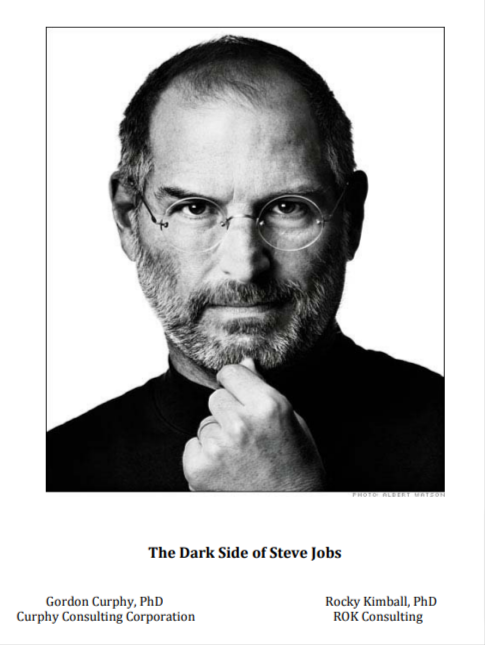
Steve Jobs has been described as an amazingly talented leader but a highly flawed individual. He was known to be a manipulative, excitable liar who was cold, mean, and vindictive. He was not very pleasant to be around and could change moods at the drop of a dime.
While working at Atari, Jobs recruited Wozniak to help him work on the game Pong. There was a big cash bonus involved if they finished the job fast and efficiently.
They did, but Jobs lied about how much money the bonus was, pocketing the majority of the money for himself.
This was how Jobs treated people. He could give a flying f*ck about friends, co-workers and even family members like his daughter who he refused to acknowledge or support and whose mother had to live on welfare.
And even his practice of Zen Buddhism could not save the man.
Jobs lacked self-reflection skills and acted sociopathic. His capacity to deceive others, distort reality, exhibit emotional outbursts, and inflict cruelty seemed to withstand the test of time.
In my personal opinion, Steve Jobs was a talented business man but also a human piece of shit, or what some people would accurately call a sociopath, and some religious folks, a demon or the Devil incarnate himself.
Even though I do not think that he worshiped Satan or summoned demons, he was a liar, thief and terrible person – just like the so-called Devil.
His mode of being was completely individualistic or what could be called Satanic.
Hell, many CEO’s and captains of industry of this Modern world act in a similar fashion to Jobs. In fact, I believe it is more common than uncommon in the world of business.
So, it is quite fitting that Jobs, the Beast of Apple Computers, had decided to sell their first computer for $666.66.
Remember, “This calls for wisdom. If anyone has insight, let him calculate the number of the beast, for it is man’s number. His number is 666.” – Revelation 13:18
Moe is the founder of GnosticWarrior.com. He is a father, husband, author, martial arts black belt, and an expert in Gnosticism, the occult, and esotericism.
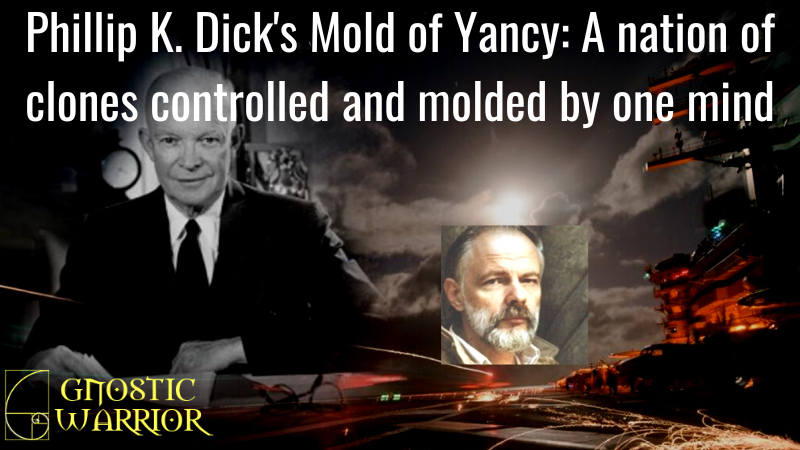
The Mold of Yancy by Phillip K. Dick is a science fiction story written in 1954 about mind control and subliminal messages, a cautionary tale of molding society. It later was adapted into his novel, The Penultimate Truth.
The story follows the life of Colony Callisto, a young woman who is the epitome of a model citizen of what looks like the perfect society that has emerged from the ashes of an off-Earth war on the planet, Jupiter. Her grandfather, John Edward Yancy, is the leader of the colony.
To the outside world, they live in what appears to be an idyllic society, but beneath the plastic façade lies a hidden world of secrets and deception.
It is a really totalitarian society that controls the populaces’ every thought and move through politics and the media.
Yancy, the colony’s leader, is a popular figure who uses his virtual persona to control all aspects of life for the colony’s inhabitants. ‘
Through broadcast shows and advertisements, Yancy dictates what the people of the colony should eat for breakfast, what music they should listen to, and even what political views they should hold.
The citizens seem to mold their thinking and behaviors exactly to whatever Yancy says, even though they seem to think their acting on their own accord.
He has the ability to speak on almost any subject by saying what people want to hear without really saying anything at all is what gives him power.
If Yancy delivered opinions on philosophy, art and culture, the plan would not work.
In this society, people are allowed to express their opinions freely without fear of repression. They enjoy life, reading, listening to music, and watching TV.
And even though they may complain about the government from time to time, they all ultimately subscribe to the same beliefs that Yancy gently suggests.
The result is a de-politicized, nonphilosophical and homogenized society of android like humans that follows Yancy’s every whim.
Analyst Peter Tavener works for the Niplan police, studying and creating reports on the political situation of Callisto.
He tells Police Director Kelleman that while Callisto they achieved a totalitarian society without an actual dictator, any elected Parliament has the potential to become totalitarian if they reach too deeply into people’s lives.
Tavener agrees to go undercover on Callisto, posing as one of their own who are increasingly looking alike.
Phillip K. Dick said that the Yancy character was roughly based on U.S. President Dwight D. Eisenhower.
Banal middle class culture has long been a source of inspiration for writers and filmmakers. In the 1950s, Dick saw this culture as a tool for conformity in the United States.
He used Eisenhower as an example of someone who was vapid and musing, yet still held immense power over the people through his broadcasts.
Of the story PKD had this to say:
“Obviously, Yancy is based on President Eisenhower. During his reign we all were worrying about the man-in-the-grey-flannel-suit problem; we feared that the entire country was turning into one person and a whole lot of clones. (Although in those days the word “clone” was unknown to us.)
I liked this story enough to use it as the basis for my novel THE PENULTIMATE TRUTH; in particular the part where everything the government tells you is a lie. I still like that part; I mean, I still believe it’s so.
Watergate, of course, bore the basic idea of this story out.”
Today, we can clearly see the hundreth-Yancy affect with political clones directing our thinking, as myself and others in the so-called middle class complain against many of these government policies, we still have to follow them and consume what is on the store shelves in order to survive.
Dick is correct in seeing the entry point of totalitarian conformity in consumerism.
While people may disagree on politics, they tend to find common ground when it comes to popular culture, which continues to move the population towards certain values.
Arguing against anti-intellectualism, it is often said that without intellectuals to question the status quo, fascism and other forms of totalitarianism can more easily take hold.
This is because intelligence and critical thinking are necessary to challenge authority and keep society free.
However, this argument presupposes that all opinions are equally valid, which is clearly not the case. Some opinions are simply better than others, and this is especially true when it comes to art, culture, and philosophy.
To be truly neutral on these matters would be impossible for anyone with a brain; one must either have an opinion or be dead inside or possibly a clone or android in Dick’s novels.
Thought and behavior control operating under the guise of social virtue is particularly invidious, easily capturing those of us suffering from the widespread malady of intellectual laziness.
The effort to mold a national way of thought can result only in a mouldering state of mind, a decay of initiative inviting totalitarianism to creep into every aspect of our lives.
I will leave you with Dwight D. Eiesenhower’s farewell speech to the colony, warning them about the danger of becoming captive to the military industrial complex and a technological elite.
The most famous quote from Eiesenhower came about halfway through the speech: “In the councils of government, we must guard against the acquisition of unwarranted influence, whether sought or unsought, by the military-industrial complex.”
Moe is the founder of GnosticWarrior.com. He is a father, husband, author, martial arts black belt, and an expert in Gnosticism, the occult, and esotericism.
The simulation hypothesis claims that we are living in a simulated reality.
A number of prominent figures, including Phillip K. Dick, Elon Musk, Neil deGrasse Tyson, Freeman Dyson, and Stephen Hawking, have expressed their belief that we may be living in a computer simulation.
The word to simulate means to give or assume the appearance or effect of often with the intent to deceive: to imitate, pretend, or counterfeit.
The computer simulation theory centers around humans being able to create computers that are so powerful they can simulate entire universes — maybe even entire universes full of sentient beings (us).
One way to do this would be by creating a computer program that runs on an extremely powerful machine and simulates an entire universe inside it.
In other words: if we can create such a program, then perhaps someone else has already done it.
It’s an idea that has been explored in science fiction for years — with writers such as Philip K. Dick and the hit movie, The Matrix being perhaps the most famous example.
The first person to claim we were living in a simulated reality was the American writer Philip K. Dick.
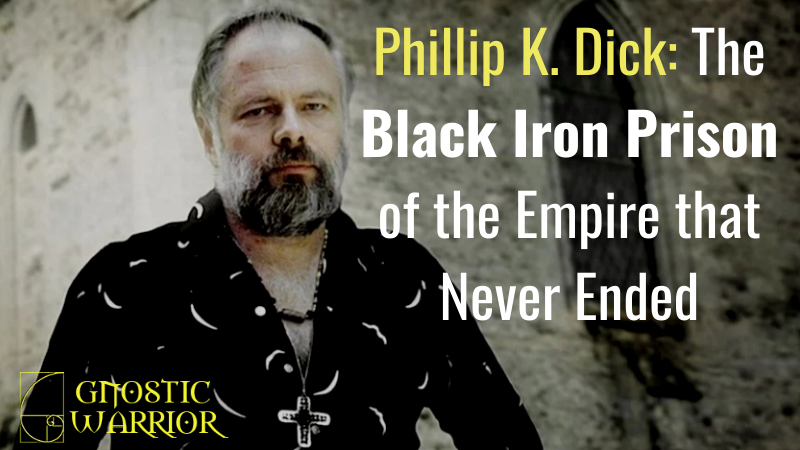
Dick was also famous for describing that we live in a Black Iron Prison.
An oppressive society where people are controlled by machines. He believed that technological advances had created huge corporations which were run for profit rather than for people’s benefit. This made it difficult for ordinary people to make their voices heard when things went wrong.
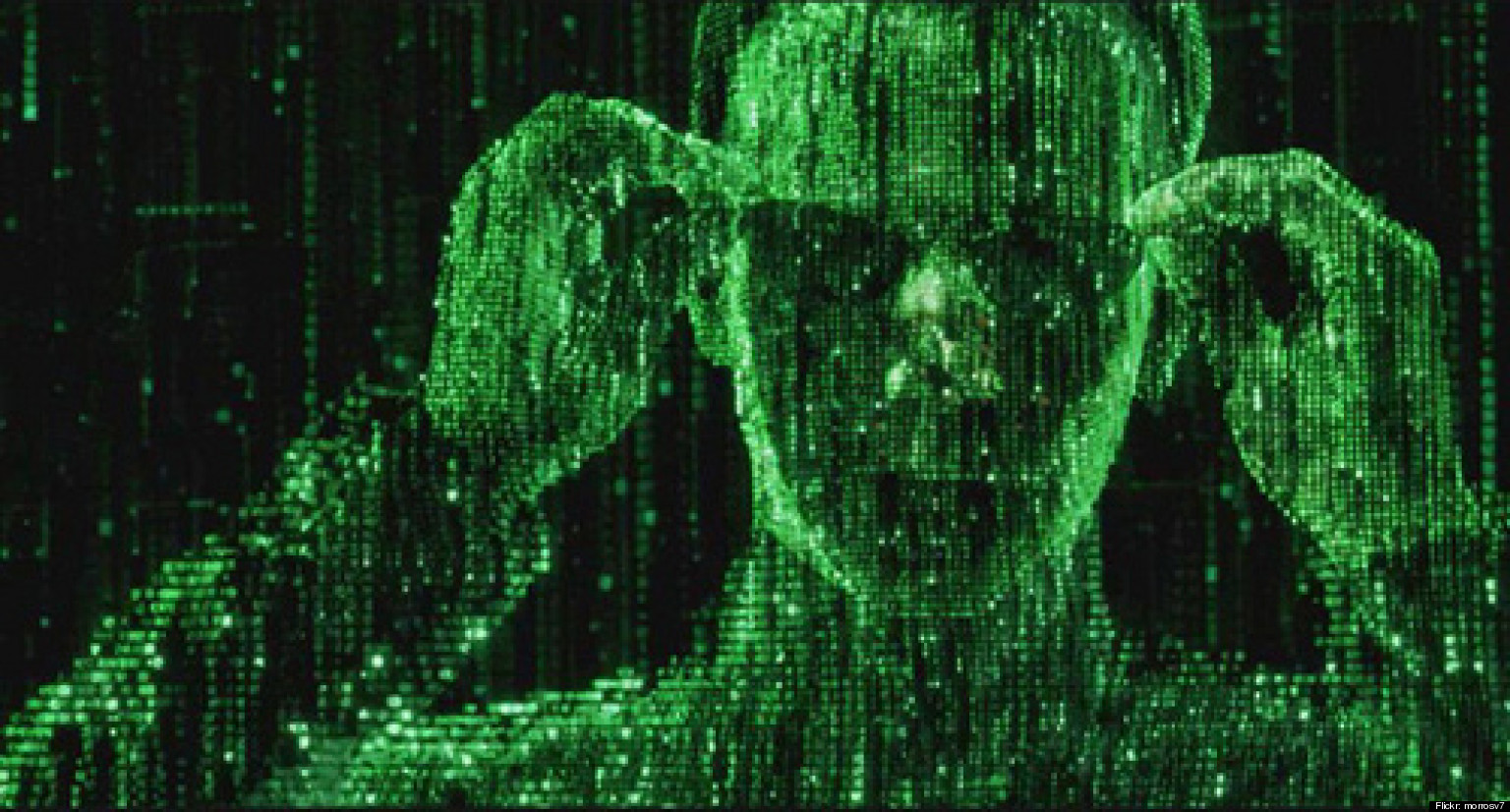
In The Matrix: Reloaded (2003) and The Matrix Revolutions (2003), the main character of the film, Neo (Keanu Reeves), discovers that he is actually living in a virtual reality simulation when he meets Morpheus (Laurence Fishburne), who introduces him to an alternative reality called “the real world.”
He learns that humanity is enslaved by sentient machines that used their control of human minds through computer technology to take over the world and keep humans docile in a virtual reality world called “the Matrix”.
Neo is a hacker who has been chosen to be a part of a resistance movement against intelligent machines that have enslaved humanity.
In this world, humans are connected to bio-electrical energy sources called “batteries” that keep them alive while their minds are trapped in virtual reality worlds created by machines.
Simulated realities are no longer a subject just for movies and has become a serious topic of discussion among philosophers and scientists.
A number of prominent figures, including Elon Musk, Neil deGrasse Tyson, Freeman Dyson and Stephen Hawking, have expressed their belief that we may be living in a computer simulation.
Stephen Hawking recently told the BBC:
“We are increasingly doing everything through computers. So it seems to me that’s very likely.”
Neil deGrasse Tyson said the odds of our universe being a simulated reality were 50/50. He used the large intelligence gap between chimpanzees and humans despite the fact we share 98 percent DNA, stating that a being many times our intelligence could both exist and potentially run simulations.
During a recent podcast interview with Joe Rogan, Elon Musk was asked if he thought we were living in a computer simulation. “Given the current acceleration of technology and innovation, I think it’s very likely,” Musk responded.
Musk said “If you assume any rate of improvement at all, games will eventually be indistinguishable from reality” before concluding “that it’s most likely we’re in a simulation.”[
Musk then went on to say that there could be millions — or even billions — of levels of reality above us, each with its own simulations. In other words, we could be living in one of the many simulations at this very moment.
“The strongest argument for us being in a simulation probably is the following,” Musk explained. “40 years ago we had Pong – two rectangles and a dot.” He continued:
“Now, 40 years later, we have photorealistic 3D simulations with millions of people playing simultaneously, and it’s getting better every year. And soon will be indistinguishable from reality,” he said.
In 2016, Oxford University philosopher and director of the Future of Humanity Institute, Nick Bostrom published a paper titled “Are You Living In a Computer Simulation?” arguing that we are more likely to be living in a simulation than not — and that we’ll know if this is the case by 2045.
Bostrom suggests that humans may be living in an artificial universe that was created by our descendants as a simulation.
He argues that simulations are an inevitable byproduct of technological advancement and could be used to study things like climate change or nuclear war without the risk to real people or property.
Bostrom also believes that human civilization will eventually reach a point where these simulations are indistinguishable from reality — an event he calls the “simulation singularity.”
He explains that there are four reasons to believe we live in a simulation:
1. “The fraction of human-level civilizations that reach a posthuman stage is very close to zero;”
2.”It is not impossible to run a great many such simulations;”
3.”We’re unlikely to be near the bottom of the curve; for example, when it comes to our current understanding of physics and cosmology, we have already reached quite high levels;”
4.”If we do live in a simulation, it will be far from unique. In fact, there will almost certainly be many simulated ‘trains’ running around in parallel universes right now.”
The reason for this increased interest is that many scientists believe we’re approaching an era when computers will be able to simulate reality so well that they will run simulations indistinguishable from the real world (something called “the technological singularity”).
If this happens, it would make sense that our reality could be just one of many simulated realities — and maybe not even the best one available.
These ideas come from a branch of physics called quantum mechanics, which deals with how subatomic particles behave at very small scales (for example, electrons can spin both clockwise and counterclockwise at once).
Quantum mechanics shows that our world is much stranger than we thought possible — there are many things happening at once that we cannot directly observe.
The Simulation Hypothesis by Rizwan Virk, a renowned MIT computer scientist and Silicon Valley video game designer, is the first serious book to explain one of the most daring and consequential theories of our time.
Virk argues that we are living in a simulated universe — a digital realm created by advanced posthumans. If true, this means we are living in a giant computer simulation, where our entire lives are just algorithms running on some advanced alien supercomputer.
He shows how the simulation hypothesis can be investigated using science, from quantum physics to neuroscience to artificial intelligence.
Virk explains how our universe could be a simulation running on a supercomputer in another universe or even another dimension; how we might detect such a simulation; and how humans could break out of it if it exists.
Gnostic Warrior Conclusion
What if we’re all living in a simulation?
It’s an interesting thought experiment to ask whether or not we live in a simulation.
If it’s possible to simulate a world that’s indistinguishable from reality, then, well, it’s likely we’re already inside one.
The idea is that right now or at some point in the future, our world and the events happening within it are controlled and manipulated by some type of secret cabal, aliens or computers.
As I said above, the word to simulate means to give or assume the appearance or effect of often with the intent to deceive: to imitate, pretend, or counterfeit.
Quite possibly everything we are taught is a script to control our feeble minds from birth to death, and our politicians and the media are just puppets who are given talking points to propagandize our thoughts.
In this simulated world, people who we think are our politicians and media are just well-paid liars who pretend to have our best interests at heart.
Counterfeits of the real thing manipulating our reality through our laws and media.
Many people we see on the street would copy the characteristics, looks and even the morals and ethics of their favorite celebrities, bands, and famous people.
Creating an entire new metaverse with hordes of clones, androids, and soulless people,
Vast swaths of the adult population will be hooked on alcohol and or using drugs (illegal and prescription) altering their personalities, and lives.
All the while, the youth would be immersed online in video games and mobile phone apps that took up all their attention and time.
Some of their parents would drug them to alter their reality and change their behaviors.
Moe is the founder of GnosticWarrior.com. He is a father, husband, author, martial arts black belt, and an expert in Gnosticism, the occult, and esotericism.