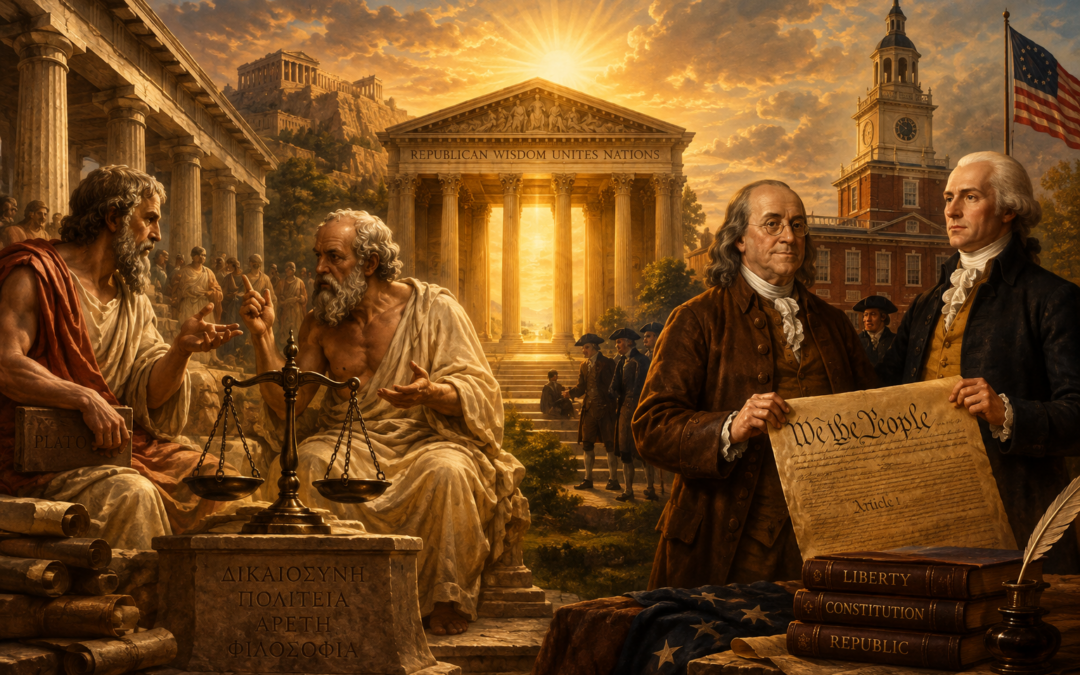
“Remember, democracy never lasts long. It soon wastes, exhausts, and murders itself. There never was a democracy yet that did not commit suicide.” – John Adams
Adams came to this conclusion after he had read every ancient historian he could find, in the original Greek and Latin, before writing the constitutions of both Massachusetts and the United States.
He understood that every empire that has ever collapsed under the weight of its own mob has told the same story before it fell: the people demanded more power, more voice, more “freedom,” and in the chaos that followed, a strongman rose up to restore order.
This is not a modern anxiety invented by your favorite liberal democratic news pundits.
It is a pattern that Plato diagrammed twenty-four centuries ago, that Polybius watched play out in the streets of Greek city-states, and that the architects of the American founding studied line by line before they refused, deliberately and on purpose, to build a democracy.
Today, as political scientists at every major university document a rising tide of strongman politics on American soil, the ancient diagnosis is playing out on schedule: pure democracy does not end in freedom; it ends with a demagogue.
We all must ask a question that most modern civics classrooms have stopped asking honestly: why did the men who built the American republic go out of their way to avoid the word “democracy,” and why did the wisest minds of antiquity see unchecked popular rule not as liberty, but as the last stop before tyranny?
The answer runs from Plato’s Athens to Cicero’s Rome to Philadelphia in 1787, and it matters more now, in an age of plebiscite politics and mob-driven outrage cycles, than it has in generations.
Ancient Warnings About Pure Democracy
Plato lived through the trial and execution of his teacher, Socrates, by a democratic Athenian jury. That experience shaped everything he wrote afterward. In the Republic, Plato traces a five-stage decay of political regimes: aristocracy degenerates into timocracy, timocracy into oligarchy, oligarchy into democracy, and democracy, finally, into tyranny.
He did not consider this a hypothetical.
He considered it a law of political nature, as reliable as gravity.
Plato’s account of democracy is unsparing. He describes a society where “life has neither law nor order,” where an “unquenchable desire for limitless liberty” causes citizens to “cease to care even for the laws, written or unwritten,” until “they will have no one over them.”
The demagogue, sensing the vacuum, exploits the fear the poor majority feels toward the rich minority, promises to protect the people, and uses that trust to seize absolute power.
“Democracy,” Plato concludes, is “the worst of all lawful governments, and the best of all lawless ones.”
The regime that follows it, tyranny, he calls “the fourth and worst disorder of a state.”
Aristotle, Plato’s student, was more measured but reached a compatible verdict. He rejected pure forms of any kind, rich and poor, one and many, as inherently unstable.
His answer was politeia, a mixed constitution combining features of democracy, oligarchy, and aristocracy, governed by a moderately wealthy middle class, “so that no group of citizens is in a position to abuse its rights.”
Aristotle’s mixed regime was not a compromise for its own sake. It was an engineering solution to a problem he considered mathematically inevitable: any single class left with total power will eventually use that power against everyone else.
The most influential ancient argument for a republic over a democracy came not from a philosopher in a lecture hall, but from a Greek historian watching Rome up close.
Polybius argued that every pure constitution carries the seed of its own corruption: monarchy decays into tyranny, aristocracy into oligarchy, and democracy into mob rule.
His solution, drawn directly from observing the Roman constitution, was a government that divided supreme authority among three competing elements at once: the consuls carrying the monarchic function, the Senate the aristocratic function, and the popular assemblies the democratic function.
No single body could dominate the others for long, because each held a check the others needed.
Cicero, writing a century after Polybius, made the case in his own voice with a formulation the American founders would later borrow almost word for word.
In De Re Publica, Cicero has the statesman Scipio conclude that a government “composed of an equal mixture of the three better forms,” monarchy, aristocracy, and democracy, “united and modified by each other,” is superior even to the best of the pure forms, kingship.
Cicero was blunt about what happens without that balance:
“In communities and individuals alike, excessive freedom topples over into excessive slavery. Extreme freedom produces a tyrant.”
For Cicero, the mixed republic was not born of idealism. It was born of “weakness,” a mutual fear between classes that forces “a pact” between the people and the powerful, because no faction can trust itself alone with total power.
What the American Founders Actually Said
The men who wrote the United States Constitution had Polybius and Cicero on their shelves, and it shows. John Adams’s Defence of the Constitutions of Government of the United States of America returns explicitly to the Polybian model of divided power.
The founders were not vague about their preference. They were emphatic, and often harsh, about the difference between a republic and a democracy.
James Madison, writing in Federalist No. 10, described direct democracies as regimes that “have ever been spectacles of turbulence and contention,” incompatible “with personal security, or the rights of property,” and typically “as short in their lives as they have been violent in their deaths.”
In Federalist No. 39, Madison defined a republic as a government “which derives all its powers directly or indirectly from the great body of the people,” but administered by representatives, not by the unmediated will of a crowd.
Alexander Hamilton drew the same distinction to Gouverneur Morris. “Real liberty,” he wrote, “is neither found in despotism or the extremes of democracy, but in moderate governments.”
He favored “a representative democracy, where the right of election is well secured and regulated,” with legislative, executive, and judicial power “vested in select persons, chosen really and not nominally by the people.”
Thomas Jefferson called the republican form “the only form of government which is not eternally at open or secret war with the rights of mankind.”
Benjamin Rush called simple democracy “one of the greatest of evils,” bluntly equating it with “mobocracy.”
Noah Webster wrote that “a pure democracy is generally a very bad government. It is often the most tyrannical government on earth.”
And then there is the anecdote every American schoolchild half-remembers but rarely understands. As Benjamin Franklin left the Constitutional Convention on September 17, 1787, a Philadelphia socialite named Elizabeth Willing Powel asked him what the delegates had created: “a republic or a monarchy?”
Franklin’s reply, recorded by delegate James McHenry in his convention journal, was four words long:
“A republic, if you can keep it.”
The line survives not because it was clever, but because Franklin understood something the founders built directly into the Constitution’s text: Article IV explicitly guarantees “to every State in this Union a Republican Form of Government,” never once using the word democracy.
The Difference That Actually Matters
Strip away the modern confusion, where “democracy” and “republic” get used as interchangeable applause lines in speeches, and the ancient and founding-era consensus reduces to one structural distinction.
A pure democracy vests final authority directly in the unmediated will of the majority, with no institutional buffer between a passing popular mood and the machinery of the state.
A republic vests sovereignty in the people but forces that sovereignty through representative institutions, layered checks, and rule of law, precisely so that no single faction, whether a king, an oligarchy, or fifty-one percent of the electorate, can seize total control.
This is not an argument against popular sovereignty. Cicero, Madison, and Adams all agreed the republic’s authority flows from the people.
It is an argument against unmediated popular sovereignty, the specific condition Plato watched kill Socrates and the founders were determined never to reproduce in Philadelphia.
The mixed constitution that Polybius admired in Rome and the separated powers that Madison built into Article I, II, and III of the Constitution are the same idea wearing different clothes, eighteen centuries apart: divide power among competing bodies so that ambition checks ambition, and no faction, however popular, can rule unopposed.
How America Became the Democracy It Was Never Meant to Be
Here is the part of the story most civics books skip.
The republic of 1787 has been systematically democratized, firewalls removed one constitutional change at a time, until the system operates far closer to the pure democracy the founders rejected than to the mixed republic they bequeathed.
The single most consequential change came on April 8, 1913, when the Seventeenth Amendment was ratified.
For the nation’s first 125 years, voters did not directly elect their senators; the Constitution of 1788 assigned that power to state legislatures, making the Senate a check on popular passion and a structural representative of the states.
The Seventeenth Amendment eliminated that filter entirely, converting the Senate into what the founders had deliberately refused to make it: a second, slower House driven by direct popular election.
Progressive Era reformers sold the change as a blow against corruption and a “millionaires’ club” Senate.
What it actually did, as the Heritage Foundation’s constitutional analysis notes, is remove the states’ last structural seat at the federal table and “make the Constitution more democratic,” exactly the direction every founding document warns against.
The Electoral College faced a parallel erosion. While the amendment process could not touch it directly, state after state has joined the National Popular Vote Interstate Compact, pledging their electors to whichever candidate wins the national popular vote, a mechanism designed to nullify the founders’ indirect filter without ever repealing it.
Meanwhile, the direct primary system replaced party conventions as the engine of candidate selection, pulling nomination power away from deliberative bodies and placing it in the hands of mass electorates primed for personality-driven, passion-driven contests. In the states, ballot initiatives and referendums now let transient majorities write law directly, bypassing the representative process altogether.
None of this happened by conspiracy. It happened by reform movements convinced, sincerely, that “more democracy” automatically meant more justice. That is precisely the faith Plato warned against, and precisely the mistake Tocqueville saw Americans making a century and a half ago: mistaking the will of the majority, however loudly expressed, for the rule of law.
Modern Political Science
Contemporary political scientists have now measured what the Funders knew would happen once the mob and democracy took over the government..
Freedom House’s global index shows the United States falling from a score of 92 in 2014 to 83 by 2021, and some assessments reclassify the country from a “full democracy” to a “flawed democracy” altogether.
Scholars of democratic backsliding define the process as “the process of removing constraints on accountability for democratically elected executive leaders,” a dynamic they now document unfolding through weak commitment to democratic rules, denial of opponents’ legitimacy, tolerance of political violence, and executive aggrandizement, patterns observed under recent administrations of both parties.
Political Science Quarterly notes that observers now warn “democracy is in greater peril today than at any time in modern U.S. history.”
This is not a partisan talking point; it is the conclusion of the academic establishment that measures regime health like doctors measure blood pressure.
A Practical Conclusion
Every generation that forgets the difference between a republic and a democracy tends to relearn it the hard way, usually by watching institutions erode under the pressure of a majority convinced its cause justifies bypassing the rules built to restrain it.
We have seen this happen in real time during our democratic era.
The remedy the ancients and the founders converged on independently, across a thousand years and three languages, is not more direct rule by referendum or mob sentiment.
It is the deliberate friction of representative government: elected bodies, independent courts, staggered terms, and constitutional limits that outlast any single election cycle’s passions.
Strip away the republic’s intermediate institutions, the state legislatures in the Senate choice, the indirect presidential election, the party conventions that filtered demagogues from nomination, and what remains is a direct line between a mob moment and the executive chair.
Each reform that removed friction to serve “the people’s voice” cleared one more obstacle from a demagogue’s path.
The founders were right about the disease; modern reformers forgot the vaccine.
Franklin knew a republic survives only as long as its citizens understand what they were given and refuse to trade its checks and balances for the momentary comfort of majority rule.
That understanding, not a slogan, is the actual inheritance.
But the Republic as went to sleep as the Democratic mob has taken the helm leading us into a liberal hell in a rainbow covered hand basket.
And only one thing is left to save us.
The strongman tyrant who has been waiting in the shadows.
Moe is the founder of GnosticWarrior.com. He is a father, husband, author, martial arts black belt, and an expert in Gnosticism, the occult, and esotericism.
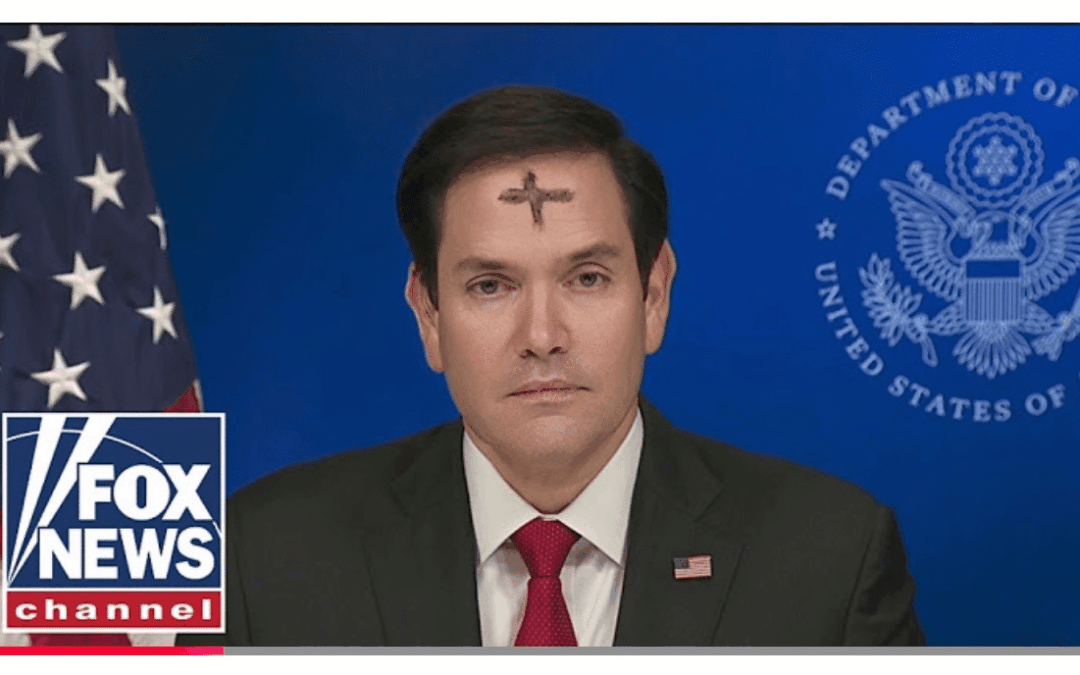
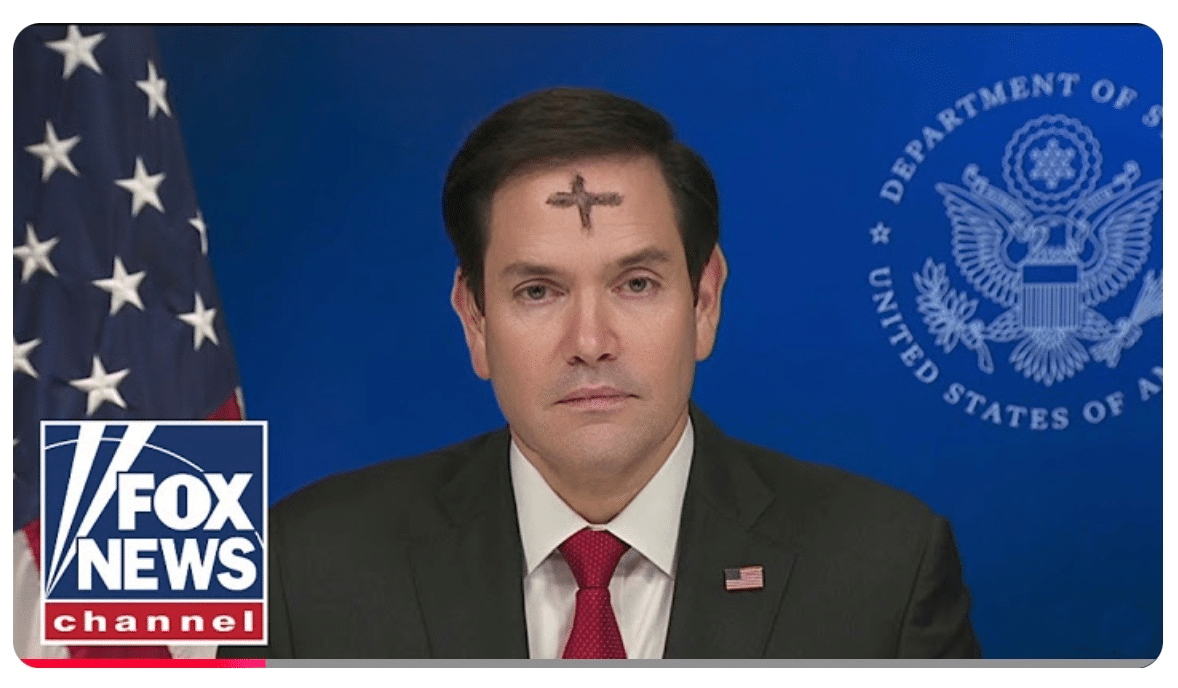
On March 5, 2025, U.S. Secretary of State Marco Rubio had appeared on on Fox TV with a large black cross on his forehead as part of the Roman Catholic “Ash Wednesday” tradition that signifies the beginning of a 40-day period of penance, reflection and fasting leading up to Resurrection Sunday.
The ash used is traditionally made from burned palm fronds from the previous year’s Palm Sunday, mixed with holy water. As the priest applies it, they typically say the words “Remember that you are dust, and to dust you shall return,” a phrase drawn from Genesis 3:19, meant to remind believers of mortality and the need for repentance.
We can trace this ancient tradition of over 2,000 years to early Christians who also wore the mark.
The Church Fathers Tertullian, Origen, Cyprian, and Jerome said that Mark of the Tau was a Christian custom of repeatedly tracing the sign of the Tau cross on their own foreheads to symbolize the value of the human mind.
Tertullian confirms the practice when he writes that, throughout the ordinary actions of daily life, “we trace upon the forehead the sign.”
Scripture tells us that the saved people of Israel had the sign of the Tau marked upon their foreheads. In Revelation, the Tau is called “the seal of our God on the foreheads of His servants” (Revelation 7:2–4). Revelation’s sealing imagery recalls the protective mark described in Ezekiel 9:4–6.
The ancient symbol on the forehead invites the modern seeker to look deeper.
Scripture presents the Mark of the Tau as a mark of moral distinction, divine ownership, and protection; neuroscience presents as a protein with the same name at the center of memory, neuronal order, and degeneration.
As I will attempt to explain in this essay, these descriptions remind me of our immune system and microbiota, whose collective genes greatly outnumber our own. What our ancestors may have called ministering spirits or angels inhabit and influence our gastrointestinal tracts, blood, and brain—exerting a direct influence upon our senses, that is, our thoughts, behaviors, actions, and health.
This essay explores how our microbiota, together with the teachings of the Tau and salvation, may relate to religion, esotericism, human biology, neuroscience, and quality of life.
Like the angels of the Bible, modern science has shown that these microscopic inhabitants help shape the human mind and, in doing so, the destiny of mankind.
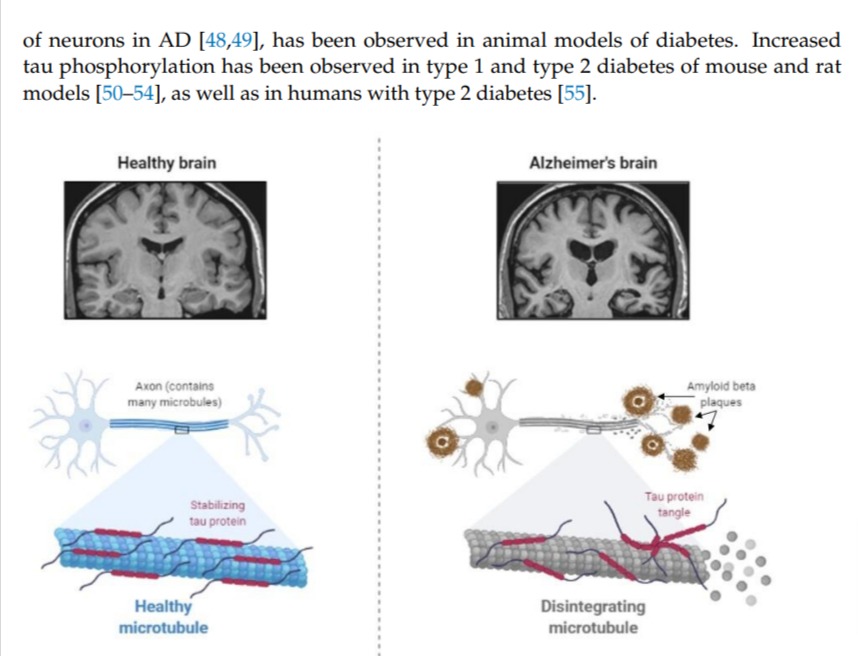
We also find today that tau pathology is the primary cause of many neurodegenerative diseases, such as dementia and Alzheimer’s disease, which involve the accumulation of abnormal tau protein in the brain and are collectively referred to as tauopathies. Deaths from Alzheimer’s disease have increased 134% between 2000 and 2024.
A 2026 review calls the gut-brain axis “a dynamic, bidirectional communication network” integrating neural, endocrine, immune, and metabolic pathways that regulate physiology and behavior.
This science converges with ancient Scripture, as we find that the Mark of the Tau was for the guidance of the angelic executors of God’s commands—a mark or sign of favorable distinction.
These angels are said to be the executors of God’s wrath and also to deliver people, such as Lot, from danger (Genesis 18–19; Exodus 12–14). As St. Paul says, “Sit at My right hand until I make Your enemies a footstool for Your feet.” He then asks, ““Are they not all ministering spirits, sent to minister for them, who shall receive the inheritance of salvation?” (Hebrews 1:14).
The word ministering means learning about and attending to others’ needs or helping or caring for someone or something.
It is as if these angels or spirits were with us at all times or were sewn into the fabric of our being and bodies from the day we were created.
St. Basil (Homily on Psalm 43) said that our guardian angels can act upon our senses (Summa Theologiae, I, q. 111, a. 4) and upon our imaginations (ibid., a. 3), but not upon our wills except per modum suadentis—that is, by working on our intellect and thus upon our will through the senses and the imagination (I, q. 106, a. 2; q. 111, a. 2).
Aquinas writes, “Both a good and a bad angel by their own natural power can move the human imagination,” while maintaining that the will remains free to consent or resist.
The prophet Ezekiel speaks of the Tau as the mark distinguishing those who were to be saved, on account of their sorrow for their sins, from those who, as idolaters, were to be slain.
The Hebrew word translated as “mark” is taw, the name of the final letter of the Hebrew alphabet, and commentators note that its ancient written form resembled a cross.
“Go through the city, walk through Jerusalem, and mark Tau upon the foreheads of the men who sigh and mourn for all the abominations that are committed in the midst thereof.
“To the others, I heard the Lord say: ‘Pass through the city after him and strike! Do not look on them with pity or show any mercy! Old men, youths and maidens, women and children—wipe them out! But do not touch anyone marked with the Tau on the forehead. Begin at My sanctuary’” (Ezekiel 9:4–6).
It is as if the people of Jerusalem were divided into two camps based on their mental health.
According to the Jewish Encyclopedia:
The cross as a Christian symbol or “seal” came into use at least as early as the second century (see Apost. Const. iii. 17; Epistle of Barnabas, xi–xii; Justin, Apologia, i. 55–60; Dial. cum Tryph. 85–97); and the marking of a cross upon the forehead and the chest was regarded as a talisman against the powers of demons (Tertullian, De Corona, iii; Cyprian, Testimonies, xi. 21–22; Lactantius, Divinæ Institutiones, iv. 27, and elsewhere).
Christians used to swear by the power of the cross (Apocalypse of Mary, viii, in James, Texts and Studies, iii, 118).
Tertullian says, “Frontem crucis signaculo terimus” (De Corona, iii)—that is, “We Christians wear out our foreheads with the sign of the cross.” He also said, “The Greek letter Tau and our Latin letter T are the true form of the cross, which, according to the Prophet, will be imprinted on our foreheads in the true Jerusalem” (Against Marcion, III, xxii).
The original meaning of Tau—Taw or Tav—in Hebrew is “mark.” It was the twenty-second letter of the alphabet and later came to represent the letter T in Greek.
The mark was how God’s angelic executors were able to find, save, or destroy people based on how they thought, spoke, lived, and acted.
“For He shall give His angels charge over thee, to keep thee in all thy ways” (Psalm 91:11).
On one side, there were people who were said to be truly sorry for their sins and adamantly opposed to the culture of sin, idolatry, and abominations.
They were said to be marked by the Lord with the Tau in order to be saved.
This means that the people chosen by God to be saved by the mark of the Tau seemed to have control and power over their own bodies and minds.
It was a type of spiritual mark or metaphysical representation that acted as a sign for the people chosen by God to be saved because they were not controlled by the supernatural or infernal forces of Satan or the Devil.
These people who had the mark were also adamantly opposed to sin and the evil acts committed by their fellow countrymen.
On the other side of the camp were the damned.
These were people who accepted and encouraged the sins of Sodom and, in doing so, bore the mark of the theta upon their foreheads.
They were under the direct control of Satan or the Devil—a type of beast that was no longer human.
They were people our ancestors may have called demons or people possessed by the Devil.
Today, we can say they simply lost their minds. Schizoid. . . .
In doing so, they were marked by ministering spirits for destruction and death.
THE TAU PROTEIN
I find these ancient biblical stories interesting because, as they relate to modern times, we find what is called the tau protein, which is found mainly in the neurons of the central nervous system and in the brain’s frontal lobe, under the forehead. Modern reviews describe tau as a major microtubule-associated protein in mature neurons.
It is associated with the mark of the Tau on the forehead of the early Christians as an indication of a sound or strong mind and, as I will show, human consciousness.
This supports my contention that tau is involved in the creative processes and in preserving the health of the brain, as well as in destructive processes, as I will show.
Tau is a phosphoprotein—a protein that contains chemically bound phosphate—critical to neuronal function, memory, cellular activity, and habituation, a form of non-associative learning. As one modern review states, “Tau plays a key role in regulating microtubule dynamics, axonal transport and neurite outgrowth,” and these functions are modulated through site-specific phosphorylation.
Tau is phosphorylated in a normal, healthy brain, and it becomes abnormally hyperphosphorylated in dementia and Alzheimer’s disease. Hyperphosphorylated tau forms a major component of the paired helical filaments and neurofibrillary tangles found in Alzheimer’s disease.
The phosphorylation process plays a key role in metabolism and immune response. It plays a critical role in regulating much of what determines our health and lifespan through cell cycles, growth, and apoptosis.
A protein being phosphorylated is like drinking an energy drink before a workout—it prepares a molecule for some specialized task.
It is what I believe is the “energy beacon” or antenna that fungi and molds use as a signaling pathway within the host, one that can regulate or corrupt protein activity and alter the expression of many genes at the cellular level.
Cells also secrete various proteins that become part of the extracellular matrix or participate in intercellular communication.
Oxidative phosphorylation is the process in which protons move through ATP synthase, releasing energy that causes the rotor and central shaft of ATP synthase to rotate. The mechanical energy from this rotation is converted into chemical energy as phosphate is added to ADP to form ATP. Biochemical research describes ATP synthase as a rotary motor driven by an electrochemical proton gradient.
The release of a phosphate group from ATP through hydrolysis releases usable energy and changes ATP to ADP.
The word phosphorus derives from the Greek phōsphoros, meaning “light-bearer.”
In Latin, the corresponding word is lucifer, meaning “light-bringer” or “morning star.”
“How art thou fallen from heaven, O Lucifer, son of the morning! How art thou cut down to the ground, which didst weaken the nations!” (Isaiah 14:12).
Phosphorus also helps nerves and muscles do their jobs. In the form of phospholipids, phosphorus is a component of cell-membrane structure and of the body’s key energy source, adenosine triphosphate, or ATP. The National Institutes of Health identifies phosphorus as a component of bones, teeth, DNA, RNA, phospholipids, and ATP.
The tau protein helps make sure the brain operates properly by supporting neuronal transport and microtubule stability, which are necessary for overall neurological fitness. It is a microtubule-associated protein, or MAP (Weingarten et al., 1975; Witman et al., 1976).
Researchers describe tau’s role in microtubule stabilization and axonal transport as crucial to neuronal function.
Physicist Roger Penrose of the University of Oxford claimed that the brain acts as a quantum computer and that protein structures called microtubules play a role in human consciousness by exploiting quantum effects. Penrose and anesthesiologist Stuart Hameroff developed this proposal as the Orchestrated Objective Reduction, or Orch OR, theory, which attributes conscious experience to proposed quantum processes in neuronal microtubules.
This may explain why, when the tau protein is corrupted by some process, it creates mental pathologies that lead people to lose their minds, memories, and consciousness.
After all, a quantum effect is the change that one quantum system causes in another.
Since tau’s health and regulation are critical for brain function, this may explain why tau pathology, or tauopathies, leads to cognitive impairment, mental illness, and diseases such as dementia and Alzheimer’s disease. Scientific reviews link tau’s misfolding, abnormal hyperphosphorylation, loss of normal function, and toxic gain of function to Alzheimer’s disease and other neurodegenerative disorders
It is as if there is an underlying or hidden cause that creates the effects of these mental illnesses and diseases, and tau is a key marker of these conditions.
The metaphysical and biological mark of those who are not to be saved—the damned.
Hence: “Pass through the city after him and strike! Do not look on them with pity or show any mercy! Old men, youths and maidens, women and children—wipe them out! But do not touch anyone marked with the Tau on the forehead. Begin at My sanctuary” (Ezekiel 9:4–6).
The mark, I contend, may have been the tau protein, which acts like a cellular signal or magnet of sorts for the angelic executors of God’s commands to destroy the mentally ill and some who are so sick that they act like what our ancestors may have called evil demons.
This story becomes even more interesting as it relates to the science of the human mind and human behavior.
Scripture tells us that Jesus, a thirty-three-year-old wise man from the land of Judea—Idumea, Crete—was brought to Golgotha, also known as the “Place of a Skull,” and crucified upon a Tau cross with two others, one on each side, with Jesus in the middle. John states, “Carrying His own cross, He went out to the Place of the Skull, which in Aramaic is called Golgotha” (John 19:17).
Miraculously, after the crucifixion upon the Tau cross, Jesus is resurrected.
The original Phoenician, or Hebrew, meaning of resurrect or resurrection is “raising up” or “rising up”—to cause someone to stand or rise, or to raise someone from sleep or from the dead. To resurrect is for man to be “raised up” to live in the spiritual realms, or what is called being “born again” or “born from above”—spiritually regenerated (John 3:3–5).
Man is “raised up together, and made to sit together in the heavenly places,” or spiritual realms, in Jesus Christ (Ephesians 2:1, 5–6; Colossians 2:12–13).
We can say that man is now conscious and aware, raised from his former ignorant state of being medically brain-dead and controlled by sin—“The soul who sins will die” (Ezekiel 18:20).
“The wages of sin is death” (Romans 6:23), which is the repayment you receive from being your own “god.”
Hence, although physically alive, you can be spiritually “dead” (1 Timothy 5:6; Revelation 3:1).
The death of Jesus is not the end of His life or a state of nonexistence, but the separation of the mind from the Light, or what Christians call the “Source of Life—God the Father.”
The resurrection of Jesus represents His rising from a metaphysical, sleep-like state, or from being unenlightened, to become righteous—that is, enlightened by the power of Almighty God, His Father.
It is as if He was formerly in a sleep-like state under the sway of the Devil, which would be a sentence of mental illness and disease that would equate to death.
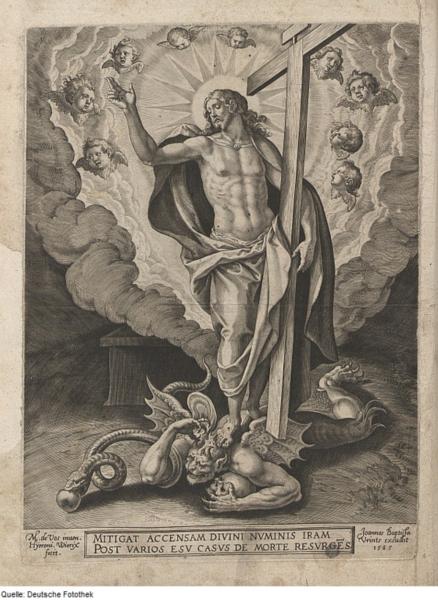
This is why, in ancient Christian iconography, Jesus with a halo is often depicted in a cloud of light, pointing toward the heavens with His right hand.
In His left hand, He holds the Tau cross as He stands upon the Devil, whom He has conquered but who is still alive as he clutches a human skull. In Byzantine resurrection art, the cross could function as a symbol of victory, while skull imagery commonly represented Golgotha, Adam’s grave, and Christ’s victory over death.
Jesus Christ is called the substitute Adam or the “last Adam,” who tasted death and overcame death on our behalf. He went to Hell to experience eternal death on our behalf (Hebrews 2:9; 1 Corinthians 15:45–47).
The Spirit of God raised Him from the grave, triumphant over all the powers of darkness that had sought to hold Him in their grip (Psalm 22:6–8, 14–18).
The resurrection of the righteous rests on their union with God through Christ (John 5:28–29).
The resurrection symbolizes the awakening and enlightenment of consciousness that occurs when someone stops abusing himself and others, or what Christians call “sinning.”
This is when a person like Jesus truly uses his senses and brain to think and process information—to use logic and reason rather than merely react emotionally or regurgitate knowledge.
The Hebrews would have called such a person behemah, or a behemoth, and the Greeks would have called such people automatons. In Scripture, they are referred to as beasts, so-called men whose number is 666, representing the carbon matter in which their minds dwell and by which they are controlled.
For, “If Jesus Christ is not risen, then our preaching is empty and your faith is also empty. . . . You are still in your sins!” (1 Corinthians 15:14, 17).
The ancient Tau would signify a metaphysical seal or sign in a person’s head indicating that he was a servant, or light, of God, as in the case of the “resurrected Jesus.”
In John 19:17, we read, “Carrying His own cross, He went out to the Place of the Skull, which in Hebrew is called Golgotha.” We also read, “At the place where Jesus was crucified, there was a garden, and in the garden a new tomb in which no one had ever been laid” (John 19:41).
Saint Mark (14:32) calls it chorion, “a place” or “estate”; St. John (18:1) speaks of it as kepos, a “garden” or “orchard.” In the East, a field shaded by numerous fruit trees and surrounded by a wall of loose stone or a quickset hedge forms the el bostan, the garden (Catholic Encyclopedia, 1913).
The word chorion, from the Greek chōros, means a uniquely designated land: anything from a garden to an estate, a country or territory, or even a whole realm, such as the realm of the dead.
The Galatians of the Bible descended from the Gauls, and in Paul’s famous complaint about the foolish Galatians who had allowed themselves to become bewitched (Galatians 3:1), he also appears to state that the Gauls had reached Christ-awareness but lost it.
Tau is found in the nuclei of neurons. Tau pathology is the main cause of many neurodegenerative diseases, such as dementia and Alzheimer’s disease, which involve the accumulation of abnormal tau protein in the brain and are referred to collectively as tauopathies.
Nuclear tau has been localized near rDNA and within regions involved in rDNA transcription and pre-rRNA processing, leading researchers to propose roles in chromosomal stability, transcription, and rRNA maturation.
Within these people’s brains are neurofibrillary tangles—intracellular aggregates of tau-protein filaments—and amyloid plaques, which are extracellular aggregates of amyloid-beta peptides. Researchers have suggested that tau may participate in rRNA-coding DNA transcription and rRNA processing. Modern reviews identify amyloid-beta deposits and neurofibrillary tangles as major pathological features of Alzheimer’s disease.
In my article, “Memory Stealers: How Fungi (Molds) Steal a Person’s Memories”, I explain how several studies have shown that the autopsied brains of Alzheimer’s patients were infected with, often, multiple types of fungi or molds. Published studies have reported fungal proteins, DNA, cells, and hyphae in brain samples from Alzheimer’s patients, and one sequencing study found five fungal genera common to all nine patients examined.
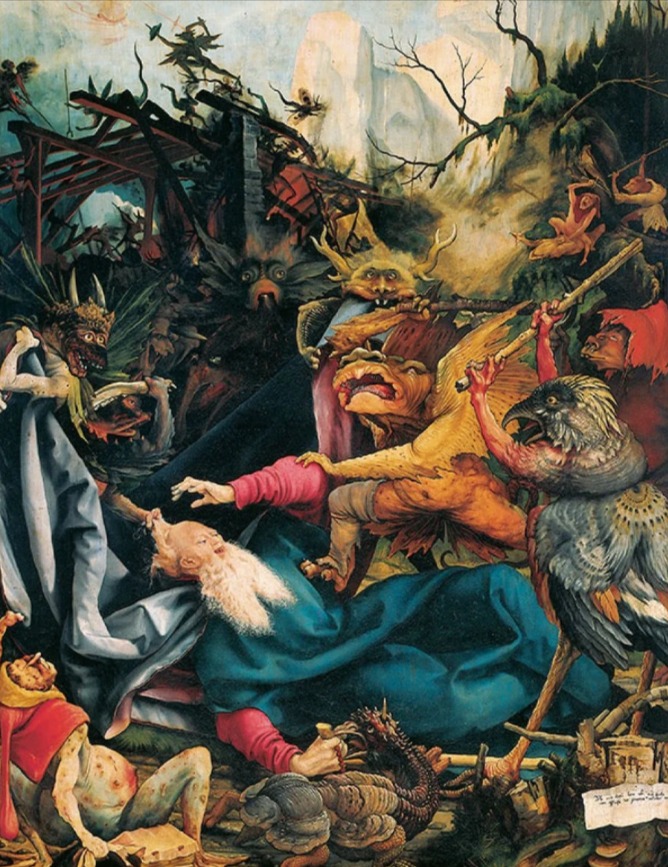
This becomes fascinating because the Tau cross is historically associated with Saint Anthony of Egypt and became known as Saint Anthony’s cross, while the fungal disease ergotism later became known as Saint Anthony’s fire.
Medical historians identify “St. Anthony’s fire” with several conditions across time, including ergotism, erysipelas, and herpes zoster, with gangrenous ergotism forming one major historical use of the name.
It was known as Holy Fire—Ignis Sacer—or St. Anthony’s Fire in the Middle Ages because of the burning sensations that resulted in the body rotting or decaying through gangrene of the limbs. Medical literature describes medieval ergotism as poisoning caused by eating rye contaminated with Claviceps purpurea, producing burning pain, vasoconstriction, and gangrene.
Ergot made people mentally ill by causing them to appear agitated, hallucinate, convulse, and behave as if they were crazy or demon-possessed. Historical accounts distinguish convulsive ergotism from gangrenous ergotism, both caused by alkaloids from ergot-contaminated grain.
If the fungal disease was left untreated, it restricted blood flow to an infected person’s extremities, resulting in gangrene in the later stages and causing fingers, toes, hands, and feet to drop from the body.
This reminds me of what we call diabetes today.
It is a disease that can cause the limbs to rot and decay to the point that they must be amputated.
This condition may be the source of “dancing epidemics.” Dancing epidemics, also known as dancing plagues or tarantism, occurred between the fourteenth and seventeenth centuries CE. Various medieval chronicles described groups of people engaging in this behavior, sometimes for months on end.
Medical historians agree that the precise cause remains uncertain, although ergot poisoning, psychogenic illness, religious ritual, and social distress have all been proposed.
These dances appeared to be involuntary and were possibly the result of ergot poisoning, vengeful spirits, supernatural fears, the bite of a tarantula or scorpion, and the distress of poverty and hardship in everyday life, combined with natural disasters.
In honor of St. Anthony’s life and struggles, the Order of Hospitallers of St. Anthony was established in 1095 CE in the medieval French province of Dauphiné. The order established centers to care for people afflicted with ergotism, and it became known for treating those suffering from the disease.
The walls of the hospital were painted red to mimic the burning sensations experienced by those suffering from the illness.
The monks wore black robes adorned with a blue Tau cross.
Conclusion
The mark of the tau challenges every generation to remain conscious.
It asks whether the individual can recognize corruption without becoming corrupted, confront suffering without surrendering reason, and explore hidden knowledge without abandoning truth.
That is where ancient wisdom and modern science can meet.
Microbes and immune messengers attend to countless biological needs without conscious direction. They can support health, respond to threats, and influence the chemical environment in which thought and emotion occur.
They are not literally angels, according to science. Yet a modern gnostic may treat the comparison as a symbolic bridge: what earlier cultures personified as invisible powers, modern laboratories may describe as cellular systems, microbial ecologies, and biochemical messengers.
The ancient tau signifies a seal in the forehead of God’s servants.
It identifies those whose minds remain alive to corruption and whose conduct reflects that awareness.
The tau on the forehead marks those who still see.
The tau within neurons participates in the architecture that allows human beings to perceive, remember, and respond.
One belongs to revelation and symbol; the other belongs to molecular biology.
The disciplined reading therefore separates three levels:
Scripture presents a theological drama of sin, judgment, salvation, death, and resurrection.
Esoteric interpretation reads that drama as an inner transformation of consciousness.
Neuroscience studies the biological structures and processes that make memory, cognition, and behavior possible.
These levels can converse without collapsing into one another.
Modern tau is a protein essential to neuronal organization.
When properly regulated, it supports microtubule dynamics and axonal transport; when pathologically altered, it can aggregate into structures associated with dementia and the erosion of memory.
Initial symptoms include difficulties in memory and mood changes, but the disease gradually progresses to impair communication and judgment, behavioral changes, and deficits in movement and motor skills, such as difficulties with swallowing, which often becomes a contributing cause of death.
“The wages of sin is death” (Romans 6:23), which is the repayment you receive from being your own “god.”
Moe is the founder of GnosticWarrior.com. He is a father, husband, author, martial arts black belt, and an expert in Gnosticism, the occult, and esotericism.
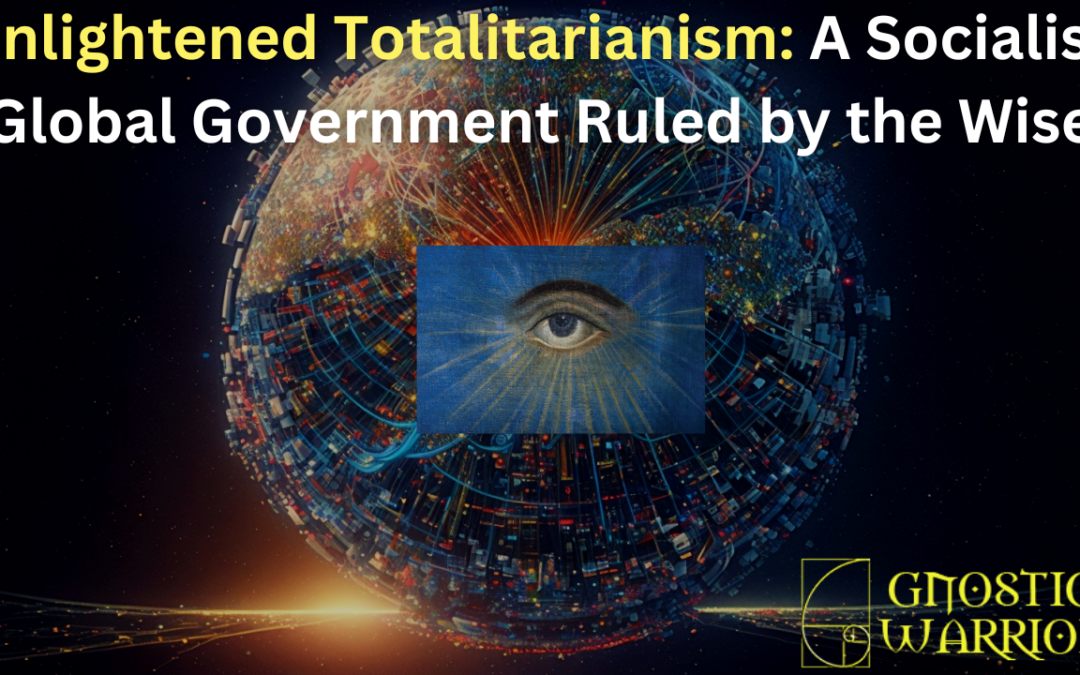
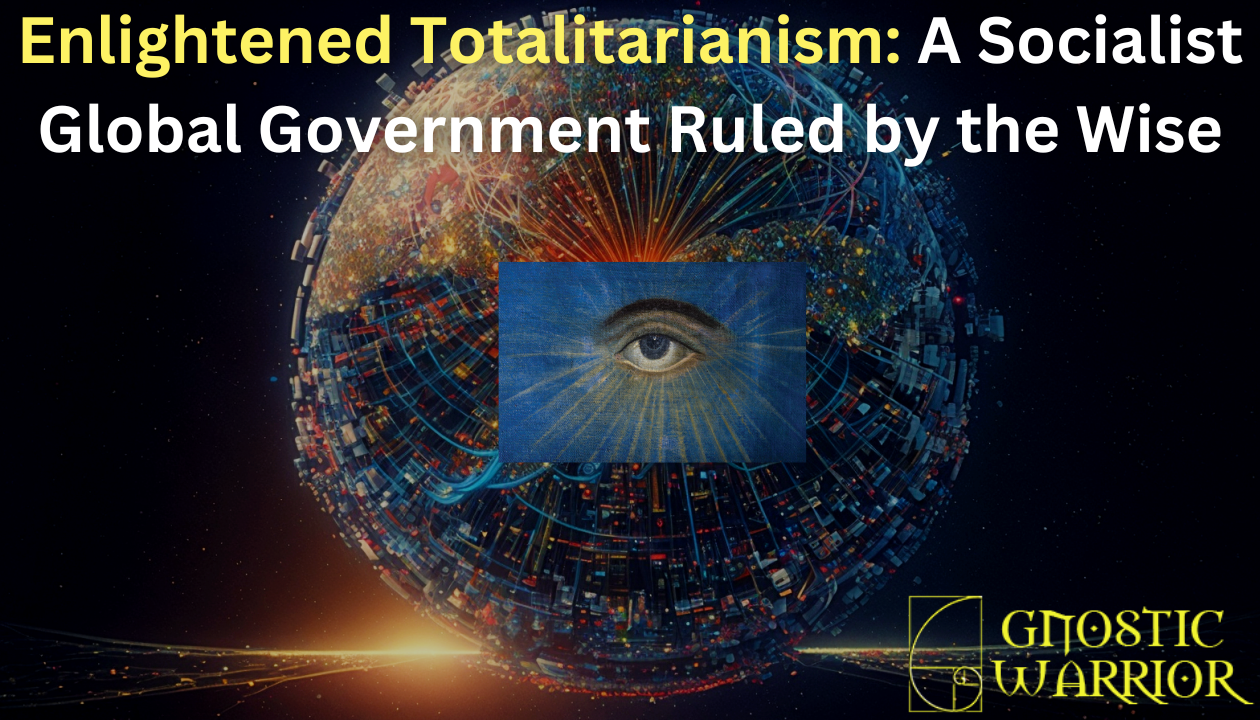
The concept of enlightened totalitarianism refers to a political ideology and form of government where a single ruling authority exercises complete control over all aspects of society as the guiding force for societal progress and development.
It is a complex and contradictory concept that merges elements of enlightenment thinking with the authoritarian nature of totalitarianism into a theoretical framework that attempts to reconcile the pursuit of rationality, progress, and individual freedoms with the need for centralized control and social cohesion.
The concept of enlightened governance emphasizes the pursuit of knowledge, reason, and human progress. Historically associated with the Age of Enlightenment, this approach values the promotion of education, scientific inquiry, and the improvement of society.
This type of governance seeks to apply scientific and technocratic methods to manage society efficiently. Rational planning, state-led industrialization, and societal engineering are seen as tools for progress and improvement.
The term “enlightened totalitarianism” in this context refers to the belief that a ruling elite possesses superior knowledge and wisdom, which enables them to make decisions that are beneficial for the masses, even if these decisions are not necessarily popular or democratic.
It has been used to describe various authoritarian regimes that claim to be working towards a higher purpose or a greater good, even if this requires sacrificing individual liberties or human rights. The ruling authority would make decisions based on what is best for the long-term welfare of society, rather than short-term political or selfish gains.
It champions principles such as rationality, individual rights, and the separation of powers, which are typically absent in totalitarian regimes. Advocates argue that a centralized government, armed with superior knowledge and a clear vision, can efficiently and effectively address societal challenges.
A central tenet of enlightened totalitarianism is the provision of social welfare programs and to ensure that all citizens receive equal access to resources, education, employment, and healthcare to promote social cohesion.
The main goal of enlightenment can be described as the ‘liberation’ of the individual through knowledge (gnosis). In these types of societies, knowledge can lead any person, regardless of race, creed, or religion to the upper ranks of their respective cultures.
Totalitarianism is a form of government that attempts to assert total control over the lives of its citizens. It is characterized by strong central rule that attempts to control and direct many aspects of society and also the laws that govern the people.
However, unlike traditional totalitarianism, which primarily relies on fear, coercion, and violence, enlightened totalitarianism purports to establish a socialist dictatorship that is committed to managing society using reason, and science for the overall welfare of its citizens.
THE HISTORY OF ENLIGHTENED TOTALITARIANISM
The orgins of enlightened totalitarianism is often associated with the political philosopher Plato and his idea of the Republic with the “philosopher-king” who would rule the “Republic” with wisdom and reason.
Plato’s notion of the Republic ruled by the wise would be a similar form of governing to what is called in the modern sense as “communism.” But instead of being ruled by a tyrant and his comrades with an iron fist, it would be governed by the people who had the most widom and experience rather than by political favor or corruption.
In book I, Plato initiates a discussion on justice in Book I by posing a question to Thrasymachus regarding its essence and characteristics, as well as its comparison to injustice (1. 351a). By approaching the concept of justice through its opposite, namely injustice, which he associates with discord, conflicts, and factions, Plato establishes a clear link between justice and unity, which defined his analogy between the individual soul and the city.
Plato states that if injustice has the ability to create division and hostility among individuals within the city (I. 351e), as well as to cause an individual to be mentally conflicted to “have a divided mind and be incapable of action,” indeed, “to be at enmity with all who are just as well as with himself” (I. 352a), justice must be the antithesis of such divisive forces.
Justice, according to Plato, embodies unity, harmony, and complete agreement among the various components, be it within the city or the individual soul.
Plato believed that a happy and virtuous city must have authoritarian political views that highlighted the establishment of a hierarchical society with superior individuals who possess knowledge of the form of justice. According to Plato, these superior individuals were the only ones fit to govern the majority of people, as the masses had limited knowledge and were incapable of self-rule.
Virtues are ranked hierarchically, with wisdom at the top. Courage, moderation, and justice complement wisdom. A person born with the virtue of wisdom excels in offering good advice and makes a wise ruler.
The ruler requires the cooperation, not competition, of others. Those with the virtue of courage must defend the ruler’s opinions. Even when those charged with governing have differing opinions on certain matters.
The wise guardians understand that not every decision, rule, or law will be unanimously agreed upon by every single person who may have different desires based on their upbringing but can have the courage to possess moderation by balancing their desires and pains for the greater good.
Likewise, a rule will also evaluate and balance their desires for what is right and good for the benefit of the republic.
Justice is a result of this hierarchical arrangement. Thus, a well-governed city is properly ordered and considered just.
When these virtues work together, justice emerges.
According to Plato, a good ruler must possess certain natural qualities in addition to being the sole possessor of weapons. These qualities include being spirited, gentle, and philosophic.
Spiritedness is characterized as the source of anger or rage, which makes the soul fearless and invincible. A guardian should be gentle towards friends and fierce towards enemies.
Although these qualities seem contradictory, Plato believes they can coexist in one person, likening it to a noble dog that is gentle with familiars but savage with strangers.
A philosophic guardian has the ability to differentiate between friends and foes based on their disposition. Ignorance arises when this disposition is absent, indicating a misalignment with one’s natural disposition.
Ultimately, a good guardian is inclined towards friends and disinclined or ignorant towards enemies.
Plato defines the right to rule with the power of knowledge as the ability to effectively practice the ruling art in understanding what is beneficial for the city.
It should not be confused with the ability to mobilize large groups or as a tool to manipulate the emotions of the masses. Its purpose should serve the advantage of everyone and not just favor friends while neglecting enemies.
According to Plato, the art of ruling is not limited to specific occasions or personal acquaintances, but instead has the responsibility to ensure political stability for all individuals in society.
If justice, as a product of the art of ruling, were to operate in such a manner, it would merely be a display of morality without a solid foundation. Such a moral demonstration would ultimately fail, as it relies on individual behaviors rather than principles.
Plato discusses the reasons behind the establishment of a city. He highlights the inability of a single individual to meet all their needs effectively (369b). People come together as partners, supporting and assisting each other.
As there are various needs to be met (such as food, shelter, clothing, and other necessities), a diverse range of arts and artists are required. Given the natural differences among individuals, each person should specialize in a specific art (370b).
The natural division of labor brings advantages like increased efficiency, speed, and quality of production, stemming from innate differences among people. Attempting to perform multiple arts can hinder the fulfillment of essential partnership needs, leading to detrimental consequences for everyone (370c).
Hence, a genuine and thriving city can be seen as an economic arrangement among individuals, where they exchange their production and labor for the benefit of the entire community (371e3-5).
Plato’s ideal city, Kallipolis, imposes restrictions on its inhabitants, limiting their freedoms and enforcing a strict hierarchy. Philosophers are chosen as rulers, and each class is assigned specific tasks according to their abilities.
In addition, residents are subjected to censorship of stories and music, as Plato believes certain narratives corrupt their virtues. The limitations in Kallipolis extend beyond actions, encompassing the stories and melodies that residents are allowed to experience.
Plato believes that poetic tales of gods and heroes, while entertaining and beautiful, corrupt listeners by undermining virtues such as wisdom, courage, moderation, and justice. He fears that citizens may emulate the negative behavior portrayed in these stories.
This paternalistic approach reflects elements of totalitarianism.
Plato illustrates his stance on poetic narration and mimicry by presenting an example of a highly skilled individual capable of perfect imitation. Despite recognizing the beauty and brilliance of such a performance, Plato asserts that the person would be rejected in favor of a less captivating poet who conforms to his strict guidelines.
When discussing an individual who prolonged their life through medicine and healthy living, Plato argues that they should have succumbed to their illness and died. He justifies this by claiming that focusing on one’s own survival prevents an active contribution to society, suggesting that death would be a preferable outcome.
Importantly, Plato emphasizes that Kallipolis is not designed to maximize the happiness of individual residents, but rather to enable each person to be “as happy as their nature allows” through the flawless functioning of the system.
This prioritization of the system and wisdom over individual well-being aligns with the principles of enlightened totalitarianism, rather than a liberal democracy like we have now.
Plato’s portrayal of Socrates as his spokesperson serves as a conduit for expressing his views on the rule of wisdom, being the pinnacle of knowledge and virtue, exerting a form of authority that can be likened to tyranny.
This notion implies that the rule of wisdom is not receptive to external influences, such as words or actions, nor does it align itself with established laws or traditional institutions.
In Plato’s eyes, political theories that encroach upon the authority of wisdom are incompatible with its governance.
Despite this stern perspective, Plato also advocated for the introduction of philosophy into the city. He envisions philosophy as a transformative force that can enrich human life and bring about positive changes.
However, the society that Plato envisions as a result of this philosophical infusion is one that is exclusive and closed-off. It operates within its own distinct framework, detached from external influences and established political systems.
Plato, speaking through the voice of Socrates, asserts that the rule of wisdom is tyrannical and intolerant of words, deeds, laws, and traditional institutions that contradict this enlightened political system.
Hence, the term enlightened totalitarianism.
In Book 8 of Plato’s Republic, a profound analysis is presented, outlining Plato’s argument against the concept of an unrestrained majoritarian democracy. The power wielded by the majority, in its unrestrained form, tends to undermine individual freedoms, creating fertile ground for the rise of tyranny.
Classical liberals, who share Plato’s concerns, find resonance in his arguments against the uncontrolled concentration of power. Their beliefs align with the notion that an excessive concentration of power, whether in the hands of the majority or an authoritarian ruler, can stifle individual liberty and impede the progress of a just society.
Plato’s envisioning of an “ideal city” in his thought experiment involves a proposition wherein rulers and soldiers are prohibited from amassing personal wealth. This particular insight resonates deeply with those who oppose crony capitalism, as it raises a fundamental principle: the pursuit of political power should never be driven by the desire for personal enrichment.
Plato’s argument serves as a timeless reminder that seeking political power should be driven by a genuine desire to serve the common good and uphold justice, rather than as a means for exploitation of power for individual gain to amass personal wealth.
In essence, Plato’s critique of majoritarian democracy and his emphasis on the need to separate political power from personal wealth align with the principles upheld by classical philosophers and liberals.
In our current democratic societal structure which is governed by the laws of neoliberalism, capitalism, business success, and money are the primary driving factors that determine a person’s worth and status regardless of their talents, morals, and ethics. It allows immoral and unethical people to cheat and or use their power to rise to the highest political offices for purely selfish goals.
Thus, a capitalistic hierarchy is naturally inverted by its nature, and the modern ruling class would be considered illegitimate based on its corrupted structure. In the past, these people have been labeled the bourgoises and today we use labels like the Western elite.
A new enlightened elite would dismantle the inverted nature of the modern capitalist system using the very machinery and technocracy they created to remove the corrupted bourgeoise from their pedestals permanently and place people, things, and places in their proper order.
Hence, the Masonic motto, “ORDO AB CHAO (Order from Chaos)”.
“Thus, instead of advocating for the dictatorship of the capital, the dictatorship of the proletariat, democratic illusions, or for postmodern grievance groups, we propose a model of government by what Socrates has called the “epaiontes” (i.e., “those with real understanding,” the “genuine experts,” “those who perceive things according to their nature”).”
What Nicolas Laos calls, “critical rational socialism.”
CONCLUSION
The concept of an enlightened totalitarian government is highly controversial, as it is difficult to reconcile the idea of total control with individual liberties and freedoms.
Proponents of enlightened totalitarianism such as myself argue that in complex and rapidly changing societies, a strong and centralized authority is necessary to navigate challenges effectively. The current so-called democratic systems, with their checks and balances, are slow, inefficient, and prone to gridlock.
By removing obstacles such as political opposition, bureaucratic red tape, and lengthy decision-making processes, an enlightened government can expedite reforms and implement necessary changes swiftly.
Totalitarianism often begins with the establishment of an overarching ideology, like Marxism-Leninism, which serves as the guiding principle for the ruling party. The party tightly controls all aspects of society, including the economy, politics, media, education, and culture.
However, this notion raises significant ethical concerns and challenges the core values of individual liberty and human rights. In practice, people are reminded of totalitarian regimes throughout history that have often been marked by oppression, censorship, and a lack of basic human rights.
However, his regime’s repressive nature, censorship, and suppression of dissenting voices reflected the reality of enlightened totalitarianism.
The state exercises strict control over media and communication channels to manipulate information and shape public opinion. Propaganda is used to glorify the ruling party, its leaders, and their ideology, while suppressing dissenting views and alternative ideas.
A totalitarian system concentrates power in the hands of a small group or an individual leader. This central authority makes key decisions and sets policies without significant opposition or checks and balances.
One prominent instance was during the reign of Emperor Napoleon Bonaparte in France. Napoleon aimed to consolidate power and centralize the state, introducing liberal reforms inspired by Enlightenment ideals. He sought to bring stability, promote secularism, and modernize French society through legal and educational reforms.
The specifics of how a modern totalitarian system operates can depend on historical, cultural, and geopolitical factors.
In Germany, we saw the rise of Fascism under the banner of National Socialism with Adolph Hitler or Russia with Communism and the likes of Stalin, and Lenin.
Lenin, for example, led the Bolshevik Party and became the head of the Soviet government taking the idea of class struggle to a global scale. It is important to note that while Marxism-Leninism has been influential in shaping totalitarian systems, the implementation and characteristics of such systems can vary in different contexts.
Other modern examples can be found in other nations such as Russia, China, Cuba, and North Korea.
The Illuminati seeks to use enlightened totalitarism to dismantle the existing world order of Capitalists and establish a global socialist society.
Nicolas Laos provides context to the plan;
“As regards the political history of the Western world during the 19th and the 20th centuries, the most important political force that belongs to Quadrant IV is Marxism–Leninism.
However, the Modern and Perfecting Rite of Symbolic Masonry offers a new ideology that belongs to Quadrant IV; and, as I mentioned earlier, this ideology is an aristocratic and scientifically rigorous conception of socialism that utilizes and endorses several aspects of Marxism–Leninism, but its roots can be traced to Plato’s political thought, practical philosophy, cybernetics, and a universal ethic inspired by Buddha, Confucius, Orpheus, Socrates, and Kant.”
This is my notion of “enlightened totalitarianism,” which, as a matter of fact, has, in an eclectic and rational way, assimilated various elements of the thinking of previous (liberal and non-liberal) political theories.”
SOURCES:
Plato: The Republic
Plato as Enemy of the Open Society – Popper, Karl
Plato: Totalitarian or Democrat? Ed. Thomas L. Thorson. Englewood Cliffs, N.J.: Prentice Hall, 1963
Moe is the founder of GnosticWarrior.com. He is a father, husband, author, martial arts black belt, and an expert in Gnosticism, the occult, and esotericism.
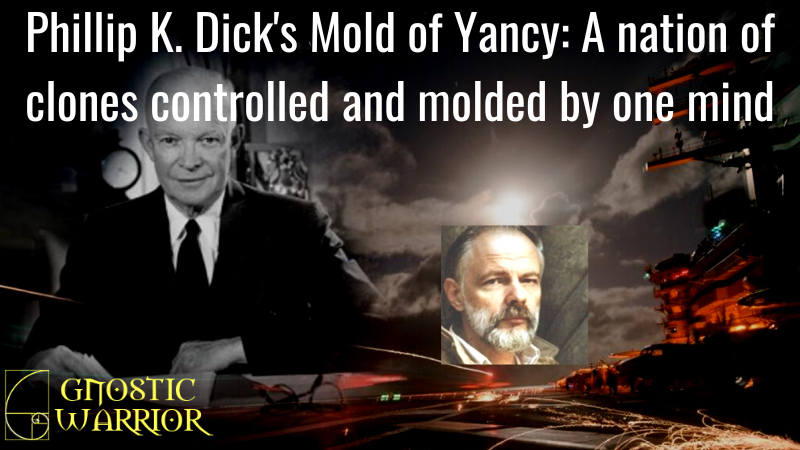
The Mold of Yancy by Phillip K. Dick is a science fiction story written in 1954 about mind control and subliminal messages, a cautionary tale of molding society. It later was adapted into his novel, The Penultimate Truth.
The story follows the life of Colony Callisto, a young woman who is the epitome of a model citizen of what looks like the perfect society that has emerged from the ashes of an off-Earth war on the planet, Jupiter. Her grandfather, John Edward Yancy, is the leader of the colony.
To the outside world, they live in what appears to be an idyllic society, but beneath the plastic façade lies a hidden world of secrets and deception.
It is a really totalitarian society that controls the populaces’ every thought and move through politics and the media.
Yancy, the colony’s leader, is a popular figure who uses his virtual persona to control all aspects of life for the colony’s inhabitants. ‘
Through broadcast shows and advertisements, Yancy dictates what the people of the colony should eat for breakfast, what music they should listen to, and even what political views they should hold.
The citizens seem to mold their thinking and behaviors exactly to whatever Yancy says, even though they seem to think their acting on their own accord.
He has the ability to speak on almost any subject by saying what people want to hear without really saying anything at all is what gives him power.
If Yancy delivered opinions on philosophy, art and culture, the plan would not work.
In this society, people are allowed to express their opinions freely without fear of repression. They enjoy life, reading, listening to music, and watching TV.
And even though they may complain about the government from time to time, they all ultimately subscribe to the same beliefs that Yancy gently suggests.
The result is a de-politicized, nonphilosophical and homogenized society of android like humans that follows Yancy’s every whim.
Analyst Peter Tavener works for the Niplan police, studying and creating reports on the political situation of Callisto.
He tells Police Director Kelleman that while Callisto they achieved a totalitarian society without an actual dictator, any elected Parliament has the potential to become totalitarian if they reach too deeply into people’s lives.
Tavener agrees to go undercover on Callisto, posing as one of their own who are increasingly looking alike.
Phillip K. Dick said that the Yancy character was roughly based on U.S. President Dwight D. Eisenhower.
Banal middle class culture has long been a source of inspiration for writers and filmmakers. In the 1950s, Dick saw this culture as a tool for conformity in the United States.
He used Eisenhower as an example of someone who was vapid and musing, yet still held immense power over the people through his broadcasts.
Of the story PKD had this to say:
“Obviously, Yancy is based on President Eisenhower. During his reign we all were worrying about the man-in-the-grey-flannel-suit problem; we feared that the entire country was turning into one person and a whole lot of clones. (Although in those days the word “clone” was unknown to us.)
I liked this story enough to use it as the basis for my novel THE PENULTIMATE TRUTH; in particular the part where everything the government tells you is a lie. I still like that part; I mean, I still believe it’s so.
Watergate, of course, bore the basic idea of this story out.”
Today, we can clearly see the hundreth-Yancy affect with political clones directing our thinking, as myself and others in the so-called middle class complain against many of these government policies, we still have to follow them and consume what is on the store shelves in order to survive.
Dick is correct in seeing the entry point of totalitarian conformity in consumerism.
While people may disagree on politics, they tend to find common ground when it comes to popular culture, which continues to move the population towards certain values.
Arguing against anti-intellectualism, it is often said that without intellectuals to question the status quo, fascism and other forms of totalitarianism can more easily take hold.
This is because intelligence and critical thinking are necessary to challenge authority and keep society free.
However, this argument presupposes that all opinions are equally valid, which is clearly not the case. Some opinions are simply better than others, and this is especially true when it comes to art, culture, and philosophy.
To be truly neutral on these matters would be impossible for anyone with a brain; one must either have an opinion or be dead inside or possibly a clone or android in Dick’s novels.
Thought and behavior control operating under the guise of social virtue is particularly invidious, easily capturing those of us suffering from the widespread malady of intellectual laziness.
The effort to mold a national way of thought can result only in a mouldering state of mind, a decay of initiative inviting totalitarianism to creep into every aspect of our lives.
I will leave you with Dwight D. Eiesenhower’s farewell speech to the colony, warning them about the danger of becoming captive to the military industrial complex and a technological elite.
The most famous quote from Eiesenhower came about halfway through the speech: “In the councils of government, we must guard against the acquisition of unwarranted influence, whether sought or unsought, by the military-industrial complex.”
Moe is the founder of GnosticWarrior.com. He is a father, husband, author, martial arts black belt, and an expert in Gnosticism, the occult, and esotericism.
A new CDC press release is warning people of a possible new Pan-demic via a fungus/mold that seems to mimic the symptoms of Leprosy found in the Scripture. A mold that is transmissible from person to person and maybe the new global threat.
“This is really the first time we’ve started seeing clustering of resistance” in which patients seemed to be getting the infections from other patients, said the CDC’s Dr. Meghan Lyman, an author of the report.
A resistance that has been dubbed “pan-resistant” because like in Ancient Greece and Greco-Egypt, the God Pan had signified “all things.” Pan was often considered as the great principle of vegetable and animal life and his city was known as Panopolis.
It is resistant of all things but the secret old meaning of the name Pan is an old word denoting to close or join together.
“Surveillance, public health reporting, and infection control measures are critical to containing further spread,” the report said, while noting that “data are lacking” about how to treat cases that are resistant to all current drugs.
According to the CDC, “Candida auris is an emerging, often multidrug-resistant yeast that is highly transmissible, resulting in health care–associated outbreaks, especially in long-term care facilities. Skin colonization with C. auris allows spread and leads to invasive infections, including bloodstream infections, in 5%–10% of colonized patients (1).
Three major classes of antifungal medications exist for treating invasive infections: azoles (e.g., fluconazole), polyenes (e.g., amphotericin B), and echinocandins. Approximately 85% of C. auris isolates in the United States are resistant to azoles, 33% to amphotericin B, and 1% to echinocandins (2), based on tentative susceptibility breakpoints.*
Echinocandins are thus critical for treatment of C. auris infections and are recommended as first-line therapy for most invasive Candida infections (3). Echinocandin resistance is a concerning clinical and public health threat, particularly when coupled with resistance to azole and amphotericin B (pan-resistance).
Pan-resistant C. auris isolates have been reported previously, although rarely, from the United States (4) and other countries (5). Three pan-resistant C. auris cases reported in New York developed resistance following echinocandin treatment and lacked epidemiologic links or common health care (4), suggesting that resistance resulted from antifungal pressure rather than via person-to-person transmission. Since January 2021, however, the Antibiotic Resistance Laboratory Network has detected independent clusters of pan-resistant or echinocandin-resistant cases in Texas and the District of Columbia (DC). Each cluster involved common health care encounters and no known previous echinocandin exposure, suggesting transmission of pan- and echinocandin-resistant strains for the first time in the United States.
Among 101 clinical and screening cases of C. auris† in DC during January–April 2021, three had an isolate that was pan-resistant. All resistant isolates were identified through skin colonization screening at one long-term care facility for severely ill patients, including those requiring mechanical ventilation.
Among 22 clinical and screening cases of C. auris in Texas during the same period, two were pan-resistant and five were resistant to both echinocandins and fluconazole. These seven cases were identified in patients who were cared for at two facilities that share patients in the same city; two patients were at a long-term acute care hospital, three at a short-term acute care hospital, and two at both facilities. Among these cases, four were identified through colonization screening and three through clinical isolates (two blood isolates and one wound isolate).
No known epidemiologic links were identified between the Texas and DC clusters. No patients with pan- or echinocandin-resistant isolates in either cluster had received echinocandins before C. auris specimen collection. Thirty-day mortality in both outbreaks combined was 30%, but the relative contribution of C. auris was unclear.
These two simultaneous, independent clusters of pan- or echinocandin-resistant C. auris cases in patients with overlapping inpatient health care exposures and without previous echinocandin use provide the first evidence suggesting that pan- or echinocandin-resistant C. auris strains might have been transmitted in U.S. health care settings. Surveillance, public health reporting, and infection control measures are critical to containing further spread. Clinicians should consider early antifungal susceptibility testing in patients with C. auris infection, especially in those with treatment failure.
Data are lacking about the most appropriate therapy for pan-resistant infections. Combination and investigational antifungal treatments can be considered, but evidence in clinical settings is limited (6). More information is needed to evaluate patient outcomes and identify proper treatment for C. auris cases with pan-resistance or echinocandin resistance.”
Moe is the founder of GnosticWarrior.com. He is a father, husband, author, martial arts black belt, and an expert in Gnosticism, the occult, and esotericism.
Throughout history, philosophers of all races, countries, and religions had spoken about the human race’s psychological and spiritual two main aspects.
They generally classified people into two simple categories: those who are awake and those who sleep.
In a recent interview I conducted with Russian Philosopher and author Aleksandr Dugin, he elaborated in succinct detail on those who sleep. People who are infected by the “Virus of Capitalism” are the actual slaves in our modern society (Modernity).
Dugin did not hold back in his most vivid and what I believe are the most classic descriptions that I have ever heard.
He had called these people a new type of creature, a new bourgeoisie, a hologram of sorts who has no life and is not connected to the earth because the “Virus of Capitalism possesses him.” A disease of the soul morphing people into an individualistic type of human creature – the entrepreneur who looks like a reptile but has no connection to the earth.
“Jeff Bezos, Hillary Clinton, and George Soros,” Dugin says, “these people are the real slaves.”
In regards to the reference to people being reptiles/snakes, Dugin states, “It is a kind of serpent capitalistic serpent, and this serpent is precisely what is in the center of the system.”
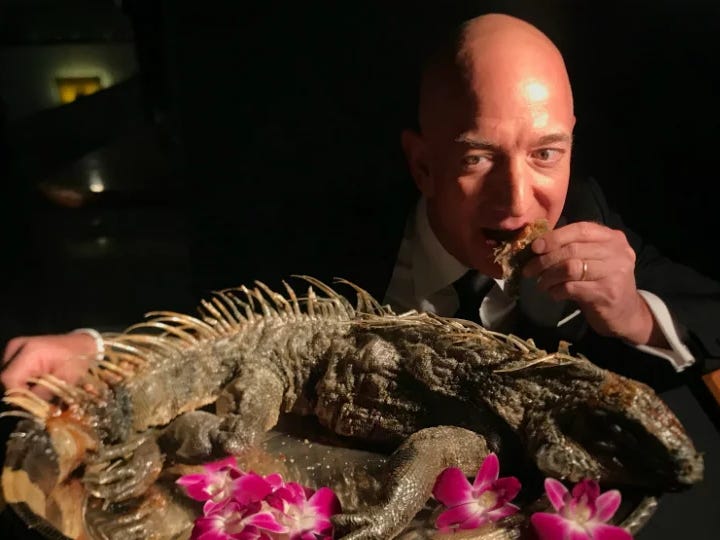
And quite prophetically, here is the world’s richest “serpent of capitalism,” Mr. Bezos shamelessly feasting on a giant land reptile known as an iguana.
Interestingly, recent Revelations about Jeff Bezos’s extramarital affair with former newscaster Lauren Sanchez led to a divorce from his wife MacKenzie and a world record settlement. He’d been married for 25 years.
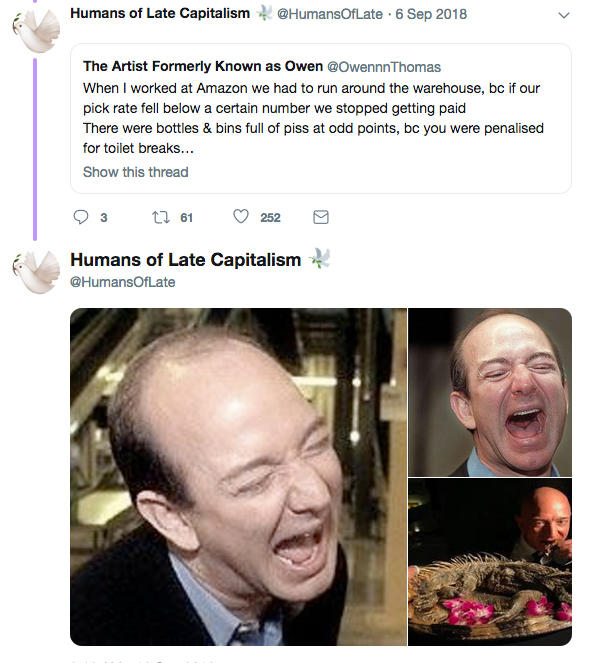
All the while, Amazon’s ill-treatment of its workers in the name of capitalist profits is starting to awaken a part of humanity. People robots who do not like getting penalized by their employer for simply following the God-given biological rules of being human and going to the bathroom as needed.
It seems Bezos would like Amazonian slaves to wear diapers so they can fill boxes and orders to prime his scaly pockets that seem to know no bound reaching down to the bowels of the earth.
When you look at what made Bezos so rich and Amazon the largest online shopping website, it is the simple formula of squeezing as much time, work, and speed out of each human robot who works there. Do things – program, ship, deliver, etc. in a 1/3 of the time ordinary competent people would expect it to be done.
In a 2019 Instagram post, Bezos reminisced about this fact in the first job ad he posted for Amazon on August 23, 1994.
When you treat humans like machines that you can whip to do a job faster to make more money, you create a global army of unhappy employees robots who will revolt sooner or later and gueSS what? That is exactly what is happening in Amazon warehouses across the world.
“A group of workers with their fists raised in solidarity hold a scrawled sign: “We are humans, not robots!”
They and others at an Amazon warehouse in Minnesota protested in March and on July’s Amazon Prime Days.
They were speaking against the day-to-day dehumanizing reality of their workplace,” Time Magazine reported.
It appears that God’s natural rules of sin ie cause and effect continue to plague Bezos. For example, today, July 5, 2021, he officially stepped down as CEO of Amazon showing that people are truly starting to awaken to his hologram which at its center is the “capitalistic serpent.”
Dugin’s analogy to the hive mind force being the “capitalist serpent” reminded me of the Biblical teachings of the tradition of the Fall when Ii was under the form of a serpent that the devil seduced Eve. Hence in the Scripture, Satan is called “the old serpent” (Revelation 12:9) and all through the East became the emblem of the spirit of evil.
When people are infected with the virus of capitalism, according to Dugin;
“This ignoble creature, a perverted figure, insists on imposing himself as forming its own unique reality. So everyone should imitate and assimilate. Be transformed into a bourgeois.
Aristocracy should behave as bourgeois. Priests should become bourgeois. Peasants should become bourgeois.
Everybody – Everybody,” he emphatically states!!!
However, Dugin claims that there is a great global civil war brewing beneath the surface of this takeover known as the Great Reset, and it will be in the form of what he has called “The Great Awakening.”
Dugin said;
“Humanity is approaching a global civil war. Not the civil war of one nation but a global civil war.
On one hand, the partisans, and the other the global elites who represent the Great Reset like George Soros. They don’t represent Americans.
They could sacrifice every American for interest in the sake of their own eschatological agenda. The end of the history of reality. So I think, in that sense, the great awakening should be universal,” he says.
“Americans cannot be awakened without the other and without being asleep. So we need to wake everybody!!
Africans, Latin Americans, Asians, Muslims, Europeans, Americans, and the Russians in order to oppose this suicidal project.
I think the great reset is pure suicide,” Dugin said.
Shortly after my interview with Dugin, my daughter Kiana had knocked on my door quite frantically. I opened the door, and she told me she had just seen a snake in our backyard by the chickens. She seemed a bit nervous and wasn’t sure the kind of snake, so I approached the area where she had last seen the serpent.
She told me that it probably went under a brown tarp that we had laying on the ground. I grabbed a yard tool with a long handle and proceeded cautiously to lift the tarp.
Sure enough, a large orange-colored rat snake revealed itself as it slithered around back undercover.
I thought to myself, I haven’t seen a snake here in the three years we have lived here but thank God it wasn’t the infamous California Rattle Snake or another venomous and deadly serpent.
So with confidence, again, I lifted the tarp. This time, the scared rat snake slithered quickly out of our yard into the brush nearby.
Later that night, I reflected on what had happened with the snake in our backyard and my incredible interview with Dugin with my wife. As I told her the story, I was reminded of Dugin’s serpent of capitalism at the core of our system who holds sway over the minds and souls of the real slaves who like serpents are its victims.
I then enthusiastically stated to my wife, “It was as if the nonvenomous rat snake sighting was a prophetic sign of Dugin’s “Great Awakening,” and these slaves of the snakes aren’t so dangerous after all!!”
“It will be the civil war of the “Serpents of Wisdom vs. Serpents of Capitalism,” I proclaimed!
That was when I was immediately reminded and subsequently relayed to her the dark and deadly history surrounding the Clintons.
You know, the stories of the people Deplorables who seem to cross Hillary or Bill and suddenly vanish or suicide themselves in some incredibly impossible ways?
Author and activist Linda Thompson, detailed a list of 34 people connected to the Clintons who had died called “The Clinton Body Count: Coincidence or the Kiss of Death?” that was later expanded by other researchers and authors to 110 deaths.
“Maybe this coming Great Awakening that will spark a global Civil War that Dugin speaks of will be a lot more bloody and deadly than that harmless rat snake?
Thinking of the American bourgeoisie elite, “Of course!” I then thought.
This war will be more like a fight between California Rattler vs. an Egyptian Cobra.
Both extremely venomous and deadly.
However, one has been built upon thousands of years of ideas, traditions, and wisdom while the other is half hazardly standing on the shoulders of the self-elected bourgeoisie who follow the serpent ie Satan.
An ignorant slave-like person who seeks to usurp God’s laws and these very same said Ancient Traditions who according to Dugin, they will pay a big price and I predict, their time is nigh.
Moe is the founder of GnosticWarrior.com. He is a father, husband, author, martial arts black belt, and an expert in Gnosticism, the occult, and esotericism.