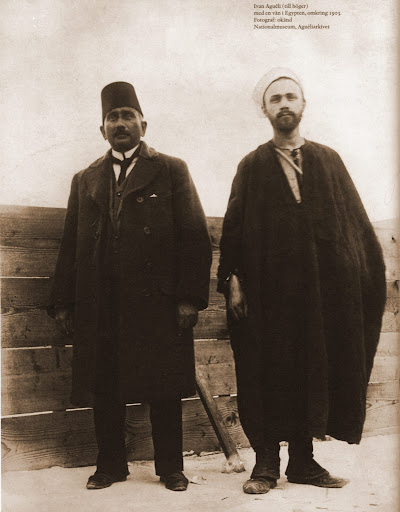
Recently, I had the honor of interviewing author and Professor, Dr. Mark Sedgwick about the History of Traditionalism and the various people involved in the Traditionalist movement, which I will be posting this week. During the interview, Dr. Sedgwick introduced me to a key player named Ivan Aguéli. He recently had written a brief post on his blog, Traditionalists, about the connection between Ivan Aguéli and René Guénon’s both calling for the rule of the ulama.
Here is a quick introduction to Aguéli. He was a Swedish mystic and a Sufi who traveled the world meeting with other great thinkers of his time who would influence his ideologies like when he went to Paris becoming the student of the Symbolist painter Émile Bernard and later in London where he met the Russian anarchist scholar and aristocrat Prince Kropotkin, who introduced Aguéli to anarcho-communism.
Dr. Sedgwick had written, “In 1904, Aguéli was calling for democracy under the control of the ulama, i.e. much same system that was meant to be introduced in Iran after the Islamic Revolution (the reality, perhaps predictably, did not quite correspond to the theory). In 1904, Aguéli was still something of a revolutionary, ending his note with “Fight capital through the agrarians, as the King of Italy does. Fight snobbery.” The reference to the King of Italy is explained by Aguéli’s engagement in Il Convito, which was pro-Italian as well as pro-Islamic.”
It is through this transmission of ideas and the need to implement them on a global scale that Aguéli founded Al Akbariyya as a secret Sufi society in Paris in 1911 recruiting one of their first members, René Guénon.
Sedgwick concludes with a reference to René Guénon also believing that the ulma be in charge. He wrote, “These positions fit with the positions that René Guénon later took. Having the ulama in charge, especially, fits with the idea of the primacy of spiritual authority over temporal power.”
This idea of the ulama or ulma interested me because I have also researched and written on their history. In Arabic, Alima (Arabic اليمه) or Ulama means “knowledgeable, wise, and or scholar. In Islam, all knowledge is divine and God-given. Today in Islam, the Ulama are placed in charge of all religious, legal, and historical governmental affairs for the kings of the East in their respective countries. The Islamic State considers the Ulama are not restricted to be knowledgeable of the state’s religious affairs, but also other experts in their respective trades whether it be in fields such as politics, science, commerce, education, and more.
Variations of the name ulama can be found in history all throughout the world such as in ancient Judaism with the “Ulam or Olam”, and in Ancient Ireland there were the “Ollamh” who ruled the country for hundreds of years. An ollam or ollamh in both early Irish literature and event today is a member of the highest rank of filí and came to mean a doctor, professor, and or scholar of any kind of learning. The Ollamhs led by the Ollamh Érenn or Chief Ollam of Ireland became the most powerful institution and person in the land whose social status was equal to the High King of Ireland. The head Ollamh of a province such as Ulster would have been the head of all the ollams in that province and would have been an equal status to the king as (Ollamh Érenn) .
In Old England, there was the “Barron of Verulam (Ver-Ulam).” English philosopher, statesman, and Rosicrucian Sir Francis Bacon took the titles of “Baron of Verulam (Ver-Ulam) and Viscount of St. Albans.” His scientific ideas remained influential through the scientific revolution.
Perhaps, a new global Ulama would be the catalyst for a New Revolution against the Modern battle for the noosphere between Neoliberalism and Traditionalism. As Aguéli and Guénon believe, I also contend that a National Ulama via a global contingent working with our nation’s political and religious leaders is the only way to solve the problems Liberalism has spawned.
Moe is the founder of GnosticWarrior.com. He is a father, husband, author, martial arts black belt, and an expert in Gnosticism, the occult, and esotericism.
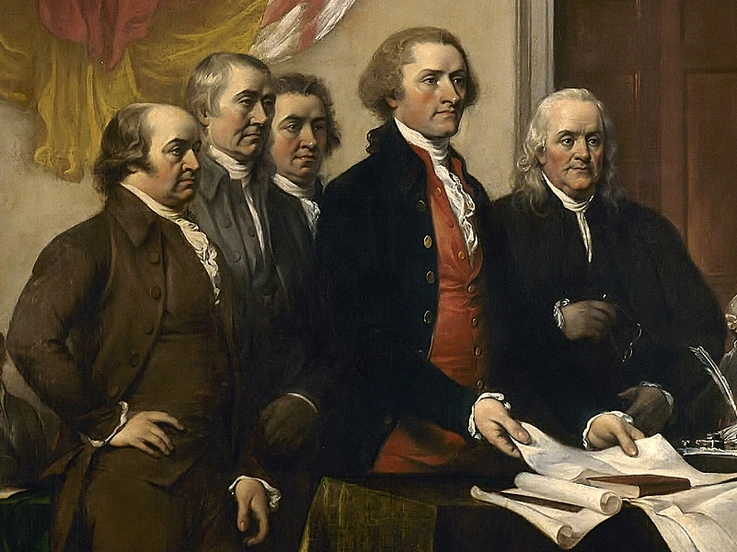
In a letter to Thomas Jefferson, John Adams wrote on August 24, 1815, “As to the history of the Revolution, my Ideas may be peculiar, perhaps Singular. What do We mean by the Revolution? The War? That was no part of the Revolution. It was only an Effect and Consequence of it. The Revolution was in the Minds of the People, and this was effected, from 1760 to 1775, in the course of fifteen years before a drop of blood was drawn at Lexington.” (1)
In the beginning, the French, Irish, Spanish, and Native American populations of North America were separated by their respective homelands’ racial and national heritages. To unite them, the Founders had devised a secret plan – a human experiment to change the way they think and act. As Thomas Jefferson once described the Declaration of Independence as an “expression of the American mind” (2) and Thomas Paine stated years later in The Rights of Man, “the independence of America, considered merely as a separation from England, would have been a matter of but little importance.
Independence acquired broad historical significance because it was ‘accompanied by a revolution in the principles and practice of governments.” (3)
The Founders would accomplish this incredible feat by implanting new ideas of personal freedom and liberty into their consciousness. They worked diligently to create a new political system that allowed was an experiment in human freedom, letting people, for the first time, think and act freely from the European aristocratic rulership and the main proclamation written in the Declaration of Independence that “all men are created equal.”
Author and philosopher Manly P. Hall had proposed in his book, “The Secret Destiny of America,” that there was a Great Plan put forth one thousand years before our Nation’s founding: humanistic and mystical organizations wished for the continent to be the location for an experiment in self-government and religious freedom.” This idea of an “experiment of self-government and religious freedom” was an entirely new concept to the world. (4)
Freed from the threat of hostile forces, American minds were suddenly emboldened to resist new British colonial policies because they were stimulated by a new ethos of individuality and self-government which caused them to demand more independence and expand individual rights. As Adams stated, the American Revolution was a revolution of the mind creating both intellectual and political turmoil following Great Britain’s victory in the French and Indian War. The right to political independence, separation of church and state, nationalism, and individual freedoms were the issues that boiled up in the revolutionary cauldron of Britain’s American colonies causing the people to openly and sometimes violently opposed Great Britain’s new assertions of control over their minds.
One of our country’s founders, the American anti-authoritarian political philosopher named John Locke (1632–1704) would be instrumental in instituting many of these new political philosophies. Locke’s teachings of individual freedom, unlimited opportunity to compete for material well-being, and an unprecedented limitation on the arbitrary powers of government to interfere with individual initiative were some of the most powerful ideologies ever invented.
It is these new individualistic ideologies that were an experiment in self-government and religion that I contend creates a “national state of mind”, which has brought our country to the present day. A human experiment in freedom where these revolutionary ideas intended to change the very structure of government, American Culture, and also the entire social global order of society. But it must also be emphasized that our nation’s founders had asserted that the freedom of individuals to pursue their own ends would be tempered by a “public spirit” and concern for the common good that would shape our social and government institutions. As with any experiment, it may succeed or it may fail and plans can also change as I believe has happened with our Traditional Ethos in the U.S.A. and is the main focus of this book.
The current American value system, or “American Creed” is a perverted form of ultra individuality, which we call “liberal individualism is not grounded on our traditional philosophies, values, and the true American ethos and when taken to the extreme can become irrational, evil, or Satanic, leading to tyranny and Totalitarianism. As studies have shown, these ideas of liberty, self-government, equality, and freedom from religion that has led the country to the contemporary U.S. culture which is a highly individualistic ethos. (5)
It is this fixation on individuality and liberalism that I contend is the opposite of collectivism or unity which leads to neo-liberalism in the American Culture. The word culture means the customs, arts, social institutions, and achievements of a particular nation or people. Individualism and collectivism refer to cultural values that influence how people construe themselves and their relation to the world.
Researchers have found that “Individualists perceive themselves as stable entities, autonomous from other people and their environment, while collectivists view themselves as dynamic entities, continually defined by their social context and relationships.
A 2006 study reported that this independent mentality makes “North Americans more likely to experience socially disengaging emotions such as pride in the self, feelings of self-confidence, anger, and frustration but less likely to experience engaging emotions such as friendly feelings, respect, guilt, and shame. (Kitayama, Mesquita, & Karasawa, 2006) This would align with de Tocqueville’s argument that equality eventually generates an egoism such that Americans ‘‘look after their own needs. [They] owe no man anything and hardly expect anything from anybody. (1969:506–508) (6) Also, recent research by some of the nation’s leading historians has cast serious doubt on the assumption that individualist values were prevalent among the early Americans in the late 1700s and early 1800s. (7)
As sociologist Robert Bellah and his coauthors written in “The Good Society” to challenge Americans to take a good look at themselves;
“The Lockean ideal of the autonomous individual was, in the eighteenth century, embedded in a complex moral ecology that included family and church on the one hand and on the other a vigorous public sphere in which economic initiative, it was hoped, grew together with public spirit…The eighteenth-century idea of a public was…a discursive community capable of thinking about the public good.” (8)
The authors of the Good Society point out What prevents Americans from “taking charge” is, according to the authors, our long and abiding allegiance to “individualism” — the belief that “the good society” is one in which individuals are left free to pursue their private satisfactions independently of others, a pattern of thinking that emphasizes individual achievement and self-fulfillment. “When citizens are engaged in thinking about the whole, they find their conceptions of their interests broadened, and their commitment to the search for a common good deepens.”
The result of a citizen population working for the common good, the authors contend is “an informed and morally sensitive public active in discussing and debating issues ranging from international financing to day care, within a framework informed by a shared vision of a good society; and a citizenry capable of instituting reforms in our economic and political institutions so that they work for the common benefit of all peoples.”
However, today, in America, we have a tradition of accepting almost all individual pursuits of liberty to be valid or acceptable as long as they do not break the law without a thought of the common or public good. As a result, many activities that were once outlawed for thousands of years have been changed over the last several decades by American Liberal Judges and secret Satanists allowing even more freedom for the American citizens to pursue just about whatever the hell they want. While this may be good for allowing freedom for ideas to increase industry and commerce, I contend that it also provides for the privilege of immoral and even evil ideas to enter our culture.
It is through this New Hybrid American Ideology of unimpeded freedom and ultra individuality without the thinking for the public good or the collective. A Beast-type system that allows laws that once protected the public good to be changed to the point today where bad ideas are protected by law.
A totally new landscape of freedom from what our original Founders had envisioned where pornography, black magicians (sorcerers), devil worshippers, Satanists, murderers, serial killers, and people who claim in their own words to kill in the name of the Great Serpent – Satan are welcomed into our homes with open arms. They often become Cult heroes like Carles Manson and Richard Ramirez to a whole generation of wayward youth.
It is this fixation on complete freedom of the individual and liberalism without thinking about the public good that I contend has created the “Satanic State of Mind.”
2. From Thomas Jefferson to Henry Lee, 8 May 1825 – US National Archives
3. American Scripture: Making the Declaration of Independence By Pauline Maier · 2012
4. The Secret Destiny of America By Manly P. Hall
5. Ethos of independence across regions in the United States: the production-adoption model of cultural change
6. Cultural regulation of emotion: individual, relational, and structural sources
7. The Origins of American Individualism: Reconsidering the Historical Evidence 1999 – Edward Grabb, Douglas Baer and James Curtis
8. The Good Society, by Robert N. Bellah, Richard Madsen, William Sullivan, Ann Swidler, and Steven M. Tipton (New York: Alfred A. Knopf, Inc., 1991 Published in Issues in Ethics – V. 5, N. 1 Spring 1992)
Moe is the founder of GnosticWarrior.com. He is a father, husband, author, martial arts black belt, and an expert in Gnosticism, the occult, and esotericism.
In the middle of the California desert, two men and a woman had performed a black magic ritual in their hopes of birthing the antichrist and taking over the world. A ritual that would require they use various Satanic sacraments, drugs, bodily fluids, and have sex – both heterosexual and homosexual to form a permanent unholy magnetic chain between the two men, woman, and God forbid, the child.
It was 1945, and these men were not just some run-of-the-mill Satanic freaks.
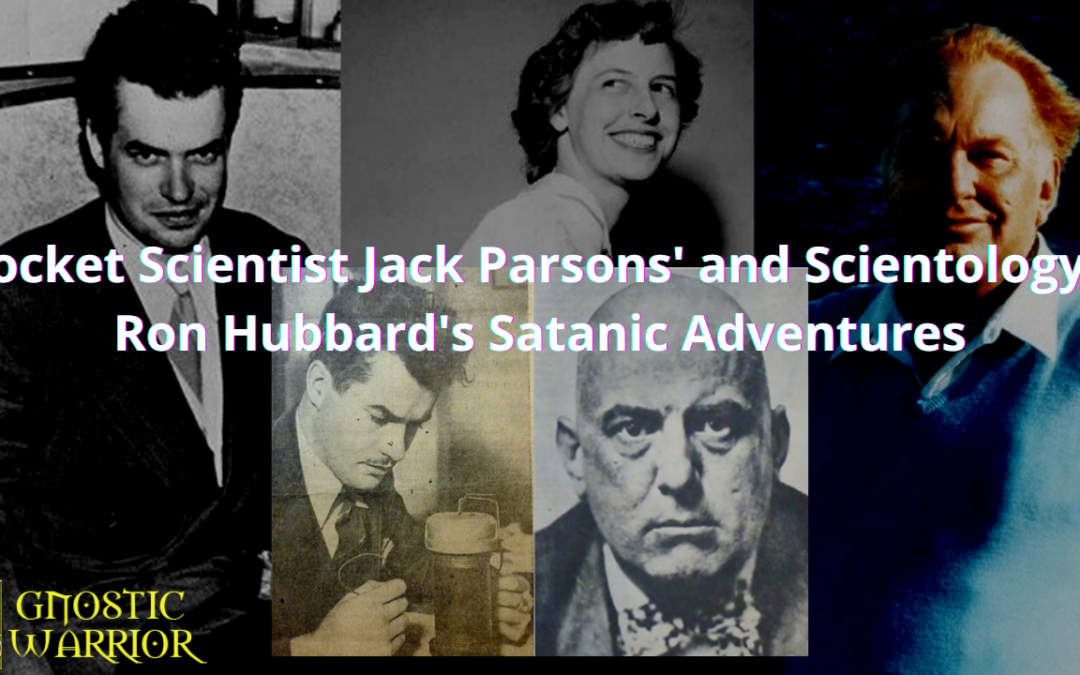
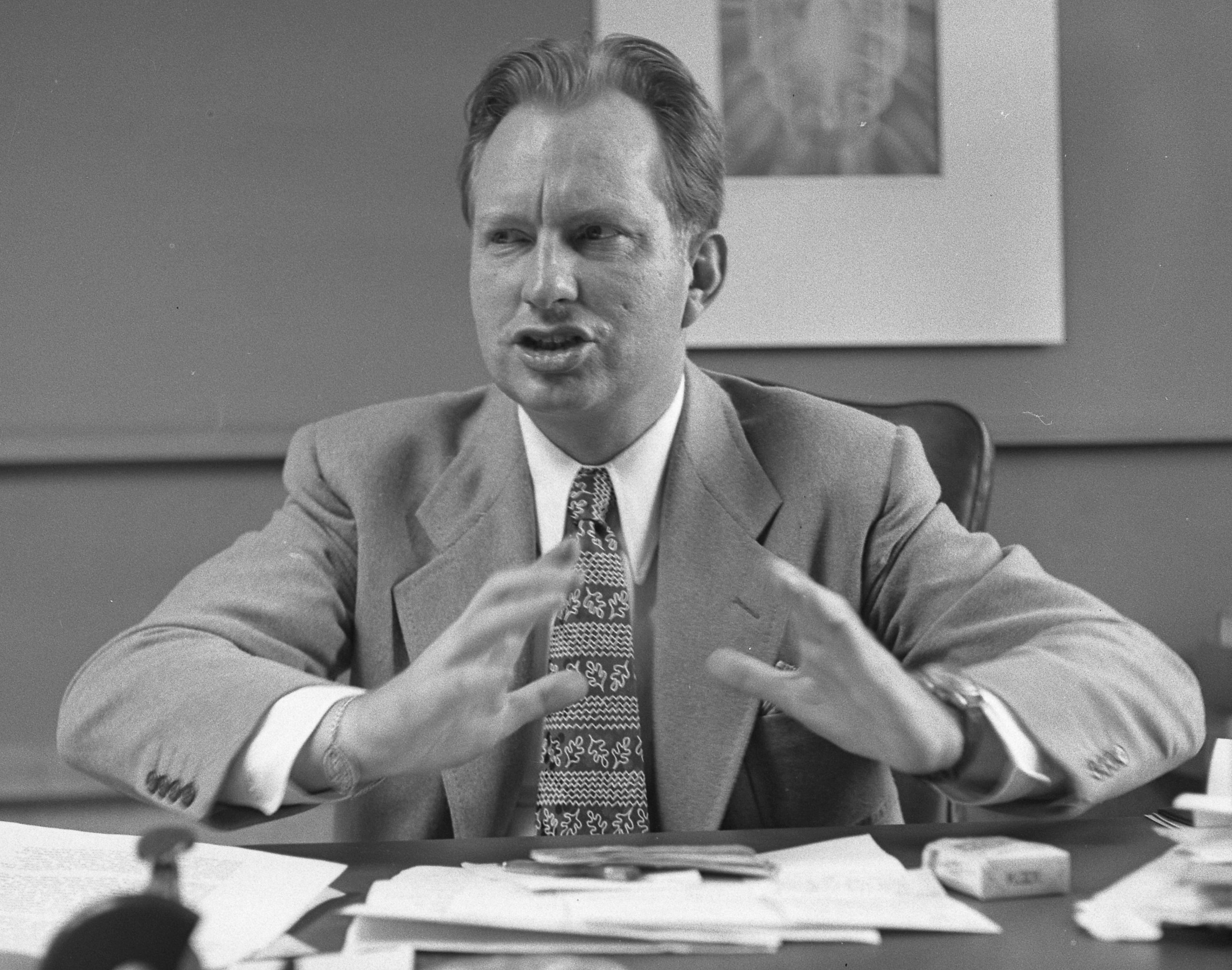
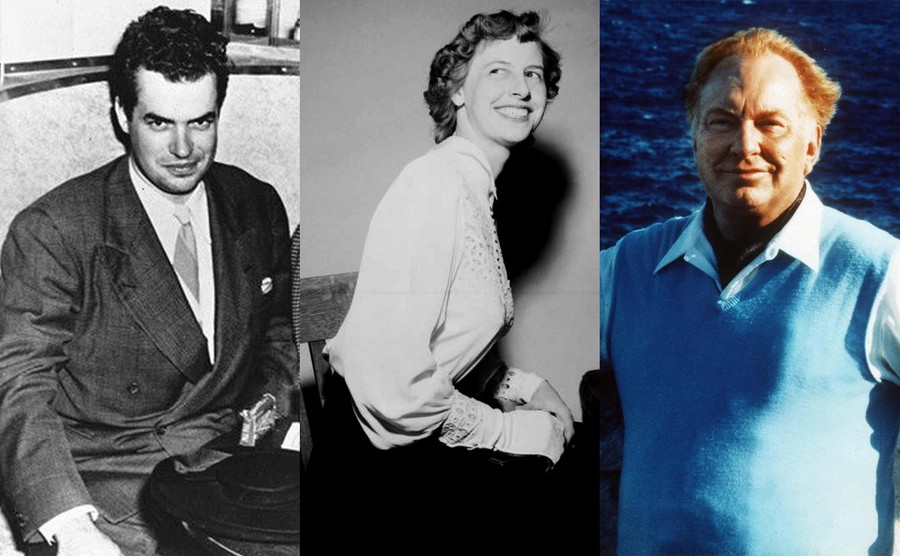
One man was a former Naval intelligence officer who became the founder of the Church of Scientology, L. Ron Hubbard.
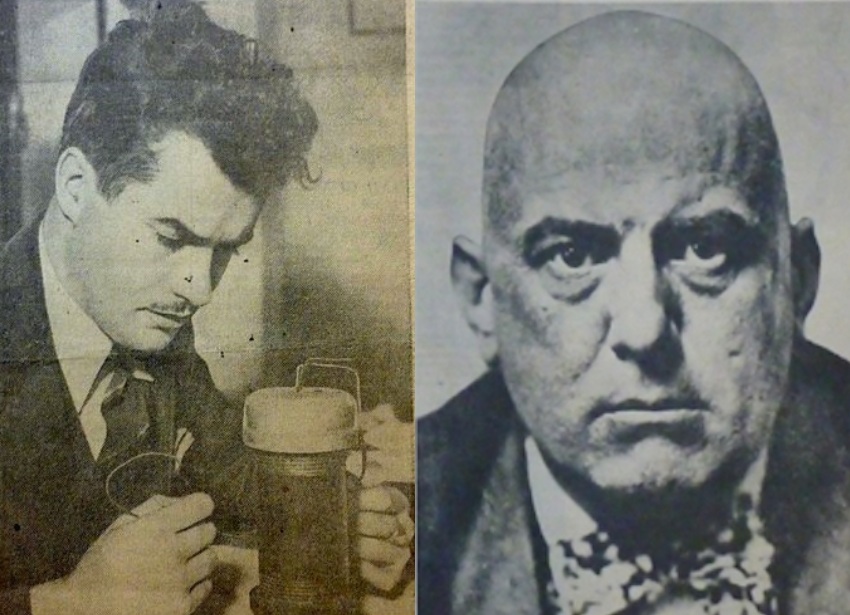
The other man was arguably one of the most brilliant American rocket scientists ever and alleged NASA founder, Jack Parsons, who was also a disciple of “the wickedest man alive” and self-appointed, “Great Beast” Aleister Crowley -the global leader of an infamous magical secret society – Ordo Templi Orientis’ (O.T.O.).
The O.T.O. is an occult initiatory organization founded at the beginning of the 20th century by the Germans Carl Kellner, Heinrich Klein, Franz Hartmann, and Theodor Reuss. Crowley had taken over the OTO furthering their teachings with “The Book of the Law,” which he claimed had been dictated to him by a demon called Aiwass upon which he created his own religion, rituals, and philosophy called “Thelema.”
The ceremonial magic they were performing was part of Crowley’s “The Babalon Working.” It was a series of sexual rituals designed to conceive an actual human fetus and a spiritual child infused with the evil spirit of Babalon. But first, the two men had to find a willing and suitable woman who would agree to the unholy sex acts and birth a possible demon child. That woman was Marjorie Cameron. After seeing her, Parsons wrote to Crowley, “I seem to have my elemental… she has red hair and slant green eyes as specified.”
Marjorie Cameron was an artist but also happened to be in a sexual relationship with fellow honorary O.T.O. member and the occult filmmaker Kenneth Anger. Cameron was instantly magnetized to the two men with the O.T.O. teachings, Parson’s good looks, and Hubbard’s charm. However, Kenneth Anger was not too happy that his two fellow O.T.O. members were not only making moves on his girl, but they were also recruiting her to perform sex magic. For the decades that followed, Anger would voice his low opinion of Hubbard, stating in an interview for a radio documentary describing him as an “elemental demon.”
As you can see, the NASA scientist Parsons and Church of Scientology’s Hubbard were well-known practicing black magicians and who we can label as Satanists. But where did they learn this magic, and when did their venture into the Satanic State of Mind all begin?
While still a student at the University of Southern California, Jack Parsons had become interested in the writings of Aleister Crowley, the English sorcerer who called himself ‘The Beast 666.’ Crowley’s dabblings in black magic had also earned him the title in the media as ‘The Wickedest Man In The World’. and his The Book of the Law preached a doctrine of ultra individuality to the wayward generation of the 20th century enshrined in a single sentence –
‘Do what thou wilt shall be the whole of the Law.’
Parsons was not only intrigued by this concept that encouraged indulgence in forbidden pleasures, but he also wanted to become the American Antichrist version of Crowley to implement them here in the United States. A Satanic test dummy of sorts. To do so, Parsons eagerly attended one of Crowley’s Ordo Templi Orientis’ (O.T.O.) masses at the Agape Lodge in Los Angeles, California in 1939, and became enamored with their ideas and teachings. Members were encouraged to explore individual sexual freedom and swap partners — both male and female.
Two years later after the meeting, Parsons and his then-wife, Helen became full-fledged members of the O.T.O. Parsons quickly rose through the ranks in the O.T.O. and by the early ’40s began having regular correspondence with Crowley, always addressing his master as ‘Most Beloved Father’ and signing his letters ‘Thy son, John’.
Around the same time, Parson’s father died, so he inherited a three-story family mansion at 1003 South Orange Grove Avenue in Pasadena, which he rapidly transformed into a house of black magic and sex rituals. He began renting rooms advertising for tenants in the local newspaper specifying that only atheists and those of a Bohemian disposition need apply. It quickly became the hang-out spot for out-of-work Hollywood actors, writers, artists, and musicians who went there for the ultra-liberal lifestyle of non-stop partying and free sex for days on end.
One of those guests, Alva Rogers, would eventually become a ‘semi-permanent resident. ‘She was fascinated by the house, its owner, and the occupants and had written about her experience in her diary. According to Rogers, Parsons never made any secret of his interest in black magic or his involvement with Aleister Crowley. She wrote;
“He had a voluminous correspondence with Crowley in the library, some of which he showed me. I remember in particular one letter from Crowley which praised and encouraged him for the fine work he was doing in America, and also casually thanked him for his latest donation and intimated that more would shortly be needed. Jack admitted that he was one of Crowley’s main sources of money in America,” she said.
For Jack Parsons, he was leading a double life whereby day, he was a respected rocket scientist working for Northrup and at night, a dedicated occultist. A secret black magician who believed passionately in the power of sorcery, the existence of demons, and the efficacy of magic spells to deal with his enemies. He was also experimenting with ritual sex magic and sleeping with other women despite being married.
While his wife was on a trip, Parsons began a sexual relationship with Helen’s half-sister, Sara “Northrup” Hollister. Even though the teachings of the O.T.O. encourage swapping partners, Parson’s wife was furious. Out of revenge, she began having an affair with Wilfred Talbot Smith – the head of O.T.O.’s Agape Lodge in California. Eventually, she divorced Parsons and married Smith becoming “Helen Parsons Smith.”
In 1943, Crowley campaigned to have Smith removed as an O.T.O. leader, declaring Smith “a god.” Crowley then ordered him to tattoo “666” on his forehead, abandon Agape Lodge and wander the desert, demanding that he make no contact with other O.T.O. members. It appears Smith never complied with Crowley but Parsons was elected as Agape’s new head.
At this point, Parson’s business and magical life were at their peak. Not only was he a leader in the O.T.O., but he had also successfully convinced the U.S. government that rocketry could be helpful in wartime. The U.S. Army was the first patron of what would become a Parsons new venture – the Jet Propulsion Laboratory, commissioning the lab to develop “jet-assisted take-off” rockets starting in 1939. In 1943, the U.S. Army ordered 2,000 rockets from his newly formed company called Aerojet.
It didn’t take long for the good-looking, popular, and wealthy Parsons to find his next sexual partner – 21-year-old Sara ‘Betty’. Around the same time, Parson’s met then science-fiction writer named Ron Hubbard, who later would become the founder of the Church of Scientology. Parsons was smitten by Hubbard’s charm and intelligence. The two men would form a business partnership funded by Parsons, who wrote to his Master, Crowley at the time:
“About 3 months ago I met Captain L Ron Hubbard, a writer, and explorer of whom I had known for some time… He is a gentleman, red hair, green eyes, honest and intelligent and we have become great friends. He moved in with me about two months ago, and although Betty and I are still friendly, she has transferred her sexual affections to him. Although he has no formal training in Magick, he has an extraordinary amount of experience and understanding in the field. From some of his experiences, I deduce he is in direct touch with some higher intelligence, possibly his Guardian Angel.
He is the most Thelemic person I have ever met and is in complete accord with our own principles. He is also interested in establishing the New Aeon, but for cogent reasons, I have not introduced him to the Lodge. We are pooling our resources in a partnership which will act as a parent company to control our business ventures.
I think I have made a great gain, and as Betty and I are the best of friends, there is little loss… I need a magical partner. I have many experiments in mind. I hope my elemental gets off the dime [gets moving] — the next time I tie-up with a woman, it will be on [my] own terms.”
Shortly after that, as I mentioned above, the two men performed homosexual ceremonial magic together in the California desert known as the “Babalon Working.” Crowley was in correspondence with Parsons during the rituals and warned him of his potential overreactions to the magic he was performing while also derailing their magic to other members he was in correspondence with. Other members of the OTO started to worry about his escapades were going to far. Jane Wolfe wrote a letter to fellow OTO member, Karl Germer. “There is something strange going on. Our own Jack is enamored of witchcraft, the houmfort, voodoo. From the start he always wanted to evoke something—no matter what, I am inclined to think, so long as he got a result.”
What was the result of Parsons’ and Hubards’ black magic escapades?
Parsons would create bombs for wartime and rockets that eventually put Americans on the Moon when it was all said and done. Hubbard made off with Parson’s girlfriend Sara, who he married, and most of his life savings that he would use to create a new multimillion-dollar religion called Scientology.
“Parsons showed Hubbard a way — a kind of format for forming a religion,” said Pendle. “Crowley came up with this kind of structure of a mystical society. A hierarchy where you move your way up, and each time you move up a level, you find out more, but you have to pay to move up those levels. And so, I feel like Scientology’s whole structure is based on this cult that Parsons was part of.”
Parsons was devastated for the first time, with jealous rage, and vowed to get revenge against his business partner and an unloyal homosexual lover – Hubbard.
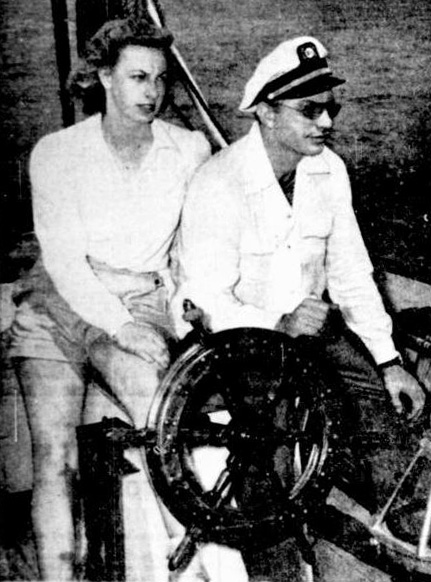
Parsons found that Hubbard used his money to purchase three boats in Miami, Florida but was unwilling to show him any financial records. Parsons headed to Miami to try and get his girl and money back but was unsuccessful. Writing to Crowley, he called Sara and Ron – “children of my folly” mentioning that he had not gotten back anything yet. Parsons later took Hubbard and Northrup to court, successfully dissolving their partnership, and took custody of two of the three boats while Hubbard and Northrup were allowed to keep the third. However, most of the money had vanished.
Wikimedia commons
Parsons later referred to this in The Book of Antichrist, writing of being stripped of his fortune, and wrote to himself that “The final experience with Hubbard and Betty, and the O.T.O. was necessary to overcome your false and infantile reliance on others, although this was only partially accomplished at the time.”
Hubbard, who briefly served with the Office of Naval Intelligence, later alleged that when he met Parsons, he worked undercover for the agency to break up “black magic” in America. As one might expect, Hubbard also began having problems with his wife, Sara. It is well documented in police records that he was responsible for a prolonged domestic violence campaign against her and kidnapped both her and her infant daughter. Hubbard had repeatedly denounced her to the F.B.I., spreading false allegations that she was a Communist secret agent. The F.B.I. declined to take any action, characterizing Hubbard as a “mental case”.
In 1951, while Parsons was working for Hughes Aircraft Company, the F.B.I. revoked his security clearance because of his association with possible Communists. Legal authorities began an investigation into his “subversive” behavior because they alleged that making rockets for the government is impossible without some access to classified information. Maybe they didn’t think that his excellent knowledge and ability to make mass killing bombs came from the devil himself.
Parsons eventually regained his security clearance from the U.S. Government but was later accused of espionage for taking documents from Hughes and again was investigated by the F.B.I. Again, he was found not guilty, but this time his scientific career was over.
About one year later, on June 17, 1952, a massive explosion rocked Pasadena, California.
Amid the debris were strewn-about pages covered in symbols such as pentagrams and text written in unfamiliar languages. On the floor was the body of a man, in a pool of blood, whose face was half-ripped off and body shattered.
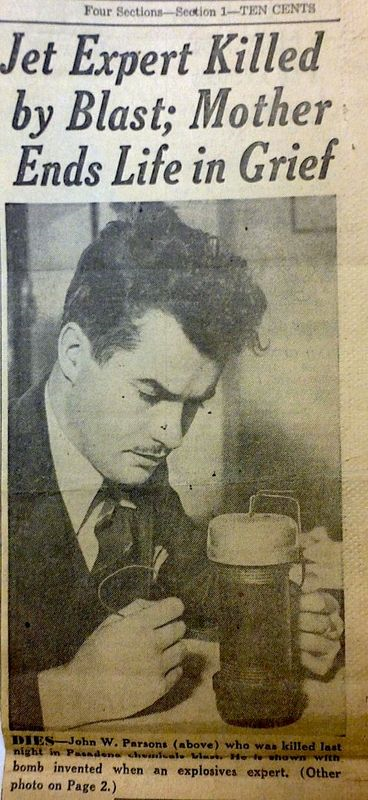
The man was Jack Parsons, who was blown to pieces by an explosion that also destroyed his house.
However, he managed to remain conscious of his hellish reality and burning flesh and sulfur after the explosion. Eventually, the light would fade. Then, finally, Parsons would die alone with his thoughts.
I can only imagine what he was thinking as his body lay tattered, and he may have reminisced what went wrong with his life. He was only 37 years old.
One newspaper headline read at the time, “Slain Scientist Priest in Black Magic Cult” and another said, “John W Parsons, handsome 37-year-old rocket scientist killed Tuesday in a chemical explosion, was one of the founders of a weird semi-religious cult that flourished here about 10 years ago.”
None of his fellow O.T.O. members would pay him homage or give him accolades for his great magical work and sacrifice for the Satanic cause. His Master Crowley would remain silent about his dead disciple.
One of the few people who loved Jack Parsons despite his sinful sex acts and Satanic lifestyle was a woman who knew him when he was an innocent boy long before he invoked demons and started parading around with Satanic freaks.
That woman was his mother who killed herself with an overdose of pills just hours after hearing of her son Jack’s death.
In the 1970s, Jack’s ex-wife, Helen Parsons Smith, became one of the most prolific publishers of Crowley’s books in the USA with her Monthelema and Thelema Publications imprints.
I believe Parsons was the willing victim of a human social experiment gone terribly wrong.
In the end, there was no funeral for one of America’s most genius and possibly evil rocket scientists ever.
Some might say that all Parsons’ black magic and sex rituals had failed. But the facts are they took him exactly where he wanted to travel into the Satanic State of Mind in a rocket ship to hell.
Moe is the founder of GnosticWarrior.com. He is a father, husband, author, martial arts black belt, and an expert in Gnosticism, the occult, and esotericism.
This week, China announced that it has just instituted a law banning effeminate men from TV and the internet has part of a National crackdown to protect their culture against these Western neoliberal influences. Communist Party of China’s propaganda department called for “resolutely put an end to sissy men and other abnormal esthetics,” using an insulting slang term for effeminate men — “niang pao,” or, “girlie guns.”
Legal authorities say the effeminate propaganda they are targeting is coming from various TV and music celebrities and also who they call “vulgar internet celebrities.” They rightly claim this creates an unhealthy admiration of wealth and celebrity causing certain distracting activities and will establish a “correct beauty standard,” and boycott vulgar internet celebrities.
The Chinese government is instructing its citizens and especially its TV programmers should avoid performers who “violate public order” or have “lost morality,” and programs about the children of celebrities also are banned. They want Broadcasters to promote “revolutionary culture,” broadening a campaign to tighten control over business and society and enforce official morality, and are calling for programming that “vigorously promote excellent Chinese traditional culture, revolutionary culture, and advanced socialist culture.”
Last week, China regulators reduced children’s access to online games after passing a law allowing only three hours of gaming per week. Rules that took effect Wednesday limit anyone under 18 to three hours per week of online games and prohibit play on school days.
Chinese authorities have accused some people in the entertainment industry of bad influence on the young and of “severely polluting the social atmosphere.” As a result, over the last few years, several celebrities and overtly vocal billionaires have been deleted from the internet as if they never existed and were issued hundred million dollar fines by the Chinese government.
For example, a famous actor and billionaire investor, Vicki Zhao Wei, was scrubbed from the Chinese internet without explanation. A famous actress, Zhao Wei, has disappeared from streaming platforms without reason. Her name has been scrubbed from credits of movies and TV programs as if she was never alive. In 2018, the country’s leading actress Fan Bingbing disappeared for more than two months before reappearing, embarrassed and ready to pay a fine of over $100 million for her tax and contractual indiscretions.
President Xi Jinping’s mission is for a “national rejuvenation,” with tighter Communist Party control of business, education, culture, and religion.
According to a 2015 study, “this “phenomenon of fake women” (weiniangxianxiang) – effeminate men who look more feminine and alluring than real women – sparked indignant discourses chastising it as an epitome of the loss of Chinese manhood and a threat to the nation-state. Experts in China, counselors, and educators called for “saving boys” through revamping the education system and underscoring gender-difference education in schools and families.
The researchers quoted many studied, “Effeminate men, contrary to the ideal entrepreneurial masculinity in postsocialist China, were given the name “fake women” in the media. The expression “fake women” stemmed from roles created in Japanese animation and comic games, where male actors displayed feminine beauty, and after extensive use of make-up, possibly equaled or at times exceeded feminine beauty (Xia 2010). News reports portrayed these effeminate men not only appearing in outlandish, ostentatious clothes, but also harboring feminine personalities” (Ying 2009; Ju 2009; Ony 2007; Ai 2007; D. Qiao 2005).
In other studies, researchers found that “The lack of manhood was repeatedly linked to the crisis of the nation-state.”
“The future of our nation is worrisome with the disappearance of manly heroism and masculine spirit,” as the discourse lamented (Yue 2012). Authors contended that a harmonious nation should have men who behave like men and women who behave like women, otherwise the nation would cease to be harmonious (Zhang 2012).
To save the nation, men’s gender-appropriate code of conduct was underscored and reasserted, the researchers emphasized.
Today, in the West, effeminate celebrities dominate and rule almost every aspect of our TV and internet programming. It is out of control and their egos need to be checked so this news from China’s government tightening control over their celebrity culture and neoliberal Western influences could not make me happier.
In my opinion, America should institute similar laws like China that are more in line with our Traditional Cultural Values of all nations of the West.
Moe is the founder of GnosticWarrior.com. He is a father, husband, author, martial arts black belt, and an expert in Gnosticism, the occult, and esotericism.
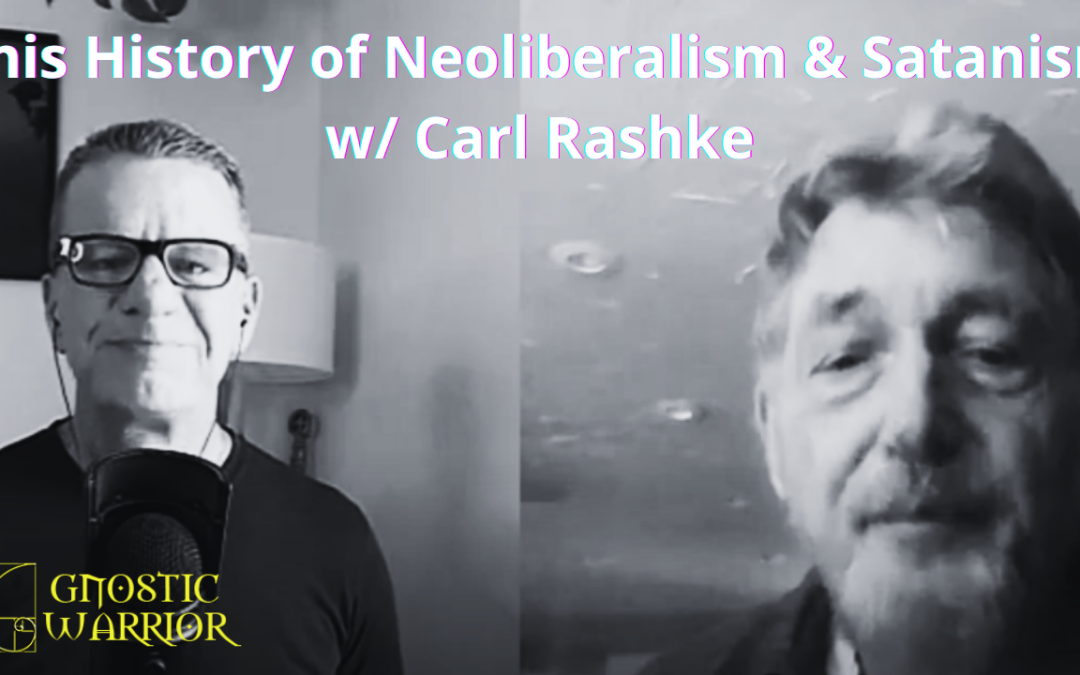
In this episode of the Gnostic Warrior Podcast, I have the honor of interviewing American philosopher and theologian Carl A. Raschke. Raschke is a Past Chair and Professor of Religious Studies Department at the University of Denver, specializing in continental philosophy, the philosophy of religion, and the theory of religion.
He is an internationally known writer and academic, who has authored twenty books and hundreds of articles on topics ranging from neoliberalism, postmodernism to popular religion and culture to technology and society.
Please watch the video podcast below on Youtube or listen/download the audio podcast.
Carl’s most recent books include Neoliberalism and Political Theology: From Kant to Identity Politics (Edinburgh University Press, 2019), Postmodern Theology: A Biopic (Cascade Books, 2017), Critical Theology: An Agenda for an Age of Global Crisis (IVP Academic, 2016), and Force of God: Political Theology and the Crisis of Liberal Democracy (Columbia University Press, 2015).
He is also Senior Editor for the Journal for Cultural and Religious Theory and Senior Consulting Editor for The New Polis. From 2016-2018 he served as managing editor for Political Theology Today (currently Political Theology Network).
There was a whole PR campaign to try to sanitize what was happening, and I was the target of a lot of these groups because I had the kind of intellectual authority. Satanism was not my thing. I knew a lot about it. I’d heard a lot about it on the ground, the narrative that let’s call the PR campaign, which is pushed by, I would say, less than reputable academics who were just kind of in it to protect themselves and protect their research clients.
I’m not saying there was necessarily a thing corrupt about it, though. There have been rumors that occasionally there were, you know, it’s, it’s, it’s kind of like the tobacco industry, you know, tried to tell you, you know, in the early days, you know, tobacco is not as harmful as they’re saying. So what they did was they got the road authorities together, and they created this narrative.
That Satanism was a panic, you know, based on the idea of a moral panic, that term was posed by a guy. I can’t remember his name, but it was called satanic panic. It came out in the nineties. It was a sociological term that basically tried to look at the whole phenomenon as if it were just a bunch of spooked out people who didn’t really understand what was going on, who were panicking.
I mean, that’s totally false because the thing emerged kind of organically and slowly the go back to Satanism mean. There is no such thing as Satanism per se. Just like there is no such thing as Christianity per se, but that’s, that was always the argument. You’re talking about Peter Gilmore, by the way, when you mentioned the church of Satan, did you?
I had a kind of debate with him on the TV back in the early nineties. There have been all sorts of schisms and arguments, and everybody was calling themselves Satanists.
Etiology there that there must be this pure thing, purity you call Satanism, which you know, is being slandered and abused and blah, blah, blah. And you know, so the whole thing was just, you know, literally a shit show. Uh, and, uh, I got caught up in the middle of that and the book I didn’t expect that I was just trying to honestly write from, uh, the notes and the interviews and the stuff I read, you know?
And you had everything from Anton. The Church of Satan, I was told by Anton Lavey’s daughter, Carla, who I met at a time, that he actually had a copy of the book and liked it. I don’t know if that’s true, but then there was Michael Aquino, who I guess is dead now. Supposedly nobody knows if he’s dead. Maybe he’s ascended going on to some new dimension or so forth, but he had the Temple of Set, and he was at war with, OR I should say, not war literally.
Moe: Adversarial.
Carl: Yeah. And you know, there were all these underground movements around the world are trying to claim that they’re there the true Satanism. But what I was trying to show in the book was just sort of the history of all these things. The moving parts of this and components and the McMartin case were weird because I never really got into the ritual abuse thing. As far as I know, you know, that’s still a mystery. I have my theories about what was going on with that whole thing. I don’t believe that it was simply known to a therapist who we’re putting things in people’s heads to me in that sense.
According to cognitive psychology and neuropsychology, that’s not possible the way it’s being claimed, but something was going on there and that became kind of the focus you had. Entrepreneurs, spiritual entrepreneurs, uh, out there, many of them, you know, we’re hucksters preachers.
They tried to use my authority and said, no way, you’re going to do that. They would say this is the great satanic, great satanic scare. You know, like the subtitle of the book was, How Satanism is ravaging our communities, this word, I didn’t choose that title.
I didn’t want that title, the publisher insisted on it, and of course, they got the blowback they did. They said, oh, well, it’s not our fault. I was trying to be. You know, somewhat guarded about all this. I was trying to show that it doesn’t matter who’s selling certificates to be a Satanist and whether they’re bad people or not.
Obviously, there were a lot of funny things going on that I’ve heard about, but who knows. I was concerned about how this ideology was spreading and being used by people like the night stalker or this guy Constanta, Amanda Morris. They would say, well, he’s not a Satanist.
That’s practicing poly me. Well, yes. I mean, Satanism, academically, is a kind of broader term. That means you’re into various forms of black cultism or black magic.
Carl on Neoliberalism
That was what I call the darker side. A kind of land virus. What was essentially a cultural transformation was going on, which led to this idea, encapsulated in a best-selling book in the seventies called Looking Out for Number One. You know, the me generation, and that became sort of the founding ethos of what we call neoliberalism.
Now, what I do in my book on neo-liberalism political theology, I try to show how this was not about religious conservatives but about religion. Primarily Progressive’s who essentially got on the whole social justice bandwagon, primarily in the early part of this millennium, but the Obama administration accelerated and so forth.
It’s we get the term virtue signaling. It’s all about me, but it’s me. Masquerading has this idea of we, but it’s not by doing anything concrete that will change the world. It’s all about building your own kind of personal human capital. I cited a lot of academics. This is totally different book than “Painted Black.” What most academic research is citing other theorists.
It’s like, you can recreate this kind of virtual world, this world of goodness. What it’s really about, essentially, is gaining power under the pretense that you’re saving the world or saving the planet or helping others. And in fact, you’re not doing a damn thing.
Neoliberalism, as we understand, it began out of the Jeffersonian ideal, but like all systems of emancipation, they become corrupted.
Like what happened in Soviet Russia with those who, you know, first get emancipated. It’s like, they don’t want anybody else to be emancipated. So now I went to college. My father was the first of his generation to get a college education. He got a bachelor’s degree. He barely got it now to make sure that his children got more of an education. He did it because he saw it not as a way of getting a job, but as a ticket to virtue to make sure that his kids could carry on the moral legacy.
Unfortunately, he died before I got into graduate school, and it’s probably because of that I did end up going to graduate school becoming who I became. But I’ve always carried that with it, particularly the idea of a liberal arts education. You become a true citizen. With the political responsibilities, somebody like Jefferson who said, which is a religious obligation, which goes back to the question I’m looking into right now, sovereignty, you know, if you have virtue.
And that’s what we don’t understand. If you have virtue, you don’t have to worry about whether you own a gun or not. I mean, people own guns, you more guns at 50 years ago than they own. Now, we have a few people who have a lot of guns, the less people own guns, and there’s a whole. Kind of a toxic debate going on in our society, but you know, people used to own guns.
They didn’t kill each other because the more, the moral that’s called the moral substance of our democracy, as you know, going out the window. So much of that has to do with what I would call libertarian excesses that led to the neoliberal regimes and criminal rules.
And then we see where it gets corrupted because it goes back to Jefferson’s idea of libertarianism and the leaf and the people, but they had to have virtue today. Everybody’s I don’t think you could call Jefferson libertarian. Libertarian is a modern word.
Libertarian means basically someone who focuses on Liberty without the virtue.
Moe is the founder of GnosticWarrior.com. He is a father, husband, author, martial arts black belt, and an expert in Gnosticism, the occult, and esotericism.