by Moe | Dec 10, 2012 | Freemasonry, History of the Brotherhood
 By Maurice Bedard
It has been about two years since the time I was driving down the street and I heard a voice in my head saying, “Our family started the Brotherhood.” This came shortly after I had applied to become a new initiate for the Freemasons in Temecula, Ca where I was living at the time. But I was denied due to my previous issues with the law that included a few felonies on my record. This precluded me from joining per their bylaws.
The news of my rejection had made me a bit depressed because I was honestly trying to become a better man and also help my community at the same time. Before I had applied for membership, I had extensively studied Freemasonry and the secret mysteries surrounding the craft. I felt connected to them, even though I was an outsider. Their symbols, signs and stories seemed to resonate in my blood. This latter statement of resonating in my blood, I would not realize at the time of these revelations, was actually something physical that I was feeling because the intuition of knowing that I had descended from the founders of freemasonry was embedded into my DNA.
When I talk about DNA and intuition via DNA gnosis, I know this subject may seem foreign to some of you. But please let me inform you that in the future of freemasonry, esoteric research and spiritual science, it will be one of the hottest subjects of research from hereon out. Not many people are aware that our false realities that we live today are mostly constructs and in order to see past the illusion, one must look within to know thyself and when we do this, we are simply tapping our own DNA for these answers or truths that we seek. In the end, many of these answers and truths that we find will be as different as our DNA or the religious dogmas that we ignorantly hold on to.
This is the great human divide that has always been the main problem in building the Temple of Solomon. This I will explain more later when I get to that chapter of my book.
These two years here since I had these first had this revelation that my ancestors had started the brotherhood have surrounded by nothing but intensive research and hardcore introspection. I have been simply on a mission led by my spirit to find truth and share my findings with my fellow brothers and sisters whomever they may be out there reading my words. I sincerely hope you my finding with an open mind and heart where the light of the truth in my words will outshine any old blood battles or religious dogmas that we all may have buried deep inside our temples.
May peace, love and light be with you as you walk your path.
Moe is the founder of GnosticWarrior.com. He is a father, husband, author, martial arts black belt, and an expert in Gnosticism, the occult, and esotericism.
by Moe | Nov 15, 2012 | History of the Brotherhood, Irish History
 The Culdees, sometimes Kyllidei, Colidei, and Kelidei were at one time Druid Bards before they had become Christian. They had been formed in a time where it was very dangerous to be anything other than pagan. After all, the Druids had long held the title of the priestly class in Britain, Ireland, and Gaul.
A “Culdee” is an anglicisation of Céli Dé (plural of Céile Dé, lit. “client/companion of God”). The Culdees, or clergy of the order of St. Columba {or Colum, as his name was before it was Latinized) had resided on on the island of Iona or Hii-colum-kiU (Icolmkill),” the island of Columba of the Cell,” or also known as Innis nan Druidhneah (” the island of the Druids “). This would the starting point of Christianity in this area of the world when it was ruled by various tribes of peoples. Hence, this is a very important time and island in the history of Christianity.
“Isle of Columba’s cell,
where Christian piety‘s soul-cheering spark
(Kindled from heaven between the light and dark
Of time) shone like the morning star.”
The year was approximately 564 when Columba had reached the Island of Iona, on the evening of Whit-Monday, according to the annals of Innisfallen. It was said that he made the voyage in a wicker boat, covered with hides and was accompanied by twelve friends. The Druids who were in power and occupied the island had tried their best from making Columba and his crew from settling there. Saint Bede said in his book, Ecclesiastical History, I that Columba had been met with fierce opposition from the Druids whose early miracles in the country of the Picts, the greater part were performed ” in order to confound the Druids and glorify God.”
Saint Columba was born in the year 521, and was a lineal descendant, in the sixth generation, from Niall Noígíallach or known in English as Niall of the Nine Hostages, an Irish king, son of Eochaid Mugmedón, and whose mother had descended from Lorn, one of the earliest princes of the Scots. Therefor you can say that when Columba had went out to establish Christianity under the Culdees, he had a very powerful family backing him up. After all that would make Columba of royal blood as well and now would be aligned with Rome. This power play at that time that would be a new alliance between the Irish King Nial, ancestor of the Uí Néill kindred who dominated Ireland from the 6th to the 10th century and Rome.
The Culdee Church was very different than the Roman Church for they were allowed to be married and had surrounded themselves by their own families similar to how the Druid Bards had done. They were succeeded by their own sons. They also were self sufficient and supported themselves by their own labor. The differences between the Culdees and the Roman Church would often cause problems in the rocky relationship. They were protestant to the practices of the Roman church at that time and many times thereafter.
This brotherhood of the Culdees would be the one where the Scot born Saint Bede, Clement and Albinus had come from before we find thehistorical story of Clement and Albinus arrive to the court of
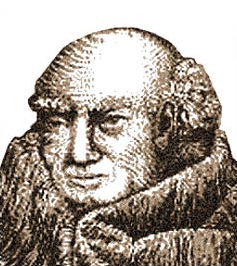
Johannes Scotus Eriugena was among the first to propose that God became the Universe, and did so to learn something about itself. (Photo credit: Wikipedia)
Charlemagne:
The court of Charlemagne was crowded with Irish scholars, and a story told by a foreign chronicler of good authority, of the arrival of two distinguished Irishmen in France during the reign of that monarch, is peculiarly characteristic. The names of these two scholars were Clement and Albinus, and they arrived on the coast of France in company with a party of merchants.
John Scotus Erigena succeeded these great evangelists, and settled at Charles the Bald’s Court
Claude Clement, known as Claude of Turin, was also of the same missionary army, labouring all around the city which has given him its name, afterwards founding the University of Paris, as John Scott, surnamed Albinus, founded the University of Pavia. In North Italy these Culdee missionaries had another representative in Sedulius, afterwards Bishop of Oreta in Spain, as Donatus similarly became bishop of the Italian Fiesole.
The Cisalpine valleys were the home of the Culdee missionaries, who did much to give them that primitive faith from which all-powerful Rome could never shake them.
In the book The Scots Worthies: In two volumes, Volume 1 By John Howie, William M’Gavin
Mention is first made of Clements and Samson, two famous Culdees, who, as we have seen in the seventh century, supported the authority of Christ as the only head of his church, against the usurped power of Rome, and who rejected the superstitious rites of Antichrist, as contrary to the simplicity of Gospel institutions. The succeeding age was still more famous for learned and pious men, to whom Scotland gave birth, and whose praise was in the churches abroad; particularly Joannes Scotus iErigena, who wrote a book upon the eucharist, which was condemned by Leo IX. in the year 1030, long after his death.
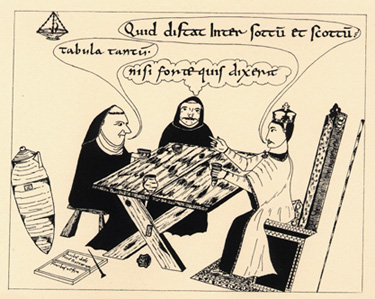
William of Malmesburyhad told the story of King Charles the Bald and John the Scot (Eriugena) were seated at the same table, when the latter did “something” which offended good Gallic manners (quod Gallicanam comitatem offendebat). Thereupon the King said: “What separates a Sot from a Scot?” To which John answered: “Only a table.”
Moe is the founder of GnosticWarrior.com. He is a father, husband, author, martial arts black belt, and an expert in Gnosticism, the occult, and esotericism.
by Moe | Nov 2, 2012 | Did You Know?, Featured
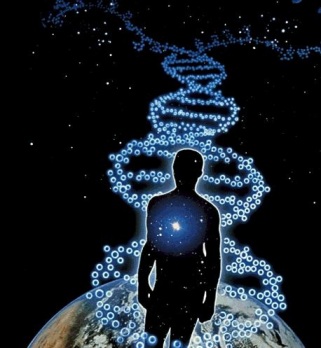 Intuition comes from within our DNA. Our DNA is a form of computer or internet. When we tap our intuition for answers or to know, we access our computers which is our DNA. This is where gnosis comes from and is our sixth sense.
Not many people are aware of their sixth sense that is known as intuition. Of course, most all of us are aware of the five physical senses known as sight, touch, taste, hearing and smell. But how come we are not taught in school about the sixth sense of intuition when growing up? Is there a reason why we are not taught to tap our “inner wells of resources,” AKA our blood to find answers or solutions to our lives?
I believe that this is one of the biggest secrets being held from man kind over the last one thousand or two thousand years and this was done purposely be design so we humans forget our pasts and the truth of where we come from. Maybe this was done for our own good or the opposite. This conclusion I have yet come to because I am still in the research stage of tracing my past through my DNA which has encoded into it these intuitive answers that I seek.
So, where does one intuit in order to sense via a human experience in order to have or even explain this sixth sense? The answer is that this sixth sense comes from within. As within, so without. For it is our DNA that we individually tap via our minds and hearts into in order to have intuition. The mind seeks and reasons while the heart is your DNA feeling and memory device in which you use your intuition to either confirm or discredit your minds finding based on cellular memory that uses vibrations to send these signals to our heart and gut. (more…)
Moe is the founder of GnosticWarrior.com. He is a father, husband, author, martial arts black belt, and an expert in Gnosticism, the occult, and esotericism.
by Moe | Oct 17, 2012 | DNA, Featured

English: A cleft chin (Photo credit: Wikipedia)
I often wondered why growing up that I seemed to be a bit different from my friends or school mates. Not only did I feel or think different, I also wasn’t the typical Joe, but more of a Moe. One thing that set me apart was this thing on my chin that is called a cleft chin or sometimes when kids made fun of mine, they said I had a butt chin.
To be honest, I wasn’t that fond of it growing up. Especially since people ignorantly associated with smelly butts.
It wasn’t until recently that my interest in my chin had rekindled when in studying my DNA and people who shared the same blood as me, I had started to study their facial features. The first thing that stood out to me was Albert Einstein and the Wright Brothers cleft chins. I then Googled some of my other ancestors and sure enough, many of them had the same facial features as I did.
Then I started studying famous people and wow, many, many very intelligent and highly gifted people have this cleft chin. In addition, many of them are extremely beautiful as well.
Could this trait of the cleft chin go along with my theory that by DNA, we may be able to identify potential geniuses, but it also looks like our future inventors, kings, actors and artists as well.
Moe is the founder of GnosticWarrior.com. He is a father, husband, author, martial arts black belt, and an expert in Gnosticism, the occult, and esotericism.