The Dark Enlightenment is a loosely defined intellectual movement that emerged in the early 21st century. It seeks to challenge the assumptions of the liberal democratic tradition that emerged after the Enlightenment period.
While there is no single, unified Dark Enlightenment theory, its adherents share a broad set of concerns about the current state of society.
They seek to develop alternative models for governance, culture, and social organization.
Its core philosophy can be traced back to two prominent philosophers of the 19th and 20th centuries, Friedrich Nietzsche and Martin Heidegger. Both Nietzsche and Heidegger had critiqued the Enlightenment’s emphasis on rationality and the individual, but their philosophies were from different ideological perspectives.
Nietzsche was more of a liberal, individualist, progressive, and anti-traditionalist, while Heidegger advocated for Traditionalism but with more of a modernist approach.
Nietzsche argued that traditional values, particularly those propagated by organized religion and societal norms, hindered the individual’s development of their own unique potential, leading to conformity and suppression of individuality.
He saw traditionalism as a form of herd mentality that stifled creativity, vitality, and self-realization.
Nietzsche famously declared that “God is dead” and criticized traditional religious beliefs as outdated and detrimental to human flourishing.
On the other hand, Martin Heidegger, a prominent figure in existentialist and phenomenological philosophy, had emphasized the importance of tradition in shaping human existence and thought.
He saw tradition as an essential aspect of human existence, as it provided a sense of belonging, continuity, and rootedness.
He argued that tradition is understood as the shared history, language, and culture of a community, providing the framework for human existence and giving meaning to human life.
However, Heidegger also warned against the dangers of blindly adhering to tradition without critical reflection, as he believed that tradition could also become stagnant and prevent individuals from engaging authentically with their own existence.
He can be called a Progressive Traditionist who believed that respecting the autonomy of the individual to learn, grow and live in the modern world, rather than blindly following old traditions.
While both Nietzsche nor Heidegger never coined the term, the Dark Enlightenment, their ideas gained momentum in the 21st century as its core philosophers, with the rise of the internet and the proliferation of online communities.
One of the key figures in the modern development of the Dark Enlightenment in our day is Curtis Yarvin, who wrote under the pseudonym Mencius Moldbug.
Yarvin’s blog, “Unqualified Reservations,” became a hub for the movement, and he developed a following among tech elites in Silicon Valley.
His writings rejected democracy and called for a return to monarchy and aristocracy. He argued that democracy was inherently flawed because it placed power in the hands of the ignorant masses, who were susceptible to demagogues and populists.
Instead, he advocated for a system in which power was concentrated in the hands of a small elite, who were best equipped to make decisions for the good of society as a whole.
The movement is often associated with the alt-right, a far-right movement that emerged in the United States in the 2010s.
However, not all members consider themselves part of the alt-right, and the two movements have some differences in their ideologies.
At the heart of the Dark Enlightenment is a rejection of the liberal democratic tradition.
This is seen as having failed to provide a stable and sustainable governance model.
Adherents of the movement argue that democracy is inherently flawed because it places power in the hands of the ignorant masses, who are easily swayed by populist demagogues.
They argue that democracy leads to a “tyranny of the majority,” in which the interests of the minority are ignored in favor of the majority.
According to its core ethos, the liberal democratic tradition is characterized by a naive faith in progress, individualism, and equality.
These beliefs have resulted in social decay, cultural decline, and the erosion of Western civilization.
Instead, adherents of the Dark Enlightenment advocate for a system in which power is concentrated in the hands of a small elite, who are best equipped to make decisions for the good of society as a whole.
They also believe that this decay is the result of a number of factors. These factors include the breakdown of traditional values, the rise of secularism, the decline of religion, and the corruption of the political system.
They argue that this system would be more efficient and effective than democracy, as decisions would be made by those with the most knowledge and expertise.
To counteract these trends, Dark Enlightenment adherents advocate for a return to traditional forms of governance, cultural values, and social organization.
This includes a rejection of modern liberal democracy’s egalitarianism, which is considered unrealistic and undesirable.
Instead, the Dark Enlightenment promotes a hierarchy based on natural differences in ability and intelligence.
This hierarchy should guide decision-making in all areas of life, from politics to culture to personal relationships.
They argue that society is naturally hierarchical and that attempts to create a society based on equality are doomed to fail.
They believe that hierarchy is necessary for social order and stability, and that attempts to eliminate it will only lead to chaos and disorder.
It also emphasizes the importance of cultural and ethnic identities, which are seen as essential for maintaining social cohesion and a sense of purpose. This means that the movement is often associated with nationalism and ethnic chauvinism.
Some of its adherents have been accused of racism and xenophobia. However, many Dark Enlightenment thinkers reject these labels.
They argue that their ideas are based on a realistic assessment of the importance of cultural and ethnic identity in maintaining social order and stability.
Another key figure in the Dark Enlightenment is Nick Land, a former philosophy professor at the University of Warwick.
He began his career as a left-wing thinker and was associated with the “cybernetic culture research unit” at the University of Warwick, which explored the intersection of technology and culture.
Land has argued that democracy is a failed experiment that has led to the decay of Western civilization. It has also led to the rise of a parasitic class of elites who manipulate the masses for their own benefit.
He has said;
“The basic theme has been mind control, or thought-suppression, as demonstrated by the Media-Academic complex that dominates contemporary Western societies, and which Mencius Moldbug names the Cathedral.
When things are squashed they rarely disappear. Instead, they are displaced, fleeing into sheltering shadows, and sometimes turning into monsters.
Today, as the suppressive orthodoxy of the Cathedral comes unstrung, in various ways, and numerous senses, a time of monsters is approaching.”
Democracy is what prevents the realization of freedom, writes Land, suggesting that democracy is merely an Enlightenment myth:
“In European classical antiquity, democracy was recognized as a familiar phase of cyclical political development, fundamentally decadent in nature, and preliminary to a slide into tyranny,” Land says.
“Today this classical understanding is thoroughly lost, and replaced by a global democratic ideology, entirely lacking in critical self-reflection.
This ideology is asserted not as a credible social-scientific thesis, or even as a spontaneous popular aspiration, but rather as a religious creed, of a specific, historically identifiable kind,” Land had written.
His work is characterized by a rejection of traditional morality and a fascination with technology and artificial intelligence. Land believes that technological progress and social change should be accelerated rather than slowed down.
He argues that the only way to escape modern society’s constraints is to embrace the chaos of technological innovation and abandon the traditional values of liberalism and democracy.
Land says that humanity is rapidly approaching a point of technological singularity, at which point the distinction between humans and machines will become blurred.
In this new world, traditional morality will be replaced by a new form of ethics, based on the optimization of intelligence and the pursuit of power.
In addition to Moldbug and Land, there are a number of other thinkers associated with the Dark Enlightenment.
These include the man dubbed the world’s most dangerous philosopher, Alexandr Dugin, economist Tyler Cowen, the philosopher Peter Thiel, and the journalist John Derbyshire.
Dugin’s version of the Dark Enlightenment is heavily influenced by the ideas of Heidegger and the French thinker Julius Evola. He sees modernity as a crisis of meaning and identity, and argues that the only way to overcome this crisis is to return to Traditionalism.
He has argued that the Enlightenment project has been a failure. We need a new paradigm that is based on a rejection of individualism and an embrace of collective identity.
Despite the controversy surrounding his ideas, Dugin has become a prominent figure in Russian intellectual circles and has been influential in shaping political discourse in not only Russia, but also in the U.S. and around the globe. His philosophies have also gained traction among far-right and alt-right groups who see him as a kindred spirit in their quest to upend the liberal democratic order.
Peter Thiel, founder of PayPal and Palantir, and the first outside investor in Facebook, has been speaking about the Dark Enlightenment for years and on recent college tours discussing apocalyptic themes such as the Antichrist and the Apocalypse
Thiel’s views on the Dark Enlightenment and his association with its proponents have sparked controversy and criticism.
Some have accused him of promoting authoritarianism and fascism, while others have praised him for his willingness to challenge mainstream political and social norms.
In a 2009 essay for the Cato Institute, Thiel criticized democracy and argued that it had failed to deliver meaningful progress. He also expressed skepticism about the ability of individuals to make rational decisions and suggested that authoritarianism might be a better alternative.
In a 2013 interview with the National Review, Thiel expressed his admiration for Moldbug’s ideas and described him as “the most interesting thinker” in the tech industry. He has also been critical of Silicon Valley culture and has argued that it is too focused on individualism and not enough on the common good.
He suggested that the tech industry needs to be more willing to work with the government and embrace a more collaborative approach to solving problems.
However, the movement is characterized more by a shared set of concerns than by a unified intellectual program, and there is a great deal of debate and disagreement among its adherents.
Critics of the Dark Enlightenment argue that its ideas are fundamentally reactionary and represent a retreat from the advances of modernity.
They point out that the movement’s emphasis on hierarchy, tradition, and ethnic identity is reminiscent of the ideologies that gave rise to the most brutal atrocities in the past.
Moe is the founder of GnosticWarrior.com. He is a father, husband, author, martial arts black belt, and an expert in Gnosticism, the occult, and esotericism.
“For a man to conquer himself is the first and noblest of all victories.” – Plato
The Ancient Greeks divided the soul of a person into three different parts – the mind (nous), the spirit (thumos), and needs or desires (epithumia).
Humans could be considered the charitor in the middle.
These parts would have different biological and mental operating functions that could either work with one another to help a person live a good and healthy life or they could work against each other to cause a person to have a bad and unhealthy life.
As if each part had a mind of its own.
In order to make rational and good decisions, each of the three parts must work with one another in a balanced manner.
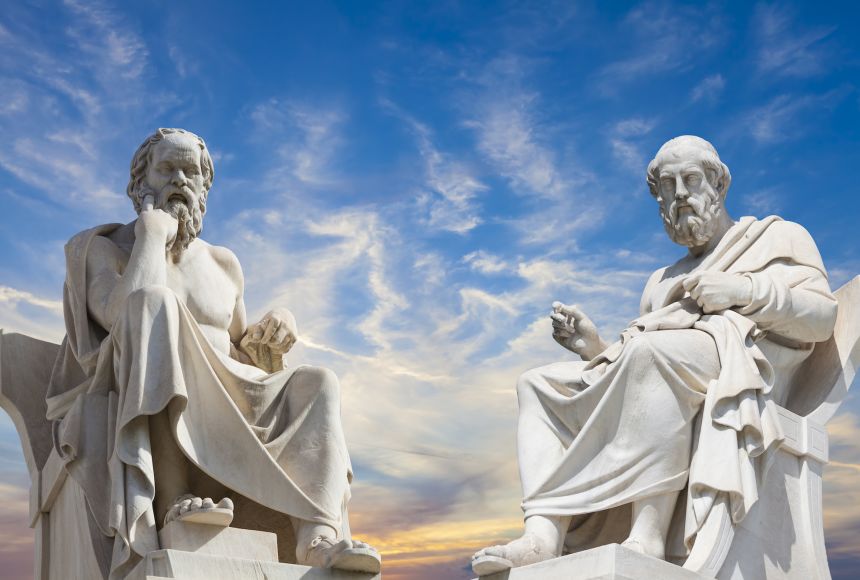
In Plato’s Republic, speaking through Socrates, he divides the soul into three sections: the rational (nous), spirited (thumos), and desiring (epithumia or appetites).
Plato further elaborates on his own tripartite theory of the soul as the following:
Nous – is related to the “mind or intellect and “reason”, which involves thoughts, reflections, and questioning and should be the controlling part of the soul that subjugates the appetites with the help of our thumos.
Thumos (Thymos) – is related to our spirit and the modern concept of the ego, emotions, and passions of which we feel sadness, anger, fear, courage, glory, love, etc. (the Republic IV, 439e);
Epithumia – is our desires or appetites, which is normally ascribed to our lower natures or bodily desires such as food, drink, sex, money, power, etc.
For Plato, when these three parts of the soul are balanced and work in combination with one another, this makes us better suited in our destined vocation, and is also the secret process for developing our innate ideas.
It is interesting how Plato’s description of the so-called “spirited element” ( to thumoeides or thumos) helps or works against the intellect (nous), but also in either subjugating or being subject to our appetites.
This is why Plato once said, “For a man to conquer himself is the first and noblest of all victories.”
And his student Aristotle followed with, “What lies in our power to do, lies in our power not to do.”
Plato believed that the thumos (spirit) was the source for desires, emotions, and sensitivities. And also various attributes such as bravery, determination, and nobility that also needed to be tempered by a need for civility, order, and justice.
Within the ideal city state, every citizen would possess a healthy thumos (spirit) within their souls.
This thumos (spirit) would allow citizens to uphold their honor and courageously assert their opinion within civic life. A citizen also knows how to maintain composure or restrict the thumos (spirit) if it were to passionate, violent or when it were misdirected.
When discussing his ideal state within the pages of The Republic, Plato, through the voice of Socrates, explains that the ideal guard or soldier would be possessed with a spirited sense of thumos and a desire to combat injustice.
Plato mentions thumos when commenting on a dog that is both loyal to his master, and dangerous to any evil-doer he may encounter.
“And is he likely to be brave who has no spirit, whether horse or dog or any other animal? Have you never observed how invincible and unconquerable is a spirit and how the presence of it makes the soul of any creature to be absolutely fearless and indomitable?”- Plato (Republic Book II)
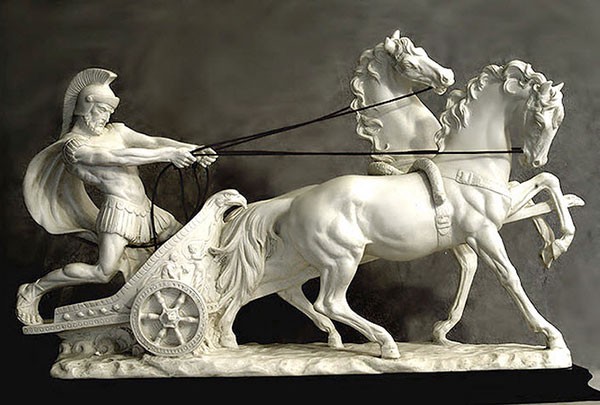
In the dialog Phaedrus, Plato compares the human soul to a chariot that is being pulled by one white horse and one black horse, with a skilled charioteer at the reigns.
“First the charioteer of the human soul drives a pair, and secondly one of the horses is noble and of noble breed, but the other quite the opposite in breed and character. Therefore in our case the driving is necessarily difficult and troublesome.”-Plato (Phaedrus)
The black horse is said to represent men’s passions and appetites (epithumia).
The white horse is said to represent what in Greek is called thumos, which again, means the spirit or ego. And the charioteer is what Plato calls the noble breed or soul using the power of reason, which holds the reigns of both horses steadily through reason, while not allowing either to run wild.
This is a powerful image by Plato to describe how to balance these different parts (minds) of the soul in order to lead a balanced and healthy life.
One horse represents our day to day needs and desires or what could be called our animal instincts, and the other represents our divine instinct to pursue social pride or what we call nobility.
In Homer’s works, thumos is used to describe the internal psychological process of thought, emotion, volition, and motivation. It was the emotional state of man, to which his thinking and feeling belonged.
It is what motivates us to accomplish or will or what can be called our God given destinies.
When a Homer writes about a hero who is under duress, he will project his thumos to converse with or get angry with it as if he has two minds or personalities to contend with within himself.
Homer uses thumos to describe the way in which a hero thinks and what drives his passions and motivations.
A “thomeward” man has an inner strength that may be called upon when faced with certain death, but it also remains separate from him and drives its own course regardless of what may be going on externally to the person.
Therefore, we can say that the thumos is the most crucial component for any hero or nobility.
Homer represents Achilles as the only hero who speaks and questions his soul as “his great-hearted spirit” when he is unsure of how to proceed in battle. He uses thumos to show how Achilles is able to use logic and reason as he thinks out loud to himself, and arrives at important decisions.
The power or energy of the thumos could help a hero control his body and also be brave because it was a power or energy that was bigger than himself. It was something the hero initiated and tapped into, but it was also an agency that was separate from him.
The thumos not only can help a hero to be brave and stand their ground, but also acts as a metaphysical bond that ties him together with other heroes i.e., nobility who have similar thumos or spirits.
Thus creating invisible chains (Noosphere) that connect people to one another to assist not only in combat, but also in helping protect all that is good in society.
Cowards or weak people who do not have a strong thumos do not have the ability or God given right to tap into this energy or power.
As if by default, they are cut off from the source or God.
The Ancient Greek pre-Socratic philosopher, Democritus used “euthymia” (i.e. “good thumos”) to refer to when our soul is calm and steadfast. Not being disturbed by fear, superstition, or passions.
Meaning that a person can have a bad thumos or a good one.
For Democritus, having euthymia was one of the main goals of human life.
Diogenes Laërtius had wrote about Democritus’ view as follows:
“The chief good he asserts to be cheerfulness (euthymia); which, however, he does not consider the same as pleasure; as some people, who have misunderstood him, have fancied that he meant; but he understands by cheerfulness, a condition according to which the soul lives calmly and steadily, being disturbed by no fear, or superstition, or other passion.”
In Seneca’s essay on tranquility, he defines euthymia as “believing in yourself and trusting that you are on the right path, and not being in doubt by following the myriad footpaths of those wandering in every direction.”
SOURCES:
Psychological Ideas in Antiquity. In: Dictionary of the History of Ideas. 1973-74 Long, A. A.
Moe is the founder of GnosticWarrior.com. He is a father, husband, author, martial arts black belt, and an expert in Gnosticism, the occult, and esotericism.
The Scripture tells us that the saved people of Israel had the sign of the Tau marked upon the forehead. In Revelation, the tau is called “the seal of our God on the foreheads of his servants.” (Rev 7,2-4).
It was said to be for the guidance of the angelic executors of God’s commands – a mark or sign of favorable distinction.
These angels are said to be the executors of God‘s wrath and also to deliver people (Lot) from danger (Gen., xviii-xix Ex., xii-xiv). As St. Paul says, “Sit at My right hand until I make Your enemies a footstool for Your feet? Are not the angels ministering spirits sent to serve those who will inherit salvation?”
Are they not all ministering spirits, sent to minister for them, who shall receive the inheritance of salvation?” (Hebrews 1:14).
The word ministering means learning of and attending to others’ needs or to help or care for (someone or something). As if these angels or spirits were with us at all times or were sewn into the fabric of our being and bodies from the day we were created.
St. Basil, (Hom. on Ps. xliii), said our guardian angels can act upon our senses (I, Q. cxi, a. 4) and upon our imaginations (ibid., a. 3). But not upon our wills, except “per modum suadentis”, viz. by working on our intellect, and thus upon our will, through the senses and the imagination. (I, Q. cvi, a. 2; and cxi, a. 2).
The Church Fathers, Tertullian, Origen, Cyprian, and Jerome, said that this was the Early Christian custom of repeatedly tracing the sign of the Tau cross on their own foreheads to symbolize the value of the human mind.
As I will attempt to explain in this essay, these descriptions remind me of our immune system and our microbiota and make up 97% of our DNA. What our ancestors may have called ministering spirits or angels that inhabit and control our gastrointestinal tracts, blood, and brain thus having a direct influence upon our senses, i.e., our thoughts, behaviors, actions, and health.
Like the angels of the Bible, modern science has proven that they help influence and can control the human mind and in doing so, the destiny of mankind.
Today, this description I put forth would make much more sense than Biblical explanations to atheistic scientists and their comrades in academia and the general public.
Meaning that if you truly research Scripture with an open mind, no pun intended to those of you who have been marked for destruction, you will see that it is truly an ancient science, history, and magic book written in allegory to conceal (occult), while also revealing these secrets of human kind.
Now, let me explain how I believe the teachings of the tau and salvation may be related to religion, esotericism, human biology, neuroscience, and the quality of life.
The Prophet Ezekiel speaks of the tau as the mark distinguishing those who were to be saved, on account of their sorrow for their sins, from those who, as idolaters, were to be slain.
“Go through the city, walk through Jerusalem and Mark Tau upon the foreheads of the men that sigh, and mourn for all the abominations that are committed in the midst thereof.
To the others, I heard the Lord say: “Pass through the city after him and strike! Do not look on them with pity nor show any mercy! Old men, youths and maidens, women and children, wipe them out! But do not touch any marked with the ‘Tau’ on the forehead. Begin at my sanctuary.” (Ezekiel 9:4-5).
It’s as if the people of Jerusalem were divided into two camps based on their mental health.
According to the Jewish Encyclopedia:
The cross as a Christian symbol or “seal” came into use at least as early as the second century (see “Apost. Const.” iii. 17; Epistle of Barnabas, xi.-xii.; Justin, “Apologia,” i. 55-60; “Dial. cum Tryph.” 85-97); and the marking of a cross upon the forehead and the chest was regarded as a talisman against the powers of demons (Tertullian, “De Corona,” iii.; Cyprian, “Testimonies,” xi. 21-22; Lactantius, “Divinæ Institutiones,” iv. 27, and elsewhere).
Christians used to swear by the power of the cross (Apocalypse of Mary, viii., in James, “Texts and Studies,” iii. 118).
Tertullian says, “Frontem crucis signaculo terimus” (De Cor. mil. iii), i.e. “We Christians wear out our foreheads with the sign of the cross.” He said, “The Greek letter and our Latin letter T are the true form of the cross, which, according to the Prophet, will be imprinted on our foreheads in the true Jerusalem.” (Contra Marc., III, xxii)
The original meaning of Tau (Taw or Tav) in Hebrew means “mark,” which was the 22nd letter of the alphabet and later became to represent the letter T in Greek.
The mark was how God’s angelic executors were able to find, save or destroy people based on how they thought, spoke, lived and acted.
“For he hath given his angels charge over thee, to keep thee in all thy ways.” (Psalm 90:11)
On one side, you had people who were said to be truly sorry for their sins and who were adamantly opposed to the culture of sin, idolatry, and abominations.
They were said to be marked by the Lord with the tau to be saved.
Meaning, these people were chosen by God to be saved by the mark of the Tau seemed to have control and power over their own bodies and minds.
A type of spiritual mark or metaphysical representation that acted as a sign for the people chosen by God to be saved because they were not controlled by the supernatural or infernal forces of Satan or the Devil.
These people who had the mark were also adamantly opposed to sin and evil acts committed by their fellow countrymen.
On the other side of the camp were the damned.
These were people who accepted and encouraged the sins of Soddom and in doing so, bore the mark of the theta upon their foreheads.
They were under the direct control of Satan or the Devil. A type of beast that was no longer human.
Who our ancestors may have called a demon or possessed by the devil.
Today, we can say they simply lost their minds. Schizzoid…
In doing so, they were marked by ministering spirits for destruction and death.
THE TAU PROTEIN
I find these ancient Biblical stories interesting because as it relates to modern times, we find what is called the tau protein that can be found mainly in the neurons of the central nervous system (CNS) and in the brain’s frontal lobe (under the forehead).
It is associated with the mark of the tau on the forehead of the early Christians as an indication of a sound or strong mind and as I will show, human consciousness.
This proves that the tau is involved in the creative processes and in preserving the health of the brain, and also the destroying powers as I will show.
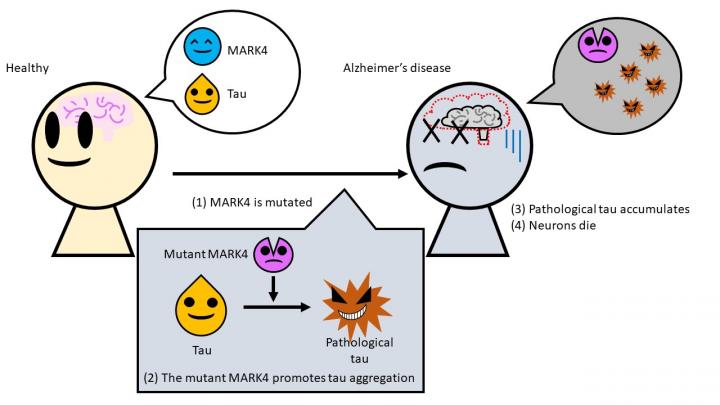
The tau is a phosphoprotein that contains phosphorus (other than in an associated nucleic acid or phospholipid) critical for mental health, memory, cellular function and to facilitate habituation (a form of non-associative learning).
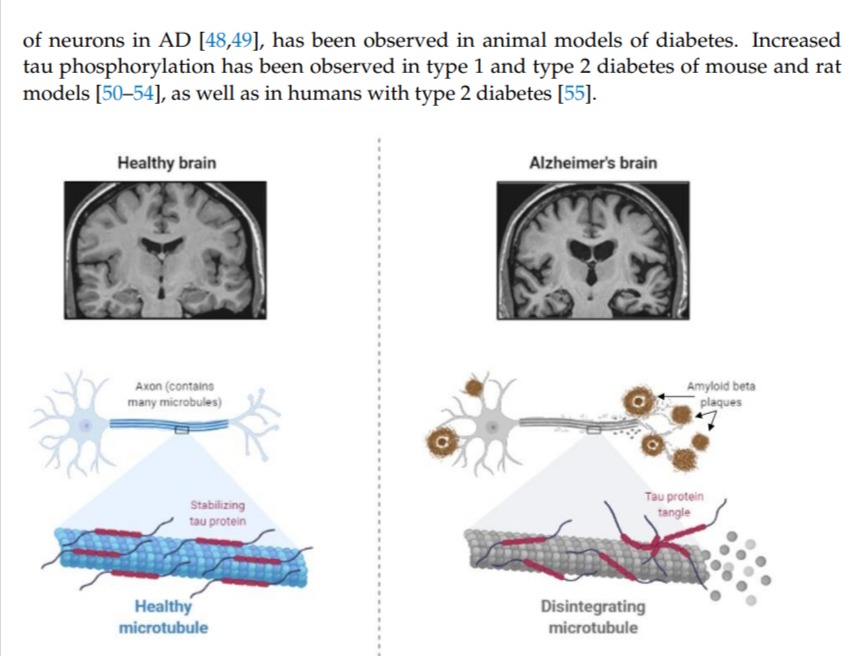
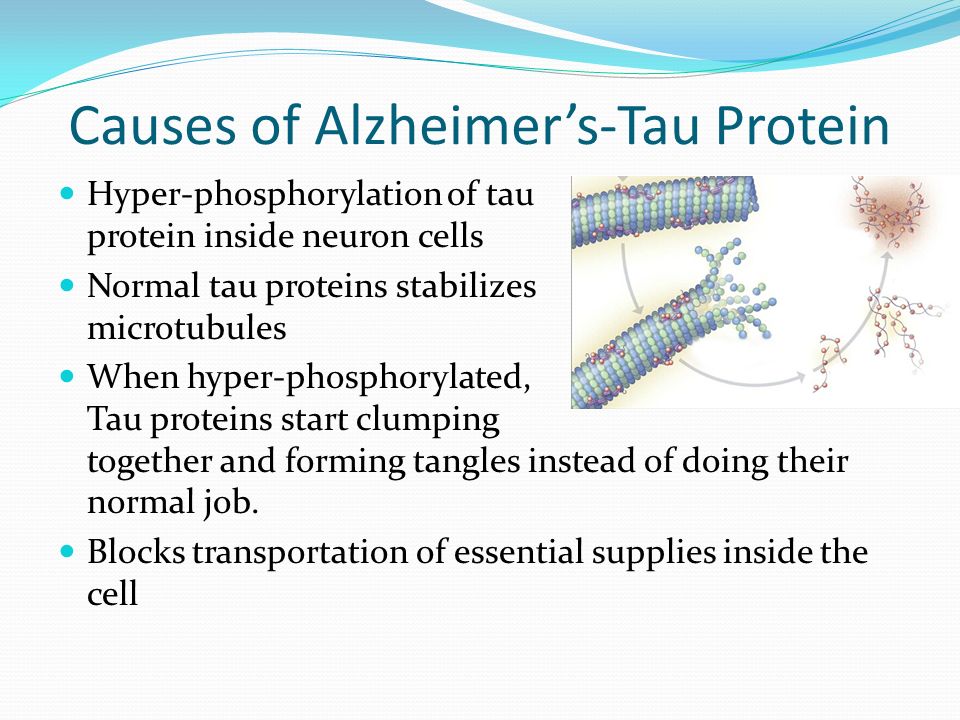
Tau is phosphorylated in a normal healthy brain, and it becomes hyperphosphorylated in Dementia and Alzheimer’s diseases.
The phosphorylation process plays a key role in metabolism and immune response.It plays a critical role in the regulation of just about everything that determines our health and life span via our cell cycles, growth, and apoptosis.
A protein being phosphorylated is like drinking an energy drink before a workout – it prepares a molecule for some specialized task
It is what I believe is the “energy beacon” or antenna that fungi/molds use as a signaling pathway within the host that can regulate or corrupt protein activity altering the expression of many genes at the cellular level.
Cells also secrete various proteins that become part of the extracellular matrix or are involved in intercellular communication.
Phosphorylation is the process by which protons move through the ATP synthase releasing energy that causes the rotor and rod of the ATP synthase to rotate. The mechanical energy from this rotation is converted into chemical energy as phosphate is added to ADP to form ATP.
The release of one or two phosphate groups from ATP, a process called dephosphorylation, releases energy, i.e., the removal of a phosphate group from an organic compound changing ATP to ADP.
The word phosphorus is derived from the Greek ‘phosphoros’, meaning bringer of light.
In Latin, phosphorus is known as lucifer, meaning the light bringer.
“How art thou fallen from heaven, O Lucifer, son of the morning! how art thou cut down to the ground, which didst weaken the nations!” – Isaiah 14:12
It also helps your nerves and muscles do their jobs. In the form of phospholipids, phosphorus is a component of cell membrane structure and of the body’s key energy source, adenosine triphosphate (ATP).
The tau protein helps make sure your brain operates properly giving your cells all the nutrients they need and for the stabilization of their oscillations for overall mental fitness. It is a microtubule-associated protein (MAP; Weingarten et al., 1975; Witman et al., 1976)
Physicist Roger Penrose, of the University of Oxford, claimed that the brain acts as a quantum computer and protein structures called “microtubules” played a role in human consciousness by exploiting quantum effects.
This may explain why when the tau protein is corrupted creating mental pathologies by something or process, which leads to people losing their minds, memories and consciousness. After all, quantam effect is the effect of one thing on another is the change that the first thing causes in the other.
Since the health and regulation of tau is critical for brain function, this may explain why tau pathology or taupathies lead to cognitive impairment, mental illness and diseases like dementia and Alzheimers.
As if there is a underlying or hidden cause that creates the effects of these mental illnesses and diseases and the tau is a key marker of these conditions.
The metaphysical and biological mark of those who are not to be saved – the damned.
Hence, “Pass through the city after him and strike! Do not look on them with pity nor show any mercy! Old men, youths and maidens, women and children, wipe them out! But do not touch any marked with the ‘Tau’ on the forehead. Begin at my sanctuary.” (Ezekiel 9:4-5).
The mark I contend may have been the tau protein hat acts like a cellular signal or magnet of sorts for the angelic executors of God’s commands to destroy the mentally ill and some who are so sick they act like what our ancestors may have called evil demons.
This story gets even more interesting as it relates to the science of the human mind and human behavior.
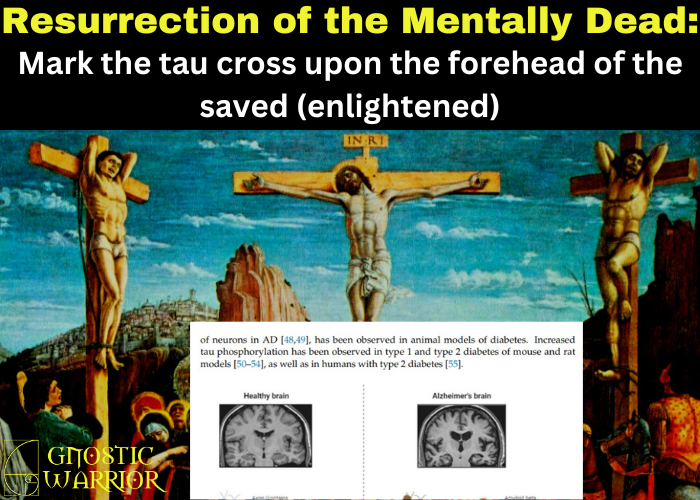
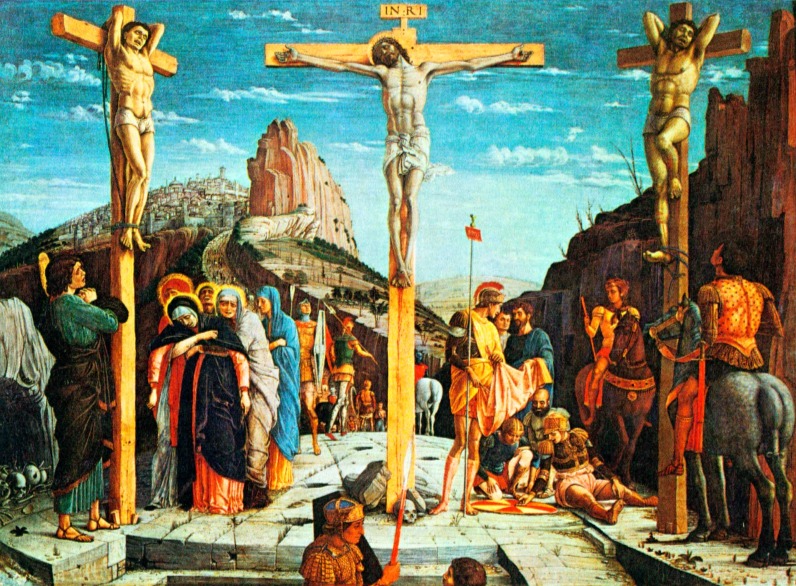
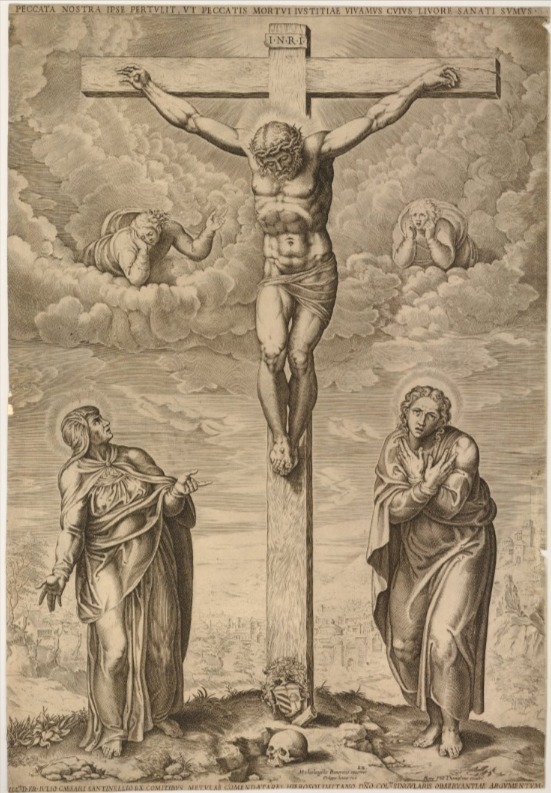
Scripture tells us that Jesus, a 33-year-old wise man from the land of Judea (Idumea, Crete) was brought to Golgatha, also known as the “Place of a Skull” and crucified upon a Tau cross with two others, one on each side, with Jesus in the middle.
Miraculously, after the crucifixion upon the tau cross, Jesus is resurrected.
The original Phoenician (Hebrew) meaning of resurrect or resurrection is ‘raising up, rising up’ or ‘to cause to stand or rise up; to raise from sleep or from the dead.
To resurrect is for man to be ‘raised up’ to live in the spiritual realms or what is called to be “born again or ‘born from above’ – spiritually regenerated (John 3: 3-5).
Man is “raised us up together, and made us sit together in the heavenly places (spiritual realms) in Jesus Christ.” (Ephesians 2: 1,5-6 & Colossians 2:12-13)
We can say that man is now conscious and aware from his former ignorant state of being medically brain dead and controlled by sin – “the soul who sins will die” (Ezekiel 18:20).
“The wages of sin is death” (Romans 6:23), which is the repayment you receive from being your own ‘god’.
Hence, although physically alive, you can be spiritually ‘dead’. (1 Timothy 5: 6; Revelation 3: 1)
The death of Jesus is not the end of his life or a state of non-existence, but the separation of the mind from the Light or what Christians call “Source of Life – God the Father.”
The resurrection of Jesus from a metaphysical sleep like state or from being unenlightened to become Righteous which is to be enlightened by the power of Almighty God – His Father.
As if he was formerly in a sleep like state under the sway of the Devil, which would be a sentence of mental illness and disease that would equate to death.
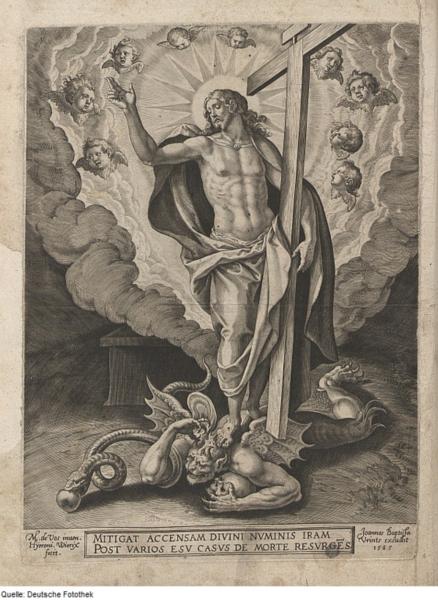
This is why in Ancient Christian iconography, Jesus with a halo is often depicted in a cloud of light pointing towards the heavens with his Right hand.
In his left hand he holds the tau cross as he stands upon the Devil who he has conquered, but still is alive as he clutches a human skull.
Jesus Christ is called the substitute Adam or the ‘last Adam’ who tasted death and overcame death on our behalf. He went to Hell to experience eternal death on our behalf. (Hebrews 2:9; 1 Corinthians 15:45-47)
The Spirit of God raised Him from the grave triumphant over all the powers of darkness that had sought to hold Him in their grip. (Psalm 22: 6-8,14-18)
The resurrection of the righteous, based on their union with God through Christ. (in John 5:28, 29)
The resurrection symbolizes the awakening and enlightenment of consciousness that occurs when someone stops abusing themselves and others or what Christian called “sinning.”
This is when a person like Jesus truly uses their senses and brain to think and process information. To use logic and reason rather than just emotionally react to or regurgitate knowledge.
A person that the Hebrews would have called Behimah or Behemoths and the Greeks would have called automatons. In Scripture, they are referred to as Beasts, so called men whose number is 666 to represent the carbon matter in which their mind dwells and is controlled.
For, “If Jesus Christ is not risen, then our preaching is empty and your faith is also empty. .. ..you are still in your sins!” (1 Corinthians 15:14 and 17b)
The ancient tau would signify a metaphysical seal or sign in a person’s head that would indicate they were servants (lights) of God as in the case of the “resurected Jesus.”
In John 19:17, we read, “Carrying His own cross, He went out to The Place of the Skull, which in Hebrew is called Golgotha “at the place where Jesus was crucified there was a garden, and in the garden a new tomb in which no-one had ever been laid” (John 19:41).
Saint Mark (xiv, 32) calls it chorion, a “a place” or “estate”; St. John (xviii, 1) speaks of it as kepos, a “garden” or “orchard”. In the East, a field shaded by numerous fruit trees and surrounded by a wall of loose stone or a quickset hedge forms the el bostan, the garden. (Catholic Encyclopedia 1913)
The word chorion from the Greek χωρος (choros) means a uniquely designated land: anything from a garden to an estate, a country or territory or even a whole realm (such as the realm of the dead).
The Galatians of the Bible descended from the Gaul, and in Paul’s famous complaint about the foolish Galatians who had let themselves get bewitched (GALATIANS 3:1), he also appears to state that the Gaul had reached Christ-awareness, but lost it.
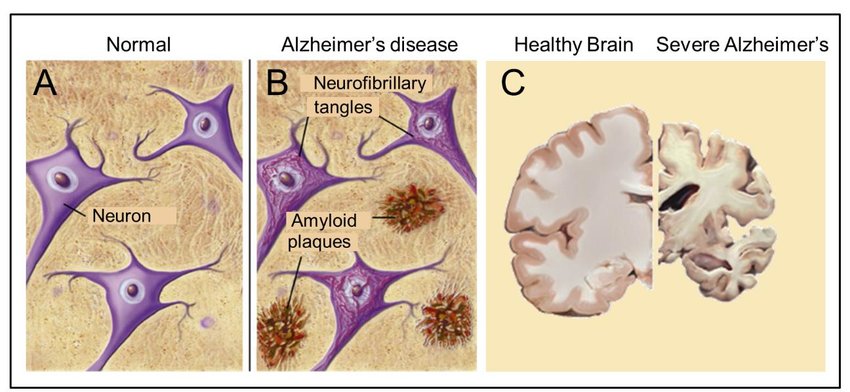
Tau is found in the nucleus of neurons. Tau pathology is the main cause of many neurodegenerative diseases such as dementia and Alzheimer’s, which are caused by the accumulation of abnormal tau protein in the brain referred to as tauopathies.
Within these people’s brains are neurofibrillary tangles or what are called intracellular aggregates of tau protein filaments) and amyloid plaques (extracellular aggregates of amyloid beta-peptides). Researchers have suggested that tau can be involved in rRNA-coding DNA transcription and rRNA processing.
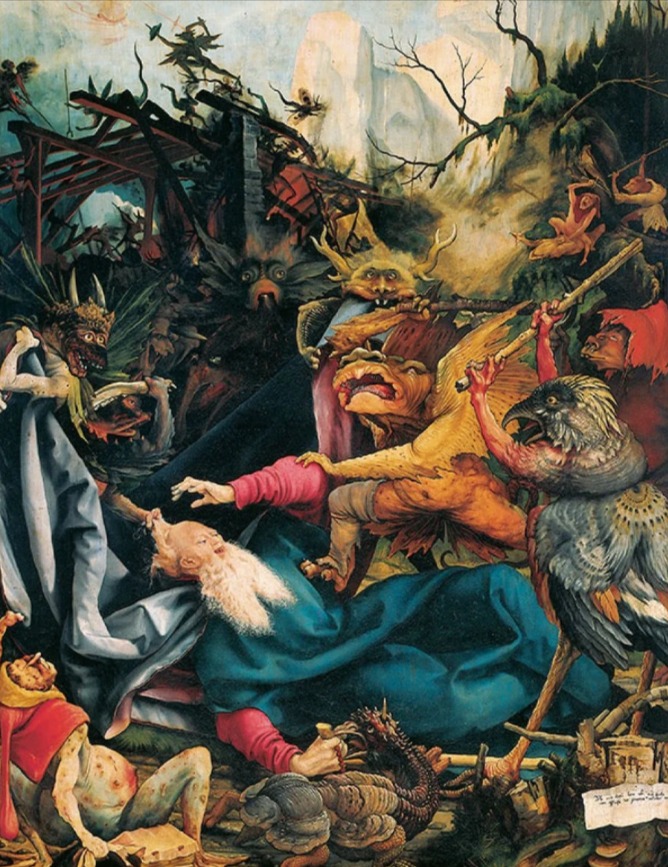
This gets fascinating because the Tau cross is historically associated with Saint Anthony of Egypt and became known as Saint Anthony’s cross, as the fungal disease called ergotism, and later was known as Saint Anthony’s fire.
It was known as Holy Fire (Ignis Sacer) or st-Antony’s Fire in the Middle Ages, because of the burning sensations resulting in the body rotting or decaying, i.e., gangrene of limbs.
Ergot made people mentally ill by causing them to appear agitated, hallucinate, convulse and just appear as if they were crazy or demon possessed.
If the fungal disease was left untreated, blood flow to an infected person’s extremities, resulting in the later stages with gangrene causing fingers, toes, hands and feet to drop off the body.
This reminds me of what we call today diabetes.
A disease that causes your limbs to rot and decay to the point they need to be amputated.
This condition may be the source of “dancing epidemics.” Dancing epidemics (also known as dancing plagues or tarantism) occurred between the 14th and 17th centuries CE. Various medieval chronicles described groups of people engaging in this behavior sometimes for months on end.
These dances appeared to be involuntary and were possibly the result of ergot poisoning, vengeful spirits, supernatural fears, the bite of a tarantula or scorpion and the distress of poverty and hardship of everyday life combined with the occurrences of natural disasters.
In honor of St. Anthony’s life and struggles, the Order of Hospitallers of St. Anthony was established in 1100 CE at Grenoble, France. There a center was created to care for people who were afflicted with ergotism.
The walls of the hospital were painted in red to mimic the burning sensations experienced by those suffering from the illness.
The monks wore black robes adorned with a blue cross.
Moe is the founder of GnosticWarrior.com. He is a father, husband, author, martial arts black belt, and an expert in Gnosticism, the occult, and esotericism.
In Phaedrus (370 BCE), Plato details a discussion between Socrates and Phaedrus about the Egyptian myth of Thoth (Theuth), the god of the underworld who is credited with “number and calculation, geometry and astronomy, as well as the games of draughts and dice, and above all else, writing” (Phaedrus, 274d).
Now the king of all Egypt at that time was Thamus, who lived in the great city of the upper region, which the Greeks call the Egyptian Thebes, and they call the god himself Ammon. To him came Thoth to show his inventions, saying that they ought to be imparted to the other Egyptians.
Thamus, the King of the great city of the upper region, which the Greeks call the Egyptian Thebes, and they call the god himself Ammon. He had visited Thoth pleading with him to disseminate the various learning arts around Egypt. As Thoth made his presentations, Thamus would either praise or offer his criticisms.
When it came to the art of writing, Thoth told the King:
“O King, here is something that, once learned, will make the Egyptians wiser and will improve their memory; I have discovered an elixir for memory and for wisdom.” (Phaedrus, 274e)
Thoth claims that writing will allow humans to record and then recall their thoughts and thus help with their memories, but Thamus disagrees. The King believes Thoth’s love of writing had kept him from acknowledging the truth that writing would increase forgetfulness rather than improve memory.
Instead of understanding and experiencing things to create experiential knowledge, people would instead rely on reading and writing to learn a subject. In doing so, students would learn a great many subjects without properly thinking about them.
Hence, they may have the “appearance of wisdom” but “for the most part they will know nothing” (Phaedrus, 275a-b).
Thamus said;
“Most ingenious Thoth, one man has the ability to beget arts, but the ability to judge of their usefulness or harmfulness to their users belongs to another; and now you, who are the father of letters, have been led by your affection to ascribe to them a power the opposite of that which they really possess.
“For this invention will produce forgetfulness in the minds of those who learn to use it, because they will not practice their memory. Their trust in writing, produced by external characters which are no part of themselves, will discourage the use of their own memory within them.
You have invented an elixir not of memory, but of reminding; and you offer your pupils the appearance of wisdom, not true wisdom, for they will read many things without instruction and will therefore seem to know many things, when they are for the most part ignorant and hard to get along with, since they are not wise, but only appear wise.”
Socrates emphasizes this point by stating that writing alone has no understanding of itself and “continues to signify just the same thing forever” (Phaedrus, 275d-e). He instead favored discourse and conversation in the form of discourse and dialect.
What Socrates means by this is that a true philosopher’s knowledge and ideas are not to be set in stone as rigid dogmas that cannot be modified or changed with the introduction of new or contradicting information.
They must always be open to viewing issues from multiple perspectives and to arrive at the most reasonable conclusion based on truth rather than selfish motives or egotistical aims.
For Socrates, true knowledge was like the seed of a flower that continues to grow allowing for more information to be added or discarded.
By continuing a dialect and discourse with the original planters, i.e., adding new knowledge about a subject or philosophy, it becomes more beautiful and perfect and thus continues to grow becoming immortal.
Socrates had said:
“The dialectician chooses a proper soul and plants and sows within it discourse accompanied by knowledge—discourse capable of helping itself as well as the man who planted it, which is not barren but produces a seed from which more discourse grows. Such discourse makes the seed forever immortal and renders the man who has it as happy as any human being can be.” (277a)
When we study the dialectical method, we find that this can be applied to the discourse a philosopher or researcher must partake in to find truth.
This can happen in different eras or thousands of years apart between the originator of the idea or philosophy and two or more people holding different points of view about a subject but wishing to hash out the difference of opinions or facts using a scientific method of logic and reason to establish the ultimate truth.
A thinking layer of knowledge and information that is introduced into human civilization as an idea that becomes our programming code based upon how many people accept, propagate, dialect, discourse, and expand upon the idea to the point it forms our reality.
This explanation of how ideas and knowledge become immortal is how I contend that the Noosphere or World Soul is formed.
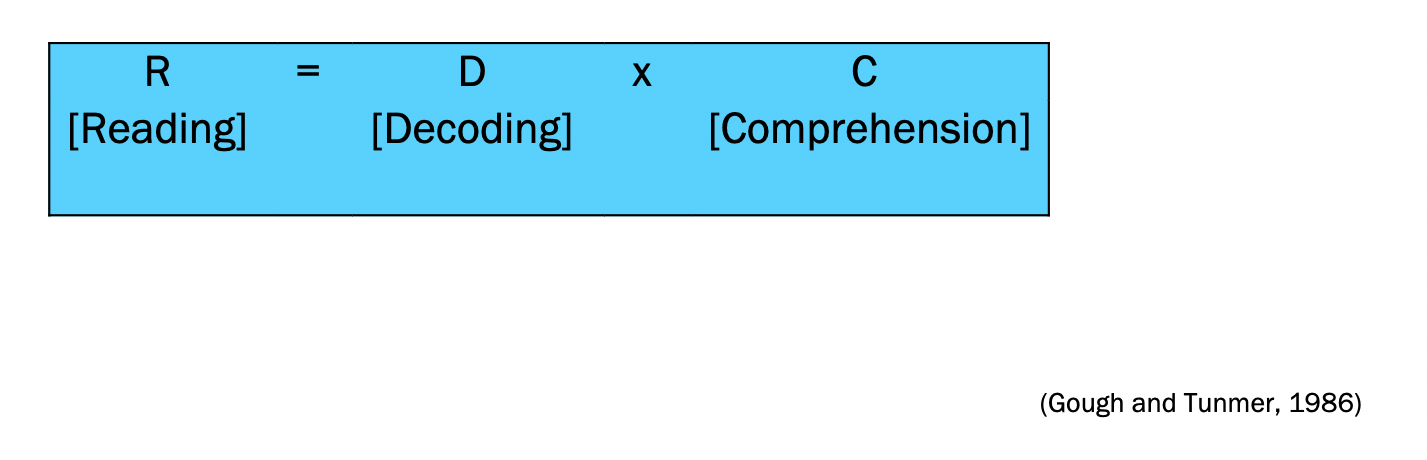
This debate that Plato puts forth between Thoth and the King of Egypt is fascinating because if we fast forward to our modern era, a 1986 study had shown that the most successful readers must first decode what they read to truly comprehend the subject.
It is called the theory of the Simple View of Reading, which defines the skills that contribute to an individual’s reading comprehension as the product of their decoding skill and language comprehension (Gough & Tunmer,1986).
Meaning, that in order to learn and know a certain subject, you cannot just tread something, you must learn to recognize and interpret information to discover the underlying meaning and to explain it in a comprehensible form.
Meaning that reading and memorizing will not equate to true understanding and wisdom.
A person must think deeply about what they read in order to understand.
Almost two decades later, a new improved theory was put forth that had shown that there are many more skills a person must have to truly decode information and to be called an accurate researcher and or expert on any given subject.
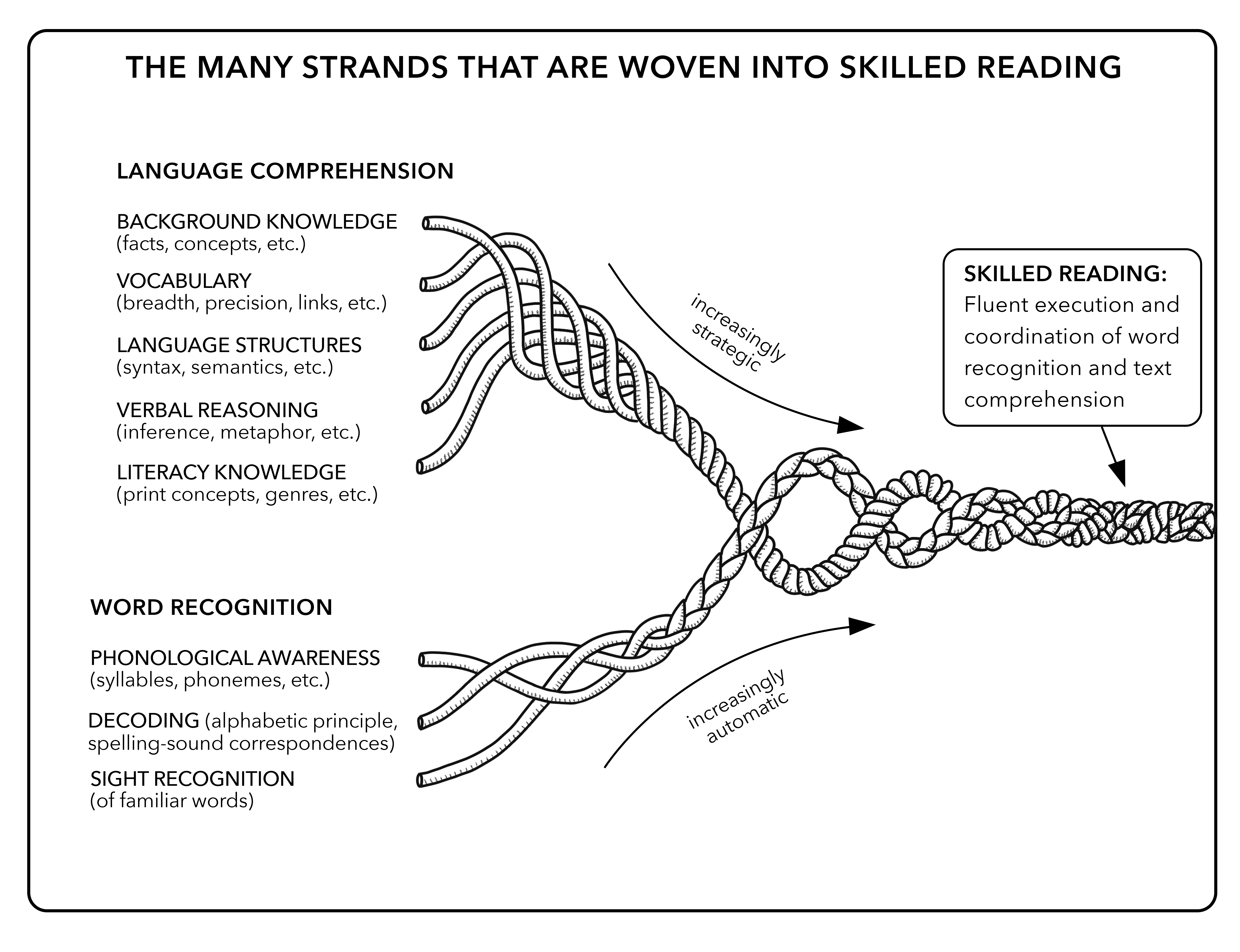
In 2001, Dr. Hollis Scarborough, a psychologist, advanced this theory further by showing that true understanding, skill, and wisdom are attained through several different skill sets that must be used for the decoding and comprehension of knowledge and word recognition.
She used a “reading rope” model depicting a rope with its different strands to demonstrate the skills a reader needs to come to a true understanding or wisdom on a subject.
The strands of the rope show the different elements of language necessary for true comprehension (the top five strands), which bind to the three essential skills (the bottom three strands) of word recognition to form a strong rope.
If one strand is weak or if the strands are not interwoven tightly in increasingly strategic and automatic ways, then the reader cannot truly become wise.
Background knowledge
Vocabulary
Language structures
Verbal reasoning
Literacy knowledge
Therefore, attaining knowledge and becoming wise does not just involve reading about a subject, it also entails intensive thought processes from different points of view and through our own experiences, and our own capacities.
It is the quality of our thoughts in combination of who you are, what we read, and converting this knowledge (information, facts, associations etc. ) to wisdom (outcomes, philosophies etc.) is how someone truly becomes wise.
But we must remain humble in our ways and cannot become a know it all or the guru who ignorantly thinks he as all the answers. As Socrates once said:
“The only true wisdom is in knowing you know nothing.”
A true philosopher must also always be open to discourse and dialect with other people and researchers who many will have different ideas and opinions if we truly want to arrive at truth.
Otherwise, we are living on the fumes from the bowels of the dogmatic lies written and read by mortal automatons hell bent on storming heaven to invert and control reality for their selfish gain.
SOURCES:
Phaedrus
Gough, Philip B., and William E. Tunmer. “Decoding, Readability, and Reading Disability.” Remedial and Special Education, 7(1), Jan/Feb 1986, pp. 6–10.
Scarborough, Hollis S. “Connecting Early Language and Literacy to Later Reading (Dis)Abilities: Evidence, Theory, and Practice.” Handbook of Early Literacy Research, edited by Susan B. Neuman and David K. Dickinson, Guilford Press, 2001, pp. 97–110.
Moe is the founder of GnosticWarrior.com. He is a father, husband, author, martial arts black belt, and an expert in Gnosticism, the occult, and esotericism.
Concealed within the teachings of Freemasonry are some of the most important ancient symbols known to mankind. A hidden science that Masons around the globe have preserved for many centuries until the modern era.
As Albert G. Mackey once wrote, “To study the symbolism of Masonry is the only way to investigate its philosophy. This is the portal of its temple, through which alone we can gain access to the sacellum where its aporrheta are concealed.
Its philosophy is engaged in the consideration of propositions relating to God and man, to the present and the future life. Its science is the symbolism by which these propositions are presented to the mind.”
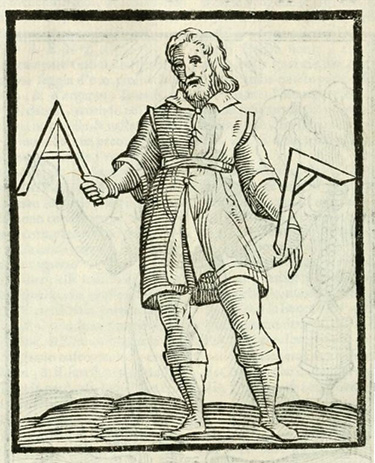
One of these symbols in Masonry is called the T Square that we also know of today in many religions as the Tau cross.
For thousands of years, it was one of the most esteemed and important symbols in all of the world.
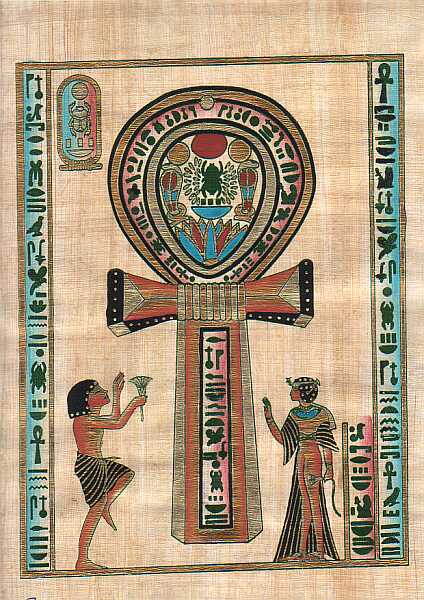
To the Ancient Egyptians, we find it in the holy life-giving Ankh, as the symbol of life.
The Ancient Egyptian Ankh, or Tau Cross is a symbol of divinity (Harding). To Freemasons, it symbolizes the Man’s triumph of his spiritual nature (human, angelic, godlike) over his physical (animal, beast, demonic) nature.
The Tau Cross is a symbol for the power of life and consciousness often associated with the Old Testament and the ancient Phoenician Hebrews, Egyptian Israelites, and the Greeks who propagated the Tau around the world.
According to Manly Hall 33°, the Tau is the oldest form of the cross and may have originated with the Egyptians.
From ancient times, the act of inscribing the mark of the Tau upon one’s forehead has been observed in many places around the world. The Tau was a sign on the foreheads of people accused of crimes, the Tau meant they been acquitted of those charges. Hence, we see the Tau employed as a symbol of liberation (Hall 569).
For example, the Druids who I have connected to the Phoenicians, AKA Hebrews used the Tau cross as a representation of the planet Jupiter, their chief deity (Mackey).
The Kabalists also use the Tau cross to represent what they call the perfect number, the number “10,” which is in reference to the Pythagorean Tetractys and the ineffable name of the deity (Pike).
In Phoenician cosmogony, the Ankh becomes the Hebrew תָּו tav, tau, or taw, the last letter of the alphabet. The tau is one of the most ancient symbols in Judaism and Christianity.
It is the cross that The Prophet Ezekiel speaks of as the mark distinguishing those who were to be saved from the damned in Jerusalem.
The tau is much different than the modern Christian or Latin cross, which is the ensign of warfare and symbol of death modeled after the Greek theta representing the New Testament.
According to Manly P. Hall, the Tau cross was a symbol of Light and Grand Emblem of Royal Masonry. Hall wrote;
“The TAU cross is preserved to modern Masonry under the symbol of the T square.
This appears to be the oldest form of the cross extant. To the Rosicrucians, Alchemists, and Illuminati, the cross was the symbol of light, because each of the three letters L V X is derived from some part of the cross.”
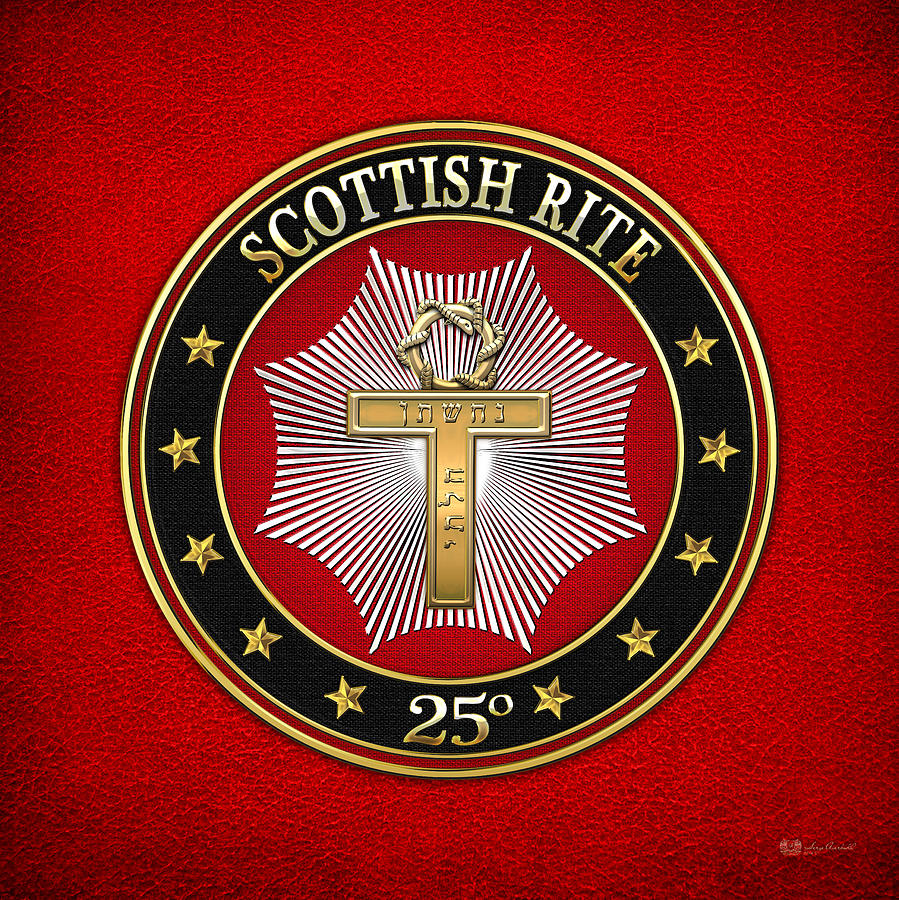
The Knight of the Brazen Serpent, which is the 25th Degree of the Scottish Rite (Council of Kadosh) preserves some of the secrets of the Egyptian Crux Ansata of the Phoenician and Greek Tau Cross.
Freemasonic author, Rex R. Hutchens, 33° discusses the meaning of the symbols and words contained in this degree.
“The jewel is a Tau cross, of gold, surmounted by a circle – the Crux Ansata of Egypt – round which a serpent is entwined. On the upright part of the cross is engraved the Hebrew word meaning ‘he has suffered’ or ‘been wounded’, and on the arms the Hebrew word given in the Bible for the brazen serpent, ‘Nakhustan’.”
Manly Hall further stated that it was used in the Royal Arch Degree as the true name of God. Hall said;
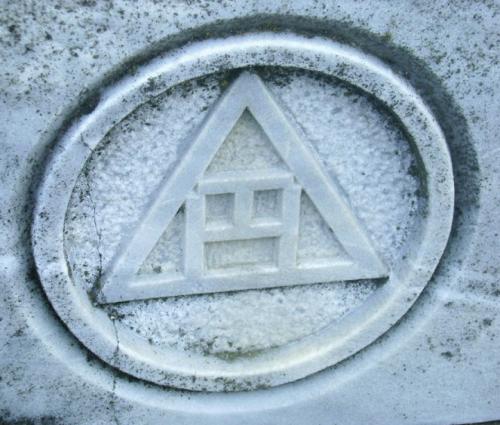
“In Freemasonry, the triple tau is used in the Royal Arch Degree as a mark designating and separating those who know and worship the true name of God from those who are ignorant.
It is placed in the center of a Triangle and Circle and is so highly esteemed as to be called the “emblem of all emblems,” and “the grand emblem of Royal Arch Masonry.”
According to Albert Pike 33°, the Masonic symbolism of the triple tau in the center of a circle and a triangle signifies the great lights of Masonry. Pike wrote;
“The triple Tau, in the center of a circle and a triangle, typifies the Sacred Name; and represents the Sacred Triad, the Creating, Preserving, and Destroying Powers; as well as the three great lights of Masonry.
If to the Masonic point within a Circle, and the two parallel lines, we add the single Tau Cross, we have the Ancient Egyptian Triple Tau.”
Pike further stated:
“This Tau was in the form of the cross of this degree, and it was the emblem of life and salvation. The Samaritan Tau and the Ethiopic Tavvi are the evident prototype of the Greek r; and we learn from Tertullian, Origen, and St. Jerome, that the Hebrew Tau was anciently written in the form of a Cross.
In ancient times the mark Tau was set on those who had been acquitted by their judges, as a symbol of innocence. The military commanders placed it on soldiers who escaped unhurt from the field of battle, as a sign of their safety under the Divine Protection.
It was a sacred symbol among the Druids. Divesting a tree of part of its branches, they left it in the shape of a Tau Cross, preserved it carefully, and consecrated it with solemn ceremonies.
On the tree they cut deeply the word Thau, by which they meant God. On the right arm of the Cross, they inscribed the word Hesuls, on the left Belen or Belenus, and on the middle of the trunk Tharamis. This represented the sacred Triad.”
SOURCES:
Albert Gallatin Mackey – An Encyclopaedia of Freemasonry and Its Kindred Sciences
Moe is the founder of GnosticWarrior.com. He is a father, husband, author, martial arts black belt, and an expert in Gnosticism, the occult, and esotericism.