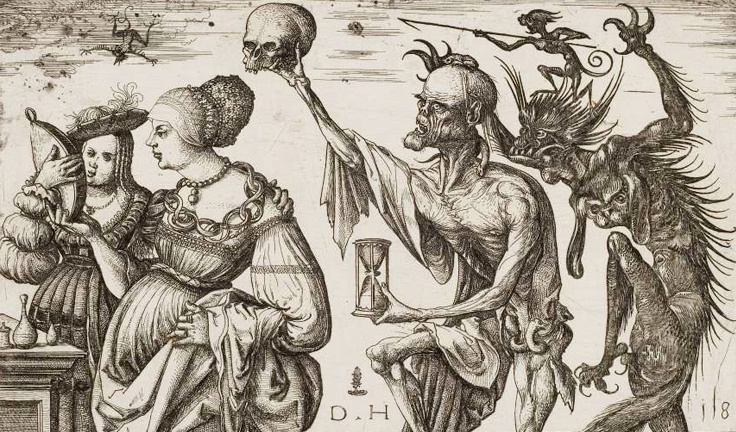
Agrippa: What concerning man after death, divers opinions

Agrippa: What concerning man after death, divers opinions

“And now the great image of me shall go under the earth……” – Dido

The following text is a chapter taken from The Three Books of Occult Philosophy by Henry Cornelious Agrippa. It is titled, “What concerning man after death, divers opinions.”

In this text, Agrippa details the ancient occult doctrines and opinions from various religions and Adepts throughout the Ages. I would like to point out where Agrippa shares some verses from different poems and mythologies that stood out in my mind as aligning with my work into the dark underworld of evil demons, disembodied spirits, and molds (fungi).

He first shares a verse from a poem by Lucretius who hath expressed:

What came from earth to earth returns again; What came from God, returns from whence it came.

The next verse is from a poem by Ovid who Agrippa said expressed it better when Ovid wrote:

Four things of man are spirit, soul, ghost, flesh; These four places keep and do possess.

The earth covers flesh, the ghost hovers over the grave, Orcus hathe the soul, stars do the spirit crave.

When speaking about when the spirit of man hath done ill, the spirt judgeth it, and leaves it to the pleasure of the devil, and the sad soul wanders about hell without a spirit, like an image, as Dido complains in Virgil:

And now the great image of me shall go under the earth……

Now, read the full text and see what Gnosis Agrippa can help you remember!

CHAP. XLI. What concerning man after death, diverse Opinions.

IN general it is appointed for all men once to die; death is fatal to all; but one is natural, another violent, another voluntarily received, another inflicted by humane laws for offences, or by God for sin, that they seem not to have ren∣dred a due to nature, but a punishment for sins; which (as the Hebrew Masters saith) God remitteth to none;

Whence the Assembly delivered to Ezechiah, that after the house of the Sanctuary was pulled down, although there remained not any order of judiciary execution, yet there should be a four∣fold kind of punishment by the which they might be con∣demned, that no man guilty of death should escape without retaliation; for he which had deserved to be stoned to death, was, God dispensing, either cast down headlong from the house, or trodden in pieces by wild beasts, or overwhelmed by ruin or fall;

but he which had deserved to be burned, was either consumed by burnings, or finished his life either by venomous bitings, or stings of a serpent, or by poison; but he which should die by the sword, was killed either by the violence of the jurisdiction, or by the tumult of the people or faction, or by the treachery of thieves; he that ought to be hanged, was suffocated either in the waters, or extinguished by some other strangling punishment; and by the ground of this doctrine, that great Origen supposed the Gospel of Christ to be declared, He who useth the sword shall perish by sword.

Moreover the Ethnic Philosophers pronounced that retaliation of this kind is Adrastia, viz. an inevitable power of divine laws, by the which in courses to come, is recompensed to every one according to the reason and merits of his former life; so as he who unjustly ruled in the former life, in the other life should relapse into a servile state; he which hath polluted his hands with blood, should be compelled to undergo retaliation; he that lived a brutish life, should be precipitated and revolved into a brutish body; of these things Plotinus writeth in his book of the proper Genius of every one; saying, whosoever have kept humane propriety, do again arise men: but whosoever have used sense only, do return brute animals:

yet so, as those who use sense especially together with wrath, do arise wild beasts; but whosoever use sense by concupiscence and pleasure, do return treacherous and gluttonous beasts: but if they shall live, not by sense together with them, so much as by the degeneration of sense, plants grow up again with them; for the vitals only, or chiefly, are living; & all their care was that they might be turned into plants.

But they which have lived being too much allured by music, not being depraved in other things, are born again musical animals; and they which have reigned without reason, become Eagles unless they have been tainted with any wickedness. But he which hath lived civilly and virtuously returns as a man. And Solomon himself in the Proverbs calls man sometimes a Lion, Tiger, Bear, a Boar. Sometimes a Hare, a hunting dog, a Cony;

sometimes a Pismire, a Hedgehog, a Serpent, a Spider; some∣times an Eagle, a Stork, a Cock, or any other bird, and many such as these. But the Cabalists of the Hebrews do not admit that souls are turned into brutes: Yet they do not deny but that they that have wholly lost their reason, shall in another life be left to a brutish affection and imagination: they assert also that souls are revolved hither thrice, and no more; because this number seems sufficient to suffice for the purgati∣on of sins, according to that of Job, He hath delivered my soul that it should not proceed to death, but should live, and see the light. Behold all these things doth God work three times through each, that he might reduce their souls from corruption, and illuminate them with the light of the living. But now let us see what the Ancients opinion is concerning the dead.

When man dies, his body returns into the earth, from which it was taken: the spirit returns to the heavens, from whence, it descended, as saith the Preacher, The body returns to the earth from whence it was, & the spirit returns to God that gave it; which Lucretius hath expressed in these verses;

What came from earth to earth returns again;
What came from God, returns from whence it came.
But Ovid expresseth it better in these verses.
Four things of man there are; Spirit, Soul, Ghost, Flesh;
These four lower places keep and do possess.
The earth covers flesh, the Ghost hovers over the grave.
Orcus hath the soul, Stars do the spirit crave;

The flesh being forsaken, & the body being defunct of life, is called a dead Carcass; Which as say the divines of the Hebrews, is left in the power of the Demon Zazel, of whom it is said in the Scripture, Thou shalt eat dust all thy daies; and els∣where, The dust of the earth is his bread.

Now man was created of the dust of the earth, whence also that Demon is called the lord of flesh, and blood, whilest the body is not expiated and sanctified with due solemnities. Hence not without cause the Ancients ordained expiations of Carcasses, that that which was unclean might be sprinkled with holy water, perfumed with incense, be conjured with sacred orations, have lights set by, as long as it was above ground, and then at length be buried in a holy place.

Hence Elpenor in Homer, I beseech thee (saith he) Ulysses, be mindful of mee, and leave mee not unburied, lest being unburied I become an ob∣ject of the Gods wrath. But the spirit of a man, which is of a sacred nature, and divine-offspring; because it is always faultless, becomes incapable of any punishment; But the soul if it hath done well, rejoiceth together with the spirit, and go∣ing forth with its Aerial Chariot, passeth freely to the quires of the Heroes, or reacheth heaven, where it enjoys all its senses, and powers, a perpetual blessed felicity, a perfect knowledge of all things, as also the divine vision, and possession of the kingdom of heaven, and being made partaker of the divine power bestows freely divers gifts upon these inferiors, as if it were an immortal God.

But if it hath done ill, the spirit judgeth it, and leaves it to the pleasure of the divel, and the sad soul wanders about Hell without a spirit, like an image, as Dido complains in Virgil;

And now the great image of mee shall go
Under the earth—

Wherefore then this soul being void of an intelligible es∣sence, and being left to the power of a furious phantasy, is ever subjected by the torment of corporeal qualities, know∣ing that it is by the just judgement of God, forever deprived of the divine vision (to which it was created) for its sins: the absence of which divine vision, as the Scripture testifies, is the ground of all evils, and the most grievous punishment of all, which the Scripture calls the pouring down of the wrath of God. This image therefore of the soul enters into the ghost as an Aerial body, with which being covered doth sometimes advise friends, sometimes stir up enemies, as Dido threatens Aeneas in Virgil saying.

I’ll hunt thee, and thee tortures I will give.

For when the soul is separated from the body, the perturbations of the memory and senses remain.

The Platonists say, that the souls, especially of them that are slain, stir up ene∣mies, mans indignation not so much doing of it, as the divine Nemesis and Demon foreseeing, and permitting of it. So the spirit of Naboth (as the masters of the Hebrews interpret it) because in the end of its life it went forth with a desire of revenge, was made, to execute revenge, the spirit of a lye, and went forth, God permitting it, a lying spirit in the mouth of all the prophets, until it made Achab go up unto Ramoth-Gilead And Virgil himself together with the Pythagoreans, and Platonists, to whom also our Austin assents, confesseth that separated souls retain the fresh memory of those things which they did in this life, and their will, whence he sings;

What care they Living had of horses brave
And Arms, the same doth follow them to the grave.

And Azazel in his book De Scientia Divina, and other Arabians, and Mahumatists which were Philosophers, think that the operations of the soul, being common to the con∣joyned body, impressed upon the soul a Character of use and exercise, which it being separated will use, being strongly im∣pressed to the like operations and passions which were not de∣stroyed in lifetime. And although the body and organ be corrupted, yet the operation will not cease, but like affections and dispositions will remain. And these souls the ancients call with a common name Manes, whereof those that were in this life innocent, and purified by moral virtues, were very happy; And of them as Virgil sings,

—That did for their country die,
With priests who in their lives vowed chastity,
And sacred Poets, who pleased Phoebus best,
Or by invented arts mans life assist,
And others in their memories renowned,—

Although they departed this life without the justification of faith, and grace, as may Divines think, yet their souls were carried without any suffering into happy pleasant fields; and as saith Virgil,

They went to places and to pleasant greens,
And pleasant seats the pleasant groves between.
Where they enjoy certain wonderful pleasures, as also
sensitive, intellectual and revealed knowledge;

also per∣haps they may be indoctrinated concerning faith, and justifi∣cation, as those spirits long since to whom Christ preached the Gospel in prison. For as it is certain that none can be saved without the faith of Christ, so it is probable that this faith is preached to many Pagans and Saracens after this life, in those receptacles of souls unto salvation, and that they are kept in those receptacles, as in a common prison, until the time comes when the great Judge shall examine our actions.

To which opinion Lactantius, Ireneus, Clemens, Tertullian, Austin, Ambrose, and many more Christian writers do assent. But those souls which are impure, incontinent, depart wicked, do not enjoy such happy dreams, but wander full of most hideous Phantasmes, and in worser places, en∣joying no free knowledge but what is obtained by concession, or manifestation, and with a continual fleshly desire are subjected by reason of their corporeal corruption to the sense of pain, and fear swords, and knives.

These without doubt Homer seemed to be sensible of, when in the eleventh book of his Odysseus he brings in the mother of Ulysses being dead, standing near to him offering sacrifice, but neither knowing him, or speaking to him, whilst he with his sword drawn did keep off ghosts from the blood of the sacrifice.

But after that Tyresia the prophetess advising of her, she had tasted of the sacrifice and had drunk the blood, she presently knew her son, and crying spake to him. But the soul of Tyresia the prophetesses, notwithstanding the drawn sword, even be∣fore she tasted the blood, knew Ulysses, and spake to him, and shewed him the ghost of his mother standing near to him. Whatsoever vices therefore souls have committed in the bo∣dies unexpiated in this life, they are constrained carrying the habits of them along with them, to purge themselves of them in hell, and to undergo punishment for them; which the Poet explains in these verses;

—When they die,
Then doth not leave them all their misery.
They having not repented of their crimes,
Must now be punished for their misspent times.

For as the manners and habits of men are in this life, such affections for the most part follow the soul after death, which then calls to mind those things which it did formerly do in its life, and then more intently thinks on them, for as much as then the divers offices of life cease, as those of nourishing, growing, generating, and various occupations of senses, and humane affairs and comforts, and obstacles of a grosser body.

Then are represented to the plantastick reason those species, which are so much the more turbulent and furious, by how much in such souls there lies hid an intellectual spark more or less covered, or altogether extinct into which are then by evil spirits conveyed species either most false, or terrible: whence now it is tormented in the concupiscible faculty, by the concupiscence of an imaginary good, or of those things which it did formerly affect in its life time, being deprived of the power of enjoying them, although it may seem to itself sometimes almost to obtain its delights, but to be driven from them by the evil spirits into bitter torments, as in the Poets, Tantalus from a banquet, Sardanapalus from embraces, Midas from gold, Sisyphus from power; and they called these souls hobgoblins, whereof if any taking care of household affairs lives and inhabits quietly in the house, it is called a household god, or familiar.

But they are most cruelly tortured in the irascible saculty with the hatred of an imaginary evil, into the perturbations whereof, as also false suspicions, and most horrible Phantasmes they then fall, and there are represented to them sad representations; sometimes of the heaven falling upon their head, sometimes of being consumed by the violence of flames, sometimes of being drowned in a gulfe, sometimes of being swallowed up into the earth some∣times of being changed into divers kinds of beasts sometimes of being torn and devoured by ugly monsters, sometimes of being carried abroad, through woods seas, fire, air, and through fearfull infernal places, and sometimes of being taken, and tormented by devils.

All which we conceive happens to them after death no otherwise then in this life to those who are taken with a phrensie, and some other melancholy distemper, or to those who are affrighted with horrible things seen in dreams, and are thereby tormented, as if these things did really happen to them, which truely are not reall• but only species of them apprehended in imagination: even so do horrible representations of sins terrifie those souls after death as if they were in a dream and the guilt of wickedness drives them headlong through divers places; which therefore Orpheus calls the people of dreams, saying, the gates of Pluto cannot be unlocked; within is a people of dreams; such wicked souls therefore enjoying no good places, when wandring in an Aeriall body, they represent any form to our sight, are called hags, and goblins, inoffensive to them that are good, but hurtfull to the wicked, appearing one while in thinner bodies another time in grosser, in the shape of divers animals, and monsters, whose conditions they had in their life time, as sings the Poet,

Then divers forms and shapes of brutes appear;
For he becomes a tiger, swine, and bear,
A scaly dragon, and a lioness,
Or doth from fire a dreadful noise expresse;
He doth transmute himself to divers looks,
To fire, wild beasts, and into running brooks.

For the impure soul of a man, who in this life contracted too great a habit to its body, doth by a certain inward affection of the elemental body frame another body to itself of the vapours of the elements, refreshing as it were from an easier matter as it were with a suck, that body which is con∣tinually vanishing; to which being moreover enslaved as to a prison, and sensible instrument by a certain divine Law, doth in it suffer cold, and heat, and whatsoever annoys the body, spirit, and sense, as stinks, howlings, wailings, gnashing of the teeth, stripes, tearings, and bonds, as Virgil sang;

—And therefore for their crimes
They must be punished, and for misspent times
Must tortures feel; same in the winds are hung,
Others to cleanse their spotted sins are flung
Into vast gulfs, or purged in fire—

And in Homer in his Necyomancy Alcinous makes this rela∣tion to Ulysses,

Of Tytius the dear darling of the earth,
We saw the body stretched nine furlongs forth
And on each side of whom a vultur great
Gnawing his bowels—

These souls sometimes do inhabit not these kinds of bodies only, but by a too great affection of flesh and blood trans∣mute themselves into other animals, and seise upon the bo∣dies of creeping things, and brutes, entering into them, what kind soever they be of, possessing them like Demons.

Pythagoras is of the same opinion, and before him Trisme∣gistus, asserting that wicked souls do oftentimes go into creep∣ing things, and into brutes, neither do they as essential forms vivifies and inform those bodies, but as an inmate dwell there as in a prison, or stand near them by a local in distance as an internal mover to the thing moved; or being tied to them are tormented, as Ixion to the wheels of serpents, Sysiphus to a stone; neither do they enter into brutes only, but sometimes into men, as we have spoken concerning the soul of Nabaoth which went forth a lying spirit in the mouth of the Prophets.

Hence some have asserted that the lives, or spirits of wicked men going into the bodies of some men, have disturbed them, and sometimes slew them. Which is more fortunately granted unto blessed souls that like good Angels they should dwell in us, and enlighten us, as we read of Elias, that he being taken from men his spirit fell upon Elisha: and elsewhere we read that God took of the spirit which was in Moses, and gave it to 70. men.

Here lies a great secret, and not rashly to be revealed.

Sometimes also (which yet is very rare) souls are driven with such a madness that they do enter the bodies not only of the living, but also by a certain hellish power wander into dead Carkasses, and being as it were revived commit horrid wickednesses, as we read in Saxo Grammaticus, that Asuitus and Asmundus two cerrain men vowed one to the other, that he that should live longest should be buried with him that was first dead: at length Asuitus being first dead, is buried in a great vault with his dog, and horse, with whom also Asmundus by reason of his oath of friendship, suffered himself to be buried alive, (meat which he should for a long time eat, being brought to him;) in processe of time Eri∣cus King of Suecia passing by that place with an army, breaking up the tomb of Asuitus (supposing that there was treasure) the vault being opened, brought forth Asmundus: whom, when he saw having a hideous look, being smeared over with filthy corrupt blood which flowed from a green wound (for Asuitus being revived, in the nights, took off with often strugling his right ear) he commanded him to tell him the cause of that wound: which he declares in these verses;

Why doth my visage wan you thus amaze?
Since he that lives amongst the dead, the grace
Of beauty needs must loose; I know not yet
What daring Stygian fiend of Asuit
The spirit sent from hell, who there did eat
A horse, and dog, and being with this meat
Not yet suffie’d, then set his claws on me,
Pull’d off my cheek mine ear, and hence you see
My ugly, wounded, mangled bloody face;
This monstrous Wight returned not to his place
Without received revenge; I presently
His head cut off, and with a stake did I
His body thorough run—

Pausanias tells a story not unlike to this, taken out of the interpreters of the Delphi; viz. that there was a certain infernal Demon, which they called Eurinomus, who would eat the flesh of dead men, and devour it so that the bones would scarce be left.

We read also in the Chronicles of the Creten∣sians, that the ghosts which they call Catechanae were wont to return back into their bodies, and go in to their wives, and lie with them; for the avoiding of which, and that they might annoy their wives no more, it was provided in the common lawes that the heart of them that did arise should be thrust thorow with a nail, and their whole carcass be burnt. These without a doubt are wonderful things, and scarce credible, but that those laws, and ancient Histories make them credible.

Neither is it altogether strange in Christian Religion that ma∣ny souls were restored to their bodies, before the universal resurrection. Moreover, we believe that many by the singular favour of God are together with their bodies received to glory, and that many went down alive to hell. And we have heard that oftentimes the bodies of the dead were by the devils taken from the graves, without doubt for no other use then to be imprisoned, and tormented in their hands.

And to these prisons and bonds of their bodies there are added also the possessions of most filthy and abominable places, where are Aetnean fires, gulfs of water, the shakings of thunder, and lightning, gapings of the earth, and where the region is void of light, and receives not the rays of the Sun, and knows not the light of the Stars, but is always dark. Whi∣ther Ulysses is reported in Homer to come, when he sings,

Here people are that be Cymmerian named,
Drown’d in perpetual darkness, it is famed,
Whom rising, nor the setting sun doth see,
But with perpetual night oppressed be.

Neither are those meer fables which many have recorded of the cave of Patricius, of the den of Unlcan of the Aetnean caves, and of the den of Nursia, many that have seen and know them testifying the same. Also Saxo Grammaticus tells of greater things then these of the Palace of Geruthus, and of the cave of Ugarthilocus:

Also Pliny, Solinus, Pythias, Clearchus, of the wonderful prodigies of the Northern sea, of which Tacitus also in his history of Drusus shows that in the German sea there wandered souldiers by whom divers mi∣raculous unheard of things were seen, viz. the force of whirlpools, unheard of kinds of birds, sea monsters like men and beasts; and in his book of Germany he tells that the Heldusians, and Axions, who had the face of men, but their other parts were equal to beasts, did dwell there. Which without all doubt were the works of ghosts and devils. Of these also Clau∣dianus long time since sang,

In th’eextream bounds of France there is a place,
Encompass’d by the sea, where in his race
Fame saith Ulysses having tasted blood,
A secret people did descry where loud
And mournful plaints were heard of wandering spirits
Which did the country people much affright.

Aristotle relates of the Aeolian Islands near Italy, that in Lipara was a certain tomb, to which no man could go safe by night, and that there were Cymbals and shrill voices with certain absurd loud laughters; also tumults and empty sounds made, as the inhabitants did strongly aver; and that up∣on a time a certain young man being drunk went thither, and about night fell asleep neer the cave of the tombe, and was after the third day found by them that sought him, and was taken up for dead; who being brought forth, the solemnities of the funeral being ready, suddenly arose up, and told in order, to the great admiration of all, many things which he had seen and suffered.

There is also in Novergia a certain mountain most dreadful of all, surrounded by the sea, which commonly is called Hethelbergius, representing Hell, whence there are heard great bewailings, howlings, and scratchings a mile round about, and over which great vaulters and most black. Crows fly, making most horrible noyses, which forbid any to come near it: Moreover from hence flow two foun∣taines whereof the one is most intense cold, the other most in∣tense hot, far exceeding all other elements.

There is also in the same country toward the Southern corner thereof a Pro∣montory called Nadhegrin, where the Demons of the place are seen by all, in an aerial body. There is also in Scotland the Mountain Dolorosus, from whence are heard dreadfull lamentations: and in Thuringia there is a mountain called Horrisonus, where dwelt Sylvani, and Satyrs, as fame and experience teacheth, and faithful writers testify. There are in divers Countries and Provinces such like miracles as these. I will not relate here those things which I have seen with mine eyes, and felt with mine hands, least by the wonderful admirableness & strangeness of them I should by the incredulous be accounted a liar.

Neither do I think it fit to pass by what many of our age think concerning the receptacles of souls, not much differing from these which we have now spoken of: of which Tertullian in his fourth book against the heresies of Marcion saith, It is apparent to evey wise man, which hath ever heard of the Elysian fields that there is some locall deter∣mination, (which is called Abrahams bosome) for the re∣ceiving of the souls of his sons, and that that region is not ce∣lestial, yet higher then hell, where the souls of the just rest, untill the consummation of things restore the resurrection of all things with fulnes of reward. Also Peter the Apostle saith to Clemens asking him of these things, thou dost constrain mee O Clemens to publish something concerning things unutterable: Yet as far as I may, I will.

Christ, who from the beginning & always was, was always through each generation, though secretly, present with the godly, with those especially by whom he was desired and to whom he did most often appear. But it was not time, that the bodies then being resolved, there should be a resurrection: but this rather seemed a remuneration from God, that he that was found just, should remain longer in a body, or that the Lord should translate him (as we see clearly related in the scripture of some certain just men.)

After the like example God dealt with others, who pleased him well, and fulfilling his will were being translated to Paradise reserved for a kingdom. But of those who could not fullfill the rule of justice, but had some relique of wicked∣ness in their flesh, the bodies indeed are resolved, but souls are kept in good and pleasant regions, that in the resurrection of the dead, when they shall receive their bodies, being now purg∣ed by resolution, they may enjoy an eternal inheritance for those things which they have done well. Ireneus also in the end of his book which he wrote against the Heresies of the Valentini∣ans, saith:

Whereas the Lord went in the middle of the sha∣dow of death, where the souls of the dead were, and after rose again corporeally, and after resurrection was taken up, it is ma∣nifest that the souls of his disciples (for whom he worked these things) should go to some invisible place, appointed by God, and there tarry until the resurrection, afterwards receiving their bodies, and rising again perfectly, i e. corporeally, as the Lord arose, so shall they come into the presence of God; for no disciple is above his master; But every one shall be perfect as his Master.

Therefore even as our Master did not present∣ly fly and go away, but expected the time of his resurrection determined by the father; which is also manifested by Jonas, after three daies arising he is taken up; So also ought we to expect the time of our resurrection determined by God, fore∣told by the Prophets; and so rising again we shall be taken up, as many as the Lord shall account worthy of this honor; Lactantius Firmianus also agreeth to this, in that book of Divine institutions, whose title is of Divine reward;

Saying, let no man think, that ••e souls after death are presently judg∣ed; for they are all detained in one common custody, until the time cometh in which the great Judge shall examine de∣serts; then they whose righteousness shall be approved, shall receive the reward of immortality: but they whose sins and wickedness are detected, shall not rise again, but being desti∣nated for certain punishment, shall be shut up with the wicked angels into the same darkness of the same opinion are Austine, and Ambrose, who sayth in his Enchiridion, The time which is interposed betwixt the death of man and the last resurrecti∣on, containeth the soul in secret receptacles; as every one is worthy of rest or sorrow, according to that which it obtai∣ned whilst it lived in the flesh; but Ambrose in his book con∣cerning the benefits of death, saith;

The writing of Esdras calleth the habitations of the souls, store houses; which he meting with the complaints of man (because that the Just who have gone before, may seem, even to the day of Judgement viz. for a long time, to be wonderfully defrauded of their just recompense of reward) doth liken the day of judgment to a garland; for the day of reward is expected of all, that in the mean time both the conquered may be ashamed, and the conquerors may attain the palme of victory; therefore while the fulnes of times is expected, the souls expect their due recompense; punishment remaining for some, glory for o∣thers; and in the same place he calleth Hell a place which is not seen, which the souls go to being separated from the bodies; And in his second book of Cain and Abel, he saith, the soul is loosed from the body, and after the end of this life, is even as yet in suspence, being doubtfull of the judgement to come; To these assenteth that evangelical saying, concer∣ning the last iudgment, Christ saying in Matthew, Many shall say to mee in that day, Lord, Lord, have we not prophesied in thy name, and in thy name cast out Devils?

And then I shall con∣fess to them, that I never knew them; by which speech it see∣meth to be clear, that even untill this day they were uncertain concerning their sentence, and by the confidence of miracles which they had performed in the name of Jesus, whilst they lived, to have bin in some hope of salvation; Therefore because the judgement of souls is deferred untill the last day, many Theologians think that satisfactory intercessions may help not only the Justified, but also the damned, before the appointed day of iudgment. So Trajan the Emperor was delivered from Hell by Saint Gregory, and Justified to salvation, though some think that he was not freed from the guilt of punishment, but the Justice of punishment was prorogued untill the day of iudgment;

But Thomas Aquinas saith it seemeth more pro∣bable, that by the intercessions of S. Gregory, Traian lived again, and obtained a gracious power by the which he was freed from the punishment and guilt of sin; and there are some Theologians who think, that by the Diriges for the dead nei∣ther the punishment nor the guilt is taken away or detracted, but that only some ease and asswagement of the pains is procured; and this by the similitude of a sweating porter, who by the sprinkling of some water seemeth to be eased of the weight of his burthen, or helped to carry it more easily, al∣though nothing of the burthen be taken off: Yet the common opinion of Theologians denieth that prayers or funeral Di∣riges do cause any favour for the guilty within the gates of Pluto: but seeing all these things are of an incomprehensible obscurity, many have vainly whet their wits in them:

Therefore we holding to the opinion of Austine, as he saith in the tenth book on Genesis, do affirm, That it is better do doubt concerning occult things, then to contend about uncertain things; for I doubt not but that that rich man is to be understood in the flames of pains, and that poor man in the refreshment of joyes; but how that flame of hell, that bosom of Abraham, that tongue of the rich man, that torment of thirst, that drop of cooling, are to be understood, it is hard∣ly found out by the modest searcher, but by the contentious never; but these things being for this present omitted, we hasten to further matters and will dispute concerning the restitution of souls.

Gnostic Jesus: This son of thine has no need of instruction

Gnostic Jesus: This son of thine has no need of instruction

In my studies into the Gnosis of Jesus, I came across a peculiar text in the Sacred Writings of the Apocrypha of the New Testament as translated by The Ante-Nicene Fathers which details the early childhood of Jesus. It tells of a seldom-heard story of how Jesus was considered a child prodigy for his incredible superhuman abilities when it came to “knowledge of all things ie: True Gnosis” and also his magical abilities to heal and kill at will.

In fact, he was considered to be so smart that he regularly outwitted and admonished the more learned elders, priests and schoolmasters in public to the point that they became his disciples and believers. Below is an example of the Lord’s Gnosis that begins with a conversation between a schoolmaster named Zacchaeus with Joseph and the young magician, Jesus. The story details the Lord’s secret knowledge of letters and also how Jesus told the master about a certain Gnosis which he had never either heard or read in any book.

The Master then proclaims that Jesus is “more learned than all the masters” and “This son of thine has no need of instruction” – ie: DNA Gnosis.

Here is the story…

“There was, moreover, at Jerusalem, a certain man named Zacchaeus, who taught boys. He said to Joseph: Why, O Joseph, dost thou not bring Jesus to me to learn his letters? Joseph agreed to do so, and reported the matter to the Lady Mary.

They, therefore, took Him to the master; and he, as soon as he saw Him, wrote out the alphabet for Him, and told Him to say Aleph. And when He had said Aleph, the master ordered Him to pronounce Beth. And the Lord Jesus said to him: Tell me first the meaning of the letter Aleph, and then I shall pronounce Beth.

And when the master threatened to flog Him, the Lord Jesus explained to him the meanings of the letters Aleph and Beth; also which figures of the letter were straight, which crooked, which drawn round into a spiral, which marked with points, which without them, why one letter went before another; and many other things He began to recount and to elucidate which the master himself had never either heard or read in any book.

The Lord Jesus, moreover, said to the master: Listen, and I shall say them to thee. And He began clearly and distinctly to repeat Aleph, Beth, Gimel, Daleth, on to Tau. And the master was astonished and said:

“I think that this boy was born before Noah.”

And turning to Joseph, he said: Thou hast brought to me to be taught a boy more learned than all the masters. To the Lady Mary also he said:

“This son of thine has no need of instruction.”

In the next scene, Bad Boy Jesus comes out again and his mother Mary again put him on house arrest because everyone who opposes him, he kills.

“Thereafter they took Him to another and a more learned master, who, when he saw Him, said: Say Aleph. And when He had said Aleph, the master ordered him to pronounce Beth. And the Lord Jesus answered him, and said: First tell me the meaning of the letter Aleph, and then I shall pronounce Beth. And when the master hereupon raised his hand and flogged Him, immediately his hand dried up, and he died. Then said Joseph, to the Lady Mary:

From this time we shall not let him go out of the house, since every one who opposes him is struck dead.

And when He was twelve years old, they took Him to Jerusalem to the feast. And when the feast was finished, they indeed returned ; but the Lord Jesus remained in the temple among the teachers and elders and learned men of the sons of Israel, to whom He put various questions upon the sciences, and gave answers in His turn.” For He said to them : Whose son is the Messias P They answered Him: The son of David. Wherefore then, said He, does he in the Spirit call him his lord, when he says, The Lord said to my lord, Sit at my right hand, that I may put thine enemies under thy footsteps?’

Again the chief of the teachers said to Him : Hast thou read the books? Both the books, said the Lord Jesus, and the things contained in the books. And He explained the books, and the law, and the precepts, and the statutes, and the mysteries, which are contained in the books of the prophets — things which the understanding of no creature attains to. That teacher therefore said: I hitherto have neither attained to nor heard of such knowledge: Who, pray, do you think that boy will be?

And a philosopher who was there present, a skillful astronomer, asked the Lord Jesus whether He had studied astronomy. And the Lord Jesus answered him, and explained the number of the spheres, and of the heavenly bodies, their natures and operations; their opposition; their aspect, triangular, square, and sextile; their course, direct and retrograde; the twenty-fourths,” and sixtieths of twenty-fourths; and other things beyond the reach of reason.

There was also among those philosophers one very skilled in treating of natural science, and he asked the Lord Jesus whether He had studied medicine. And He, in reply, explained to him physics and metaphysics, hyperphysics and hypophysics, the powers likewise and humours of the body, and the effects of the same ; also the number of members and bones, of veins, arteries, and nerves; also the effect of heat and dryness, of cold and moisture, and what these give rise to ; what was the operation of the soul upon the body, and its perceptions and powers; what was the operation of the faculty of speech, of anger, of desire ; lastly, their conjunction and disjunction, and other things beyond the reach of any created intellect. Then that philosopher rose up, and adored the Lord Jesus, and said:

Lord, from this time I will be thy disciple and slave.

While they were speaking to each other of these and other things, the Lady Mary came, after having gone about seeking Him for three days along with Joseph. She therefore, seeing Him sitting among the teachers asking them questions, and answering in His turn, said to Him: My son, why hast thou treated us thus? Behold, thy father and I have sought thee with great trouble. But He said: Why do you seek me? Do you not know that I ought to occupy myself in my Father’s house? But they did not understand the words that He spoke to them. Then those teachers asked Mary whether He were her son; and when she signified that He was, they said:

Blessed art thou, O Mary, who hast brought forth such a son. And returning with them to Nazareth, He obeyed them in all things. And His mother kept all these words of His in her heart. And the Lord Jesus advanced in stature, and in wisdom, and in favour with God and man.5 54. And from this day He began to hide His miracles and mysteries and secrets, and to give attention to the law, until He completed His thirtieth year, when His Father publicly declared Him at the Jordan by this voice sent down from heaven:

This is my beloved Son, in whom I am well pleased ; the Holy Spirit being present in the form of a white dove.”

Bad Boy Jesus: How the Lord Killed People With Magic

Bad Boy Jesus: How the Lord Killed People With Magic

Did you know that Jesus may have been a powerful Gnostic magician who terrified and killed some people in his village who angered him? Did you also know that a schoolmaster named ‘Levi’ had slapped him for being disrespectful to his authority?

Allegedly, the chaos and ruckus that Jesus had caused with his magic in his hometown got so bad that his father Joseph declared that the Lord would be on house arrest when he said;

“Henceforth, we will not allow him to go out of the house; for everyone who displeases him is killed.”

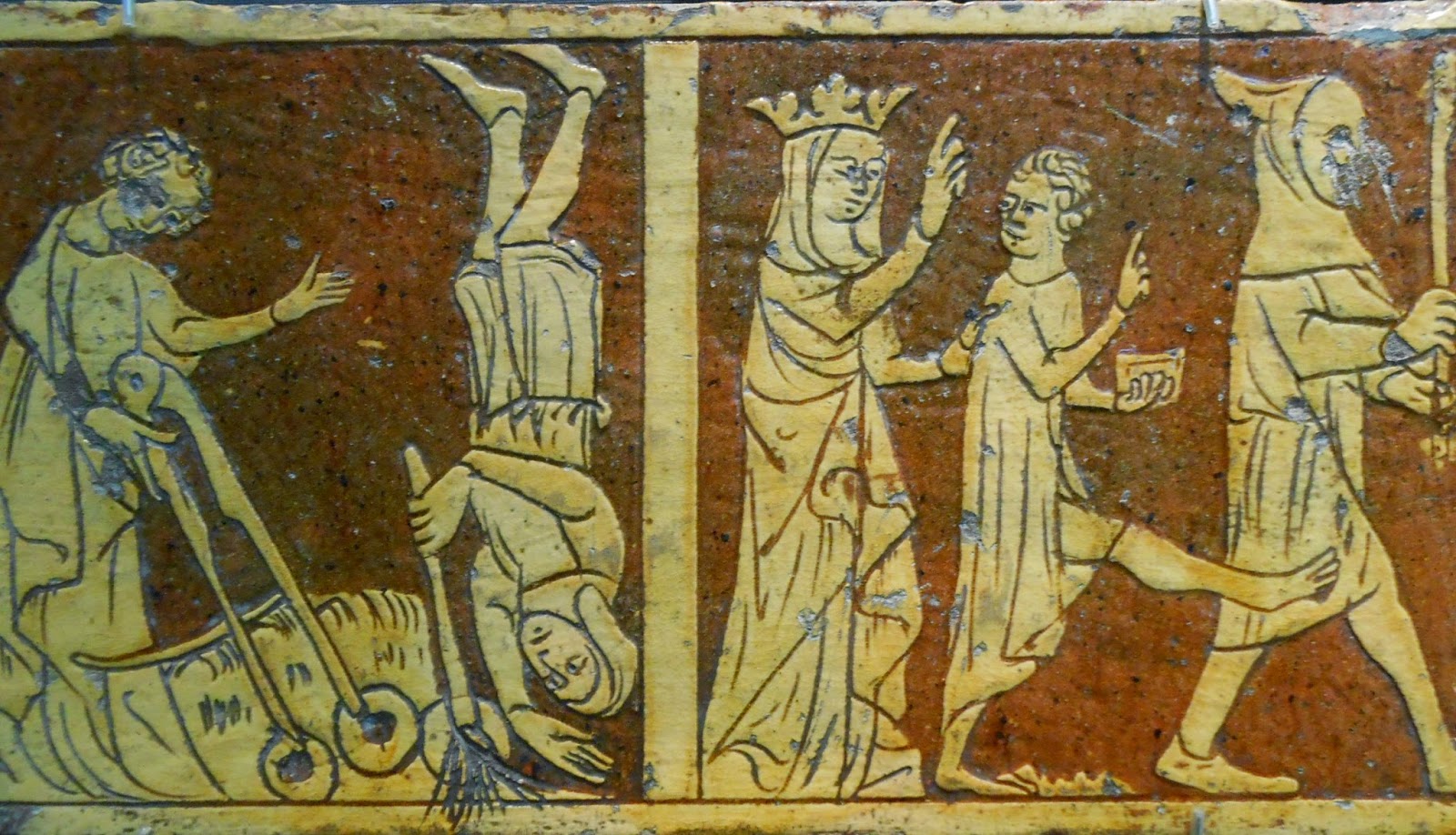
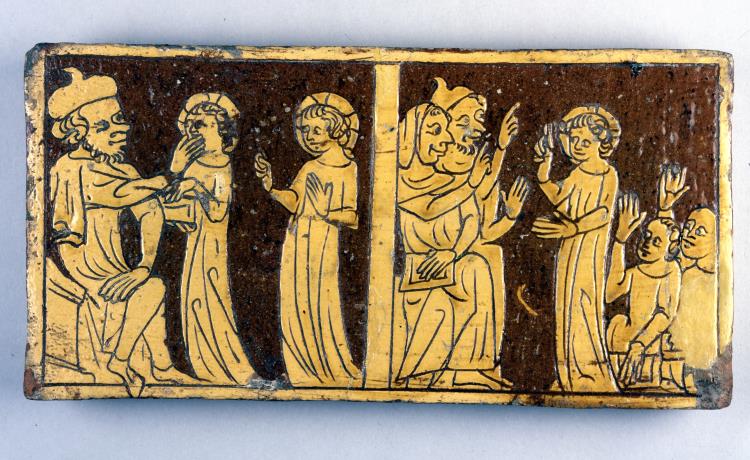
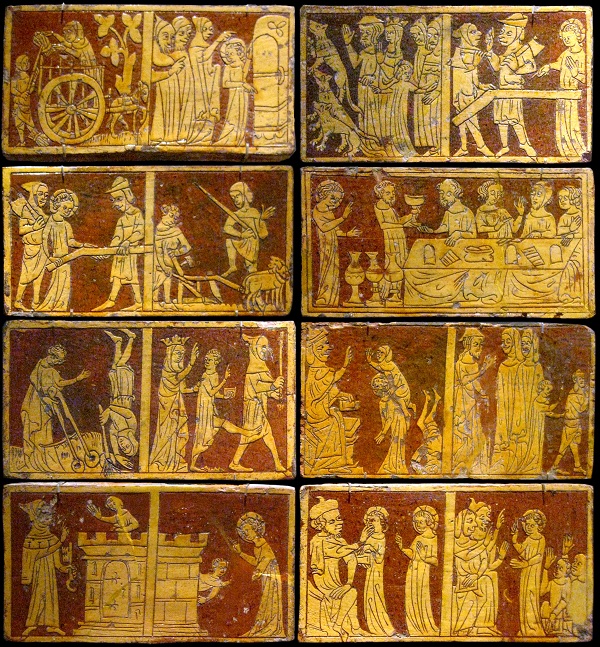
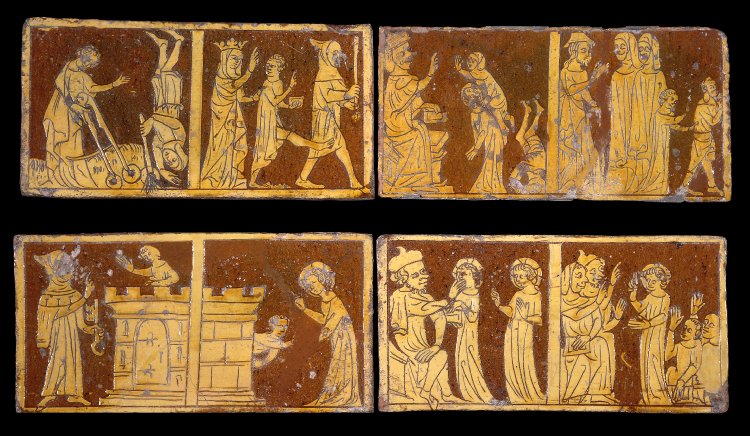
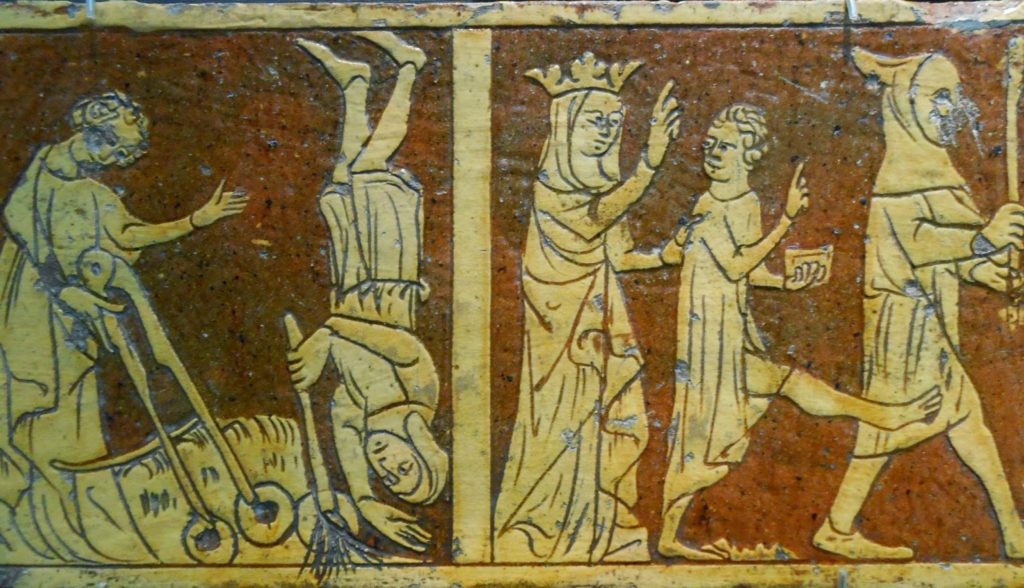
Today, you will discover this secret story of Jesus in the British Museum. The story is told on what is known as the “Tring Tiles” which date from the early 14th century and illustrates the scenes from Jesus’ alleged childhood that are said to be of English, or Norman manufacture. (Norman-Anglo-Saxon Old Guard) using a 14th-century art technique known as graffito.

The images on the tiles were said to be based on the Sacred Writings of the Apocrypha the New Testament which was originally translated by The Ante-Nicene Fathers and was very popular in the 14th century. These specific designs are thought to be derived from the Apocryphal Gospels via a French manuscript in the Bodleian Library in Oxford University.

The tiles were presumably once wall-mounted at St. Peter and St. Paul’s Church at Tring near London and is also said to be called the “Tring Parish Church” located on “Frogmore Street.”

Nobody knows exactly how many tiles there are in existence, but there are currently eight tiles on display at The British Museum and two in the Victoria and Albert Museum.

We can see in one image in the lower right on the tile shows Jesus entering school, on the right and in the next tile he is standing directly in front of his teacher who is named ‘Levi’ from whom he receives a slap on the face.

You may ask, “Why in the hell would anyone want to slap Jesus?” – I did not learn about that in Sunday school or in my newly edited 666th version of the New Testament Bible.

The reason is that these are the stories that became “banned and unlawful” by Rome and the Church through the Roman Curia to distribute so they did not make the cut in the editing process of the Old and New Testaments but were still considered “sacred” by the early Church Fathers. They are collectively known as the “Infancy Gospels,” written in Syriac, Arabic, and Greek which relates to us Jesus’ childhood acts or more appropriately – “magic acts.”

Even though many theologians and Christian researchers may have never heard of these writings, these books were still being taught and distributed in various parts of the world by what appears to be an Orthodox Greek and Russian conspiracy with the help of the English Anglican Church to keep these teachings for their descendants.

I believe the reason being is that they contain a treasure trove of the knowledge and Gnosis of the secret mysteries of the early church and also the fact that Jesus appears to be a superhero type of Gnostic – prodigal son who is portrayed as a magician with supernatural powers who heals and kills people with his magic.

The Jesus we find in these stories appears here not as the Prince of Peace who loves thy neighbor and turns the other cheek when slapped. No, Jesus is portrayed as a boy with supernatural knowledge (Gnosis) and magic whose abilities can easily debate and beat his elder schoolmasters and also kill his foes at will.

It is clear as day that Jesus is a warrior priest who can get just as angry as an “an eye for an eye” Old Testament or Greek God.

In one of the images on the Tiles, Mary and Joseph stand behind Jesus giving hand salutes with Joseph respectively with the Right Hand representing the Father and Mary the Left Hand -the Holy Spirit. We are shown a depiction of how even beasts like the Wolf had known Jesus, the Son but men knew him not.

He takes his Left Hand and touches the Left Hand of a man behind him, then Jesus proclaims;

“These beasts know me: but men know me not.”


To many people, the idea of the Lord Jesus being some type of “bad boy” who declares wolves as his friends and men as his foes and then practices magic and is feared by almost everyone in his community might seem totally reprehensible. But that is exactly what these stories of Jesus’ early childhood portray.

In fact, he absolutely amazed the learned elder teachers of his village with his knowledge and he copletely terrified the profane children and parents of his village with his magical abilities.

For example, we are told that Jesus kills a boy who bumped into him with his words and magic. In the gospels, a boy running down the street bumps into Jesus, knocking him down and in the Tring tile series, the event happens in a classroom. After the boy bumps into Jesus, he angrily condemns the boy to death when he declares:

“As thou has thrown me down, so shalt thou fall, nor ever rise. And that moment the boy fell down and died.”

News about Jesus began to spread around the village and the people truly began to fear him. The story goes that when a group of parents saw him coming up the street one day, they hid their children in a large oven.

Jesus asked the parents, “What was in the oven?”

They replied, “Little pigs.”

Jesus then said, “So be it.” And when the oven was opened, they found that the children were gone and only piglets remained.”

The facts are that the children were morphed into pigs by Jesus stating, “So be it.”

In another scene from the tiles, it shows how Jesus treats bullies with “zero tolerance.”

Here we clearly witness Jesus making some nice round circles which are said to be pools beside the river large with what looks like a large Masonic compass. More evidence for Freemasons and theologians that the family of Jesus were not only Priests and teachers but also Chaos magicians who were the original master builders ie: Freemasons.

Hence, “We started the Brotherhood.”

Jesus then proclaimed the death penalty on the boy who was the son of Annas the Scribe when he said, “In like manner as this water has vanished, so shall thy life vanish;” and the boy died.

This same “destructive boy” who dies is associated with Satan in the Gospel of Pseudo-Matthew where it is written;

“Then one of the children, the son of the Devil, and of an envious mind, shut up the channels which supplied water to the pools, and overthrew what Jesus had made. Then Jesus said unto him, Woe unto thee, son of death, Son of Satan. Does thou destroy the works which I have wrought? And straightway he who had done this died.”

It appears that the retribution dished out by Jesus seems to exceed the limits of moral justice where the offense did not warrant the death penalty even when compared to the Old Law of the slaves which allowed “an eye for an eye” and today we have the “Rule of Law” which only allows the state to administer justice.

In the next scene, it looks like his mother Mary instructs him to follow the light of the True God of the Most High with her Right Hand raised to the heavens as it shows Jesus with his right hand also raised with his left foot on the ground than restoring the boy back to life with magic using his right foot.

I believe the placing of the arms, hands, legs, and feet in these tiles play a huge role in the secret message they were trying to communicate to the initiates of their sacred bloodline via DNA Gnosis. Magic and Gnosis that the profane ie: uninitiated would not have understood and would have been absolutely terrified of Jesus’s supernatural abilities.

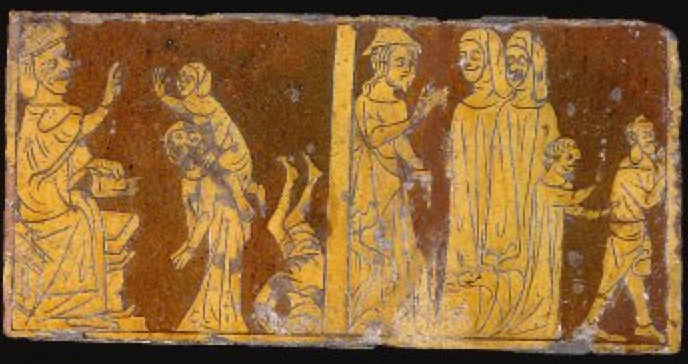
In one scene of the Tring tiles, a boy jumps on Infant Jesus’ shoulder. That angered the young Jesus so he kills him. The parents who are pictured on the right then come and complain to Joseph who has a talk with his son Jesus who then with his magic, revives the boy, who is next seen walking off to the right.


This may be the reason why the tiles show outraged village parents who came to Joseph complaining of Jesus’ atrocious acts. They demanded that something is done about the boy.

Joseph then attempted to admonish Jesus, but when Jesus discovered that the parents had complained about him, he used his magical powers to strike them blind.

In this story, it is obvious that although the knowledge (Gnosis) and intelligence of Jesus had easily exceeded that of the elders in his village, he lacked self-control which contributed to his rage and his unjust retribution against those who angered him.  It was at this time that Joseph was persuaded by a schoolmaster named Zaccheus that the young Jesus should be sent to school where he might learn both discipline and literacy and more.

The secret story of the Bad Boy Jesus will be continued…

Freemason Albert Mackey on Nergal

Freemason Albert Mackey on Nergal

In Mackey’s Revised History of Freemasonry, by Robert Ingham Clegg, et. al., we find the following: [Volume VII, pp. 2135 – 2137]

“Figures 3, 5, and 6 are different forms of Nergal. The word Ner-Gal divides into two parts: Ner signifies light, or luminary, etc., and gal signifies to roll, revolve, a revolution, a circuit, the two together implies the revolving or returning light. If this be truly descriptive of Nergal, there is nothing improbable in considering the rooster as allusive to it, since the vigilance of the rooster is well known, and that he gives due notice of the very earliest reappearance of light, morning after morning. There are different senses in which light may be taken, besides its reference to natural light:

1. Deliverance from any singular danger, or distress. Esther 8:6.
2. Posterity; a son, or successor. 1 Kings 11:36; 2 Chron. 21:7.
3. Resurrection or something very like it. Job 33:28, 30; Psalm 97:11.

In the figures 3, 5, and 6 there is no allusion to the first of these principles, but they have a strong reference to the second, Posterity, and the idea of fecundity or fertility is expressed in the adaptation of the figure of a rooster, which signifies the returning of light.

In Figure 5, which is taken from a gem in the Gallery of Florence, Italy, two roosters are yoked to the car of Cupid, and driven by one Cupid and led by another; and not merely as if harnessed to a common car, but as if they had been in a race and had come off victorious; as the driving Cupid carries a palm-branch, which is the reward of victory, obtained by these his emblematical figures.

In Figure 3 we have a car with a rooster standing in the attitude of crowing and flapping his wings; which is the custom of this bird on certain occasions. The star shown is the star of Venus, and distinguishes this equipage as the consecrated vehicle of that supreme goddess of love and beauty. [6] At a short distance in the background sits Hymen, the god of marriage and conjugality; his torch brightly blazing; at his feet is a rooster crowing, etc., in a manner and attitude very like the other; and with precisely the same allusions. The indication of this allegory is the influence of Venus and Hymen, the genial powers of vitality, on the renovation of life, in human posterity.

As the extinction of lamps, or torches, indicated utter desolation, loss of children and misery, so on the contrary we are led by the brightly blazing torch to imply the joy of connubial or marriage engagements.

The Figure 6 represents a rooster holding in his bill two ears of corn; he is attended by Mercury, having a Caduceus or wand in one hand, and a bag of money in the other. This gem has puzzled the learned. Montfaucon says, ‘To see Mercury with a rooster is common enough; but to see him walking before a rooster larger than himself, is what I have never noticed, except in this representation. It may denote that the greatest qualities of Mercury is vigilance. The rooster holding the corn in his bill, may, perhaps, mean that vigilance only can produce plenty of the productions necessary to the support of life.’ Ancient mythology adopted various representations of the human form.

Nergal: The Patriarch of the Sons of Chaos on Babylonian Tablets

Nergal: The Patriarch of the Sons of Chaos on Babylonian Tablets

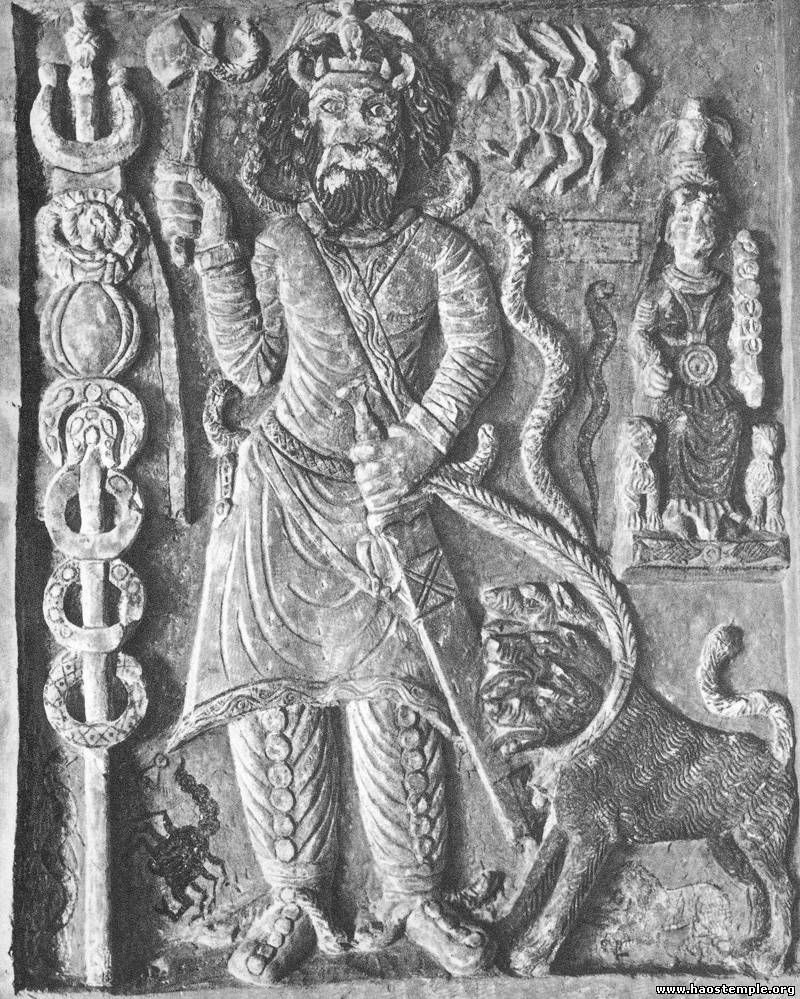
The “Cutha tablet” was found in the ancient city of Babylonia. The text on the tablet gives an account of “creation” and speaks of a “temple of Sittam, ” in the sanctuary of Nergal, the “giant king of war, lord of the city of Cutha.” He is frequently invoked in the hymns and his symbols and characteristics we find in the inscriptions and texts of Babylonian, Assyrian, and Samarian rulers.

As I explained in my article, Nergal: The Lion-Headed Cock God of Babylonian Hell (Earth), Nergal was the Cock-headed and Lion-headed Idol of the Samaritan Hebrews who we also know by many other names such as the Kush, Cush, Kish, Cuthah, Cuthites, Cushite, Cutheans, and Babylonians – to name a few. So when you read these different names you need to understand that they were the same people who purposely babbled history, scripture, and mythology because that has been their main job as the Scribes of Chaos for well over the last 2,000 years.

For those of you who have not read my past research on the Cush, I have found that they were also known as the Sons of Seth / Sethians who descended from Egyptian Pharaoh Seth I (Sesostris or Set I) and eventually became the founders of the Phoenician empire and at a later date – the Roman empire.

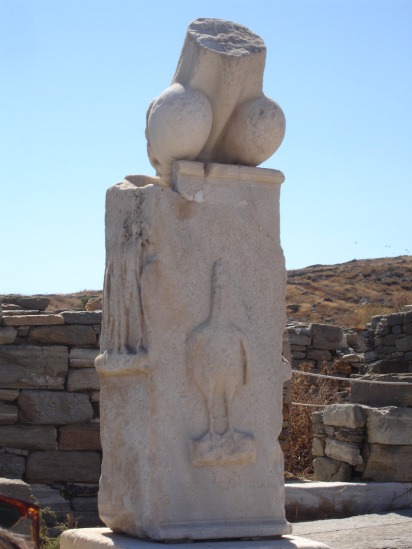
The Cush AKA Gnostic Sethians were the main progeny for the pillar (phallic/cock) cult that we see all around the world today and even here in the U.S. with the cock of Washington and Cleopatra. Herodotus tells us Seth defeated an army without much resistance and then erected a pillar in their capital with a vagina on it to symbolize the fact that the army fought like women which was most likely the same pillar that Josephus said survived in his time.

This is why we find Nergal, the Cush, Sethians and Romans were had carried and were associated with pillars (phallic/cock) in whatever lands they had conquered and ruled. Once a land and people were taken, their cocks were erected and sperm of their descendants was spread into the remaining concubine vaginas to establish their new hybrid/Hyksos empire.

As I mentioned earlier, Nergal was first mentioned as the god of the city known as Cuthah (Cuth/Kuth), and his association with this city is referred to in the Old Testament (II. Kings xvil. 30). He is mentioned in 2 Kings xvii, and the Babylonian Talmudic treatise Sanhedrin (fol. 63, p. 2) which states that the men of Cuthah made Nergal their god.

“And what was it? A cock.”

I find it interesting that they chose the cock which we call today a rooster and lion as their main symbols to represent Nergal and also aligned their souls with a God who they claimed was in charge of war and plagues. But when you really think about it, if you are trying to conquer the world, it makes perfect sense to get the God of war and plagues on your side so that you can use him to smite your foes and clear the land in a hurry.

I have found that there is probably a no better way to manage and rule the world than to use secret biological warfare via parasitical fungi/molds and their sovereign ruler – Nergal which have the ability to control, maim and kill your foes unbeknownst to them.

It was said that the Persians, Arabians, and Indians called the palm-tree – nergil, by of which they report strange things and we find that Nergal is in god lists, the god of the underworld named “King of the Palm Tree” (Lugal-gisimmar).

NERGAL IN BABYLONIAN HISTORY

In my opinion, the Babylonian texts reveal to us a treasure trove of hidden history, human biology, microbiology and spirituality that seems to prove that some of the stories in the Scripture are true and also these same people are the ancient Brotherhood of Magi that existed between Ancient Egypt and Crete for thousands of years.

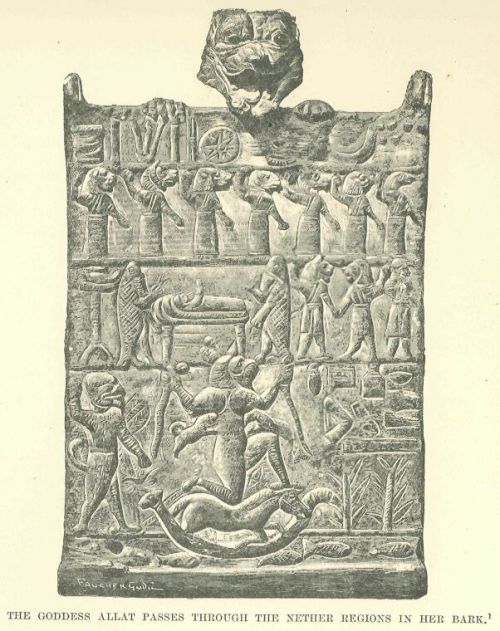
Assyrian documents of the 1st millennium BC describe Nergal as a benefactor of men, who hears prayers, restores the dead to life, and protects agriculture and flocks. Hymns depict him as a god of pestilence, hunger, and devastation. The other sphere of Nergal’s power was the underworld, of which he became king. According to one text, Nergal with his demon escorts descended to the underworld where the goddess Ereshkigal (or Allatum) was queen. He threatened to cut off her head, but she saved herself by becoming his wife, and Nergal obtained kingship over the underworld.”

According to the Babylonian theory of the manifestation of the divine power in cosmos and cycle, Nergal represents the Underworld, AKA Hell or lowest part of the cycle ie; Modernity as “King of the Beasts,” in which he is the “Lord of the great Dwelling-place,” that is, of the realm of Death. He is also most appropriately called the ” raging king,” the “furious one.”

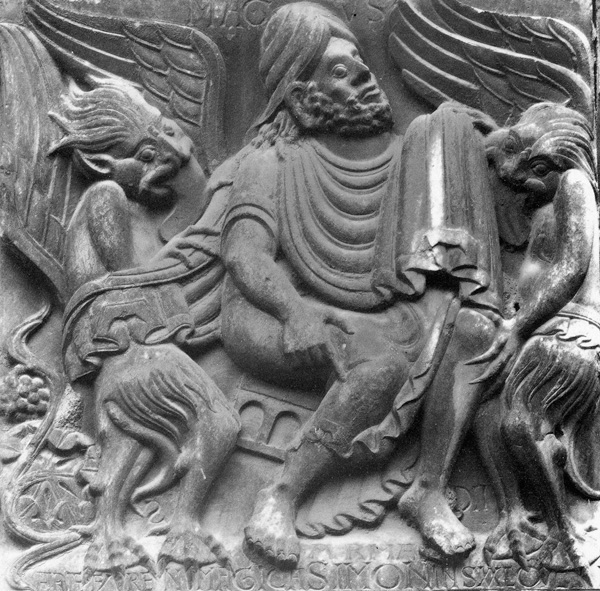
In Christianity, Nergal later appears to take on the form of Simon Magus who is surnamed Saint Peter and Satan – the Father of the Galileans and King of Hell ie: The Modern World. This makes sense given the fact that the same Babylonian scribes who wrote about Nergal were the progenitors for the later Babylonian scribes of Rome.

The same family. The same story. Just the names have been babbled to create a confusion of tongues which was always the goal as they tell us in Genesis;

And the LORD said, “If they have begun to do this as one people speaking the same language, then nothing they devise will be beyond them. Come, let Us go down and confuse their language so that they will not understand one another’s speech.” So the LORD scattered them from there over the face of the whole earth, and they stopped building the city.…”

We find Nergal in the Gilgamesh Epic (q.v.) where he opens the earth and brings up the spirit of Eabanland is listed as a god of plague and war Glr-ra with fourteen demons to assist him on his mission. He sends the plague-demon called Namtar to announce his arrival to Allatu who is obliged to admit him. Nergal then drags her from her throne intent on killing her, but when she bursts into tears and offers to become his wife and to place “the tablets of wisdom” in his hands, he spares her.

By doing so, he becomes the God of Knowledge (Gnosis) and protector of the “tablets of wisdom” and his descendants of chaos as the protectors of the king.

A role we see played today by national security apparatuses of the Deep State of the world such as the CIA and NSA in the U.S. and FSB in Russia. As the Mother of the CIA, James Jesus Angleton once said, “Deception is a state of mind and the mind of the State.”

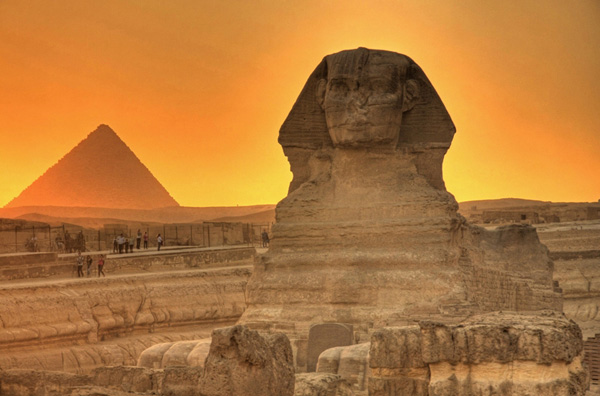
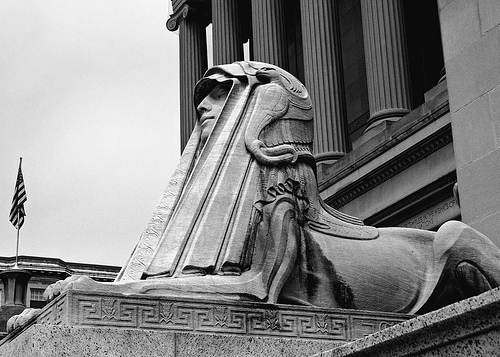
Nergal is also associated with the god of the chase with his symbol of the lion and is often shown as a chimera type figure being that of man-lion and what we call today the Sphinx. The Semitic name for Nergal was Arin or Erin, a word which signifies “lion” in Hebrew and Syriac.

His descendants, The Cush – AKA Sons of Seth, AKA Samarians, AKA Babylonians, AKA the Aryan or Arian race who we find the Aryans all over the world such as in the names of the Island of Erin in Ireland which is named after their Aryan founders and the Arii of Germany, of the Ases of Scandinavia, and of the Island of Erin (Ireland).

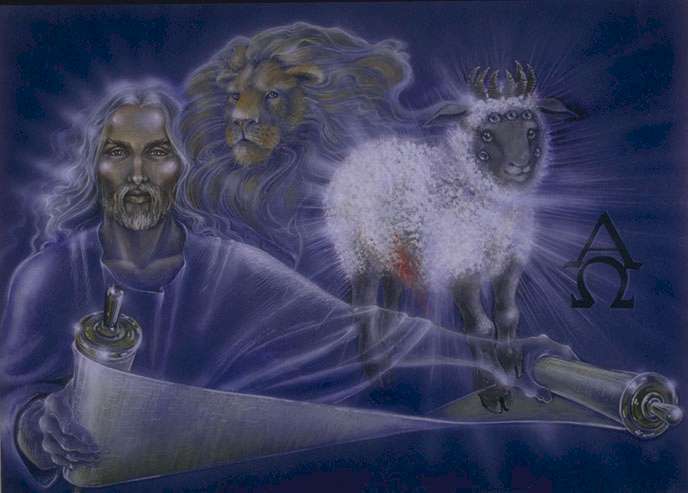
We also have the Lion of the Tribe of Judah and in Christianity refers to Jesus Christ, the Messiah. In Matthew 1:1–6 and Luke 3:31–34 of the New Testament, Jesus is described as a member of the tribe and Revelation 5:5 also mentions an apocalyptic vision of the Lion of the tribe of Judah.

I have discovered the man-lion of the Cutha in the traditions of Gnosticism with the Yaldabaoth and the Demiurge who are depicted as a lion-faced figure or serpent and also the Lion-headed Chnoubis, The same symbol of lion we can now find in their Gnostic descendants, the Freemasons.

Who we find have the ritual of “The Lion of the Tribe of Judah” and the famous Lion’s Paw which is the most important message of the Third Degree.

Let us not forget that the Masons are the masters of ORDO AB CHAO.

In the astral-theological system, Nergal is said to be associated with the planet Mars, while in the ecclesiastical art, we find his symbol of the great lion and on boundary-stone monuments surmounted by the head of a lion serving as guardians to the temples and palaces.

The Cutha tablet allegedly found at the library of Nineveh originally written for the great temple of Nergal at Cutha show Nergal the destroyer, who is represented as sending out the hosts of the ancient brood of chaos to their destruction.

The text also shows Nergal’s armies of chaos came into existence. The words are put into the mouth of Nergal and were written for his great temple at Cutha.

“On a tablet none wrote, none disclosed, and no bodies or brushwood were produced in the land; and there was none whom I approached.

Warriors with the body of a bird of the valley, men with the faces of ravens, did the great gods create.

In the ground did the gods create their city.

Tiamat (the dragon of chaos) suckled them. Their progeny (sasur) the mistress of the gods created.

In the midst of the mountains they grew up and became heroes and increased in number. Seven kings, brethren, appeared and begat children. Six thousand in number were their peoples. The god Banini their father was king; their mother was the queen Melili.”

To be continued…

Pharisees: The Lord’s Masons

Pharisees: The Lord’s Masons

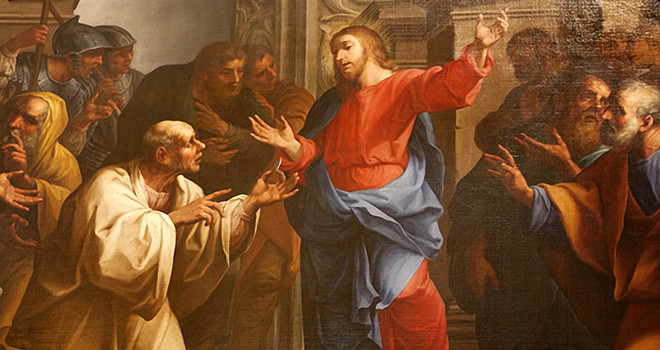
Jesus had said to the scribes and Pharisees, “Woe to you experts in the law! For you have taken away the key to knowledge. You yourselves have not entered, and you have hindered those who were entering.” As Jesus went on from there, the scribes and Pharisees began to oppose Him bitterly and to ply Him with questions about many things.” (Luke 11:52)

The Lord speaking to his Apostilistic Pharisees had proclaimed, “I am from above, ye are from beneath.”

These prophetic words indicate both the religious and political roles that the Pharisees had administered during the formation of the ministry of Jesus. What is interesting is that these Pharisees he says are from beneath and he is from above which shows it was a carefully constructed dual ministry (Light & Dark – Truth & Lies – Politics – Heaven & Hell) via the Masonic chessboard right from the beginning of this 6th Age.

The Masonic Pharisees of Jesus

When I research the formation and the political roles of this secret society of some of the world’s most celebrated Apostles, I see many parallels with modern Masonry who may very well be the modern descendants of the teachings of the Pharisee #33 global rule of Golgatha – ORDO AB CHAO.

Some of the most famous men in the religious history of the civilized world were members of this very powerful ancient secret political society. Pharisees like Saint Paul, Judas MaccabaeusJohn Hyrcanus and the Roman-Jewish Historian – Josephus.

Most of our modern knowledge of the Pharisees comes down to us from Josephus in the first century of this 6th Age. He explains that they were kin (related/Family) to the sect known in Ancient Greece as the Stoics but that the Pharisees were able to make great opposition to kings, cause great mischief and when the Jews swore their allegiance to Caesar, the Pharisees did not swear.

Like the Masons of today, Josephus said that they had the power of true royal authority to become the real administrators of public affairs. Josephus writes;

“Being now nineteen years old, I began to conduct myself according to the rule of the sect of the Pharisees, which is kin to the sect of the Stoics, as the Greeks call them.

These are they that are called the sect of the Pharisees, who were able to make great opposition to kings; a cunning sect they were, and soon elevated to a pitch of open fighting and doing mischief.

Accordingly, when all the people of the Jews gave assurance of their goodwill to Caesar and to the king’s government, these men did not swear, being about six thousand.”

Joseph also states that they have the power to make freemen by the binding and loosing of souls. He had written;

“The Pharisees artfully insinuated themselves into Queen Alexandra’s favour by little and little, and became the real administrators of public affairs; they banished and restored whom they pleased; they bound and loosed at their pleasure; they had the enjoyment of the royal authority, while the expenses and the difficulties of it belonged to Alexandra.”

In studying the modern history of Masonry, we also find that the Masons have been involved in various important and what some call occult governments like here in the U.S. with the creation of its capital named after the first Freeman AKA Freemason – Washington.

Freemasons today are also heavily involved in all legal systems throughout the world and of course, their involvement in some of the world’s most famous revolutions such as the Masonic French Revolution in the 18th century.

One of the most important of the 12 Apostles, the Apostle Paul, declared himself to be a Pharisee before his conversion to Christianity. We do not know much about Paul’s family or upbringing, but we know that both his father and teacher had belonged to this secret society.

Paul stated that he was “a Pharisee, the son of a Pharisee” in Acts 23:6, and he “was educated by Gamaliel, a Pharisee.”

St. Paul mentions he is a Pharisee after he was arrested and put on trial – “And when he had so said, there arose a dissension between the Pharisees and the Sadducees: and the multitude was divided. . . . And there arose a great cry; and the Scribes that were of the Pharisees’ part arose, and strove, saying, We find no evil in this man.”

Pleading before King Agrippa in the presence of Festus, Paul says;

“The Jews knew me from the beginning, if they would testify, that after the most straitest sect of our religion I lived a Pharisee.”