The Theology of the Phoenicians from Sanchoniatho

The Theology of the Phoenicians from Sanchoniatho

The text below contains The Theology of the Phoenicians from Sanchoniatho.

Sanchoniatho was of Phoenician descent and one of the most esteemed authors of his time.

Second century Christian Bishop and Church Historian, Eusebius of Caesarea said that he wrote the truest history about the Jews because he obtained records from “Hierombalus” priest of the god Ieuo (Yahweh).

These Phoenician writings I seem to resonate with being that it is closest to my ancestors given the fact that I’m also of Phoenician descent. What stands out in particular for me is the Cosmology section which begins with Erebus and Wind, between which Eros ‘Desire’ came to be.

From this was produced Môt which is the Semitic word for ‘Death’ but which the account says may mean ‘mud’ which some call Ilus (Mud), but others the putrefaction of a watery mixture. And from this sprung all the seed of the creation, and the generation of the universe.

And there were certain animals without sensation, from which intelligent animals were produced, and these were called Zophasemin, that is, the overseers of the heavens.

Here is The Theology of the Phoenicians from Sanchoniatho…

COSMOLOGY

He supposes that the beginning of all things was a dark and condensed windy air, or a breeze of thick air and a Chaos turbid and black as Erebus: and that these were unbounded, and for a long series of ages destitute of form. But when this wind became enamored of its own first principles (the Chaos), and an intimate union took place, that connexion was called Pothos: and it was the beginning of the creation of all things.

And it (the Chaos) knew not its own production; but from its embrace with the wind was generated Môt; which some call Ilus (Mud), but others the putrefaction of a watery mixture. And from this sprung all the seed of the creation, and the generation of the universe.

And there were certain animals without sensation, from which intelligent animals were produced, and these were called Zophasemin, that is, the overseers of the heavens; and they were formed in the shape of an egg: and from Môt shone forth the sun, and the moon, the less and the greater stars.

And when the air began to send forth light, by its fiery influence on the sea and earth, winds were produced, and clouds, and very great defluxions and torrents of the heavenly waters. And when they were thus separated, and carried out of their proper places by the heat of the sun, and all met again in the air, and were dashed against each other, thunder and lightnings were the result: and at the sound of the thunder, the before-mentioned intelligent animals were aroused, and startled by the noise, and moved upon the earth and in the sea, male and female. (After this our author proceeds to say:)

These things were found written in the Cosmogony of Taautus, and in his commentaries, and were drawn from his observations and the natural signs which by his penetration he perceived and discovered, and with which he has enlightened us.

(Afterwards, declaring the names of the winds Notus, Boreas, and the rest, he makes this epilogue:)—But these first men consecrated the productions of the earth, and judged them gods, and worshipped those things, upon which they themselves lived, and all their posterity, and all before them; to these they made libations and sacrifices. (Then he proceeds:—Such were the devices of their worship in accordance with the imbecility and narrowness of their souls.)—Euseb. Præp. Evan. lib. I. c. 10.

THE GENERATIONS

Of the wind Colpias, and his wife Baau, which is interpreted Night, were begotten two mortal men, Æon and Protogonus so called: and Æon discovered food from trees.

The immediate descendants of these were called Genus and Genea, and they dwelt in Phœnicia: and when there were great droughts they stretched forth their hands to heaven towards the Sun; for him they supposed to be God, the only lord of heaven, calling him Beelsamin, which in the Phœnician dialect signifies Lord of Heaven, but among the Greeks is equivalent to Zeus.

Afterwards by Genus the son of Æon and Protogonus were begotten mortal children, whose names were Phôs, Pûr, and Phlox. These found out the method of producing fire by rubbing pieces of wood against each other, and taught men the use thereof.

These begat sons of vast bulk and height, whose names were conferred upon the mountains which they occupied: thus from them Cassius, and Libanus, and Antilibanus, and Brathu received their names.

Memrumus and Hypsuranius were the issue of these men by connexion with their mothers; the women of those times, without shame, having intercourse with any men whom they might chance to meet. Hypsuranius inhabited Tyre: and he invented huts constructed of reeds and rushes, and the papyrus. And he fell into enmity with his brother Usous, who was the inventor of clothing for the body which he made of the skins of the wild beasts which he could catch.

And when there were violent storms of rain and wind, the trees about Tyre being rubbed against each other, took fire, and all the forest in the neighbourhood was consumed. And Usous having taken a tree, and broken off its boughs, was the first who dared to venture on the sea. And he consecrated two pillars to Fire and Wind, and worshipped them, and poured out upon them the blood of the wild beasts he took in hunting: and when these men were dead, those that remained consecrated to them rods, and worshipped the pillars, and held anniversary feasts in honour of them.

And in times long subsequent to these; were born of the race of Hypsuranius, Agreus and Halieus, the inventors of the arts of hunting and fishing, from whom huntsmen and fishermen derive their names.

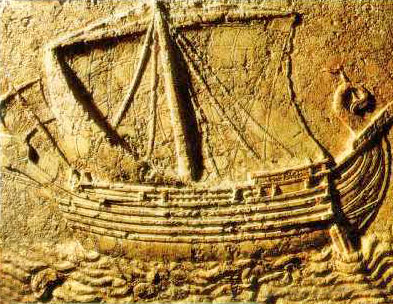
Of these were begotten two brothers who discovered iron, and the forging thereof. One of these called Chrysor, who is the same with Hephæstus, exercised himself in words, and charms and divinations; and he invented the hook, and the bait, and the fishing-line, and boats of a light construction; he was the first of all men that sailed. Wherefore he was worshipped after his death as a God, under the name of Diamichius. And it is said that his brothers invented the art of building walls with bricks.

Afterwards, of this race were born two youths, one of whom was called Technites, and the other was called Geïnus Autochthôn. These discovered the method of mingling stubble with the loam of bricks, and of baking them in the sun; they were also the inventors of tiling.

By these were begotten others, of whom one was named Agrus, the other Agrouerus or Agrotes, of whom in Phœnicia there was a statue held in the highest veneration, and a temple drawn by yokes of oxen: and at Byblus he is called, by way of eminence, the greatest of the Gods. These added to the houses, courts and porticos and crypts: husbandmen, and such as hunt with dogs, derive their origin from these: they are called also Aletæ, and Titans.

From these were descended Amynus and Magus, who taught men to construct villages and tend flocks.

By these men were begotten Misor and Sydyc, that is, Well-freed and Just: and they found out the use of salt.

From Misor descended Taautus, who invented the writing of the first letters: him the Egyptians called Thoor, the Alexandrians Thoyth, and the Greeks Hermes. But from Sydyc descended the Dioscuri, or Cabiri, or Corybantes, or Samothraces: these (he says) first built a ship complete.

From these descended others; who were the discoverers of medicinal herbs, and of the cure of poisons and of charms.

Contemporary with these was one Elioun, called Hypsistus, (the most high); and his wife named Beruth, and they dwelt about Byblus.

By these was begotten Epigeus or Autochthon, whom they afterwards called Ouranus (Heaven); so that from him that element, which is over us, by reason of its excellent beauty is named heaven: and he had a sister of the same parents, and she was called Ge (Earth), and by reason of her beauty the earth was called by the same name.

Hypsistus, the father of these, having been killed in a conflict with wild beasts, was consecrated, and his children offered libations and sacrifices unto him.

But Ouranus, succeeding to the kingdom of his father, contracted a marriage with his sister Ge, and had by her four sons, Ilus who is called Cronus, and Betylus, and Dagon, which signifies Siton (Bread-corn,) and Atlas.

But by other wives Ouranus had much issue; at which Ge, being vexed and jealous of Ouranus, reproached him so that they parted from each other: nevertheless Ouranus returned to her, again by force whenever he thought proper, and having laid with her, again departed: he attempted also to kill the children whom he had by her; but Ge often defended herself with the assistance of auxiliary powers.

But when Cronus arrived at man’s estate, acting by the advice and with the assistance of Hermes Trismegistus, who was his secretary, he opposed himself to his father Ouranus, that he might avenge the indignities which had been offered to his mother.

And to Cronus were born children, Persephone and Athena; the former of whom died a virgin; but, by the advice of Athena and Hermes, Cronus made a scimitar and a spear of iron. Then Hermes addressed the allies of Cronus with magic words, and wrought in them a keen desire to make war against Ouranus in behalf of Ge. And Cronus having thus overcome Ouranus in battle, drove him from his kingdom, and succeeded him in the imperial power.

In the battle was taken a well-beloved concubine of Ouranus who was pregnant; and Cronus bestowed her in marriage upon Dagon, and, whilst she was with him, she was delivered of the child which she had conceived by Ouranus, and called his name Demarous.

After these events Cronus surrounded his habitation with a wall, and founded Byblus, the first city of Phœnicia. Afterwards Cronus having coneived a suspicion of his own brother Atlas, by the advice of Hermes, threw him into a deep cavern in the earth, and buried him.

At this time the descendants of the Dioscuri, having built some light and other more complete ships, put to sea; and being cast away over against Mount Cassius, there consecrated a temple.

But the auxiliaries of Ilus, who is Cronus, were called Eloeim, as it were, the allies of Cronus; being so called after Cronus. And Cronus, having a son called Sadidus, dispatched him with his own sword, because he held him in suspicion, and with his own hand deprived his child of life. And in like manner he cut off the head of his own daughter, so that all the gods were astonished at the disposition of Cronus.

But in process of time, whilst Ouranus was still in banishment, he sent his daughter Astarte, being a virgin, with two other of her sisters, Rhea and Dione, to cut off Cronus by treachery; but Cronus took the damsels, and married them notwithstanding they were his own sisters. When Ouranus understood this, he sent Eimarmene and Mora with other auxiliaries to make war against Cronus: but Cronus gained the affections of these also, and detained them with himself. Moreover, the god Ouranus devised Bætulia, contriving stones that moved as having life.

And by Astarte Cronus had seven daughters called Titanides, or Artemides; by Rhea also he had seven sons, the youngest of whom was consecrated from his birth; also by Dione he had daughters; and by Astarte again he had two other sons, Pothos and Eros.

And Dagon, after he had found out bread-corn, and the plough, was called Zeus Arotrius.

To Sydyc, who was called the just, one of the Titanides bare Asclepius: and to Cronus there were born also in Peræa three sons, Cronus bearing the same name with his father, and Zeus Belus, and Apollo.

Contemporary with these were Pontus, and Typhon, and Nereus the father of Pontus: from Pontus descended Sidon, who by the excellence of her singing first invented the hymns of odes or praises: and Poseidon.

But to Demarous was born Melicarthus, who is also called Heracles.

Ouranus then made war against Pontus, but afterwards relinquishing the attack he attached himself to Demarous, when Demarous invaded Pontus: but Pontus put him to flight, and Demarous vowed a sacrifice for his escape.

In the thirty-second year of his power and reign, Ilus, who is Cronus, having laid an ambuscade for his father Ouranus in a certain place situated in the middle of the earth, when he had got him into his hands dismembered him over against the fountains and rivers. There Ouranus was consecrated, and his spirit was separated, and the blood of his parts flowed into the fountains and the waters of the rivers; and the place, which was the scene of this transaction, is shewed even to this day.

(Then our historian, after some other things, goes on thus:) But Astarte called the greatest, and Demarous named Zeus, and Adodus who is entitled the king of gods, reigned over the country by the consent of Cronus: and Astarte put upon her head, as the mark of her sovereignty, a bull’s head: and travelling about the habitable world, she found a star falling through the air, which she took up, and consecrated in the holy island of Tyre: and the Phœnicians say that Astarte is the same as Aphrodite.

Moreover, Cronus visiting the different regions of habitable world, gave to his daughter Athena the kingdom of Attica: and when there happened a plague with a great mortality, Cronus offered up his only begotten son as a sacrifice to his father Ouranus, and circumcised himself, and compelled his allies to do the same: and not long afterwards he consecrated after his death another of his sons, called Muth, whom he had by Rhea; this (Muth) the Phœnicians esteem the same as Death and Pluto.

After these things, Cronus gave the city of Byblus to the goddess Baaltis, which is Dione, and Berytus to Poseidon, and to the Caberi who were husbandmen and fishermen: and they consecrated the remains of Pontus at Berytus.

But before these things the god Taautus, having pourtrayed Ouranus, represented also the countenances of the gods Cronus, and Dagon, and the sacred characters of the elements. He contrived also for Cronus the ensign of his royal power, having four eyes in the parts before and in the parts behind, two of them closing as in sleep; and upon the shoulders four wings, two in the act of flying, and two reposing as at rest. And the symbol was, that Cronus whilst he slept was watching, and reposed whilst he was awake.

And in like manner with respect to the wings, that he was flying whilst he rested, yet rested whilst he flew. But for the other gods there were two wings only to each upon his shoulders, to intimate that they flew under the controul of Cronus; and there were also two wings upon the head, the one as a symbol of the intellectual part, the mind, and the other for the senses.

And Cronus visiting the country of the south, gave all Egypt to the god Taautus, that it might be his kingdom.

These things, says he, the Caberi, the seven sons of Sydyc, and their eighth brother Asclepius, first of all set down in the records in obedience to the commands of the god Taautus.

All these things the son of Thabion, the first Hierophant of all among the Phœnicians, allegorized and mixed up with the occurrences and accidents of nature and the world, and delivered to the priests and prophets, the superintendants of the mysteries: and they, perceiving the rage for these allegories increase, delivered them to their successors, and to foreigners: of whom one was Isiris, the inventor of the three letters, the brother of Chna who; is called the first Phœnician.—Euseb. Præp. Evan. lib. I. c. 10.

OF THE MYSTICAL SACRIFICE OF THE PHOENICIANS

It was the custom among the ancients, in times of great calamity, in order to prevent the ruin of all, for the rulers of the city or nation to sacrifice to the avenging deities the most beloved of their children as the price of redemption: they who were devoted this purpose were offered mystically.

For Cronus, whom the Phœnicians call Il, and who after his death was deified and instated in the planet which bears his name, when king, had by a nymph of the country called Anobret an only son, who on that account is styled Ieoud, for so the Phœnicians still call an only son: and when great dangers from war beset the land he adorned the altar, and invested this son with the emblems of royalty, and sacrificed him.—Euseb. Præp. Evan. lib. I. c. 10.—lib. IV.

OF THE SERPENT

Taautus first attributed something of the divine nature to the serpent and the serpent tribe; in which he was followed by the Phœnicians and Egyptians. For this animal was esteemed by him to be the most inspirited of all the reptiles, and of a fiery nature; inasmuch as it exhibits an incredible celerity, moving by its spirit without either hands, or feet, or any of those external members, by which other animals effect their motion. And in its progress it assumes a variety of forms, moving in a spiral course, and darting forward with whatever degree of swiftness it pleases. It is moreover long-lived, and has the quality not only of putting off its old age, and assuming a second youth, but of receiving at the same time an augmentation of its size and strength. And when it has fulfilled the appointed measure of its existence, it consumes itself; as Taautus has laid down in the sacred books; upon which account this animal is introduced in the sacred rites and mysteries.—Euseb. Præp. Evan. lib. I. c. 10.

Next

Footnotes

1 This union, among the Heathens, and particularly among the Phœnicians, was symbolized by an Egg enfolded by a Serpent, which disjunctively represented the Chaos and the Ether, but, when united, the hermaphroditic first principle of the Universe Cupid or Pothos.

2 “Wind knew not, &c.” Vig. Col. Orel. Cumb. &c.

Gnostic prophets are rewriting genesis in the halls of the Vatican

Gnostic prophets are rewriting genesis in the halls of the Vatican

The former head of the Vatican Bank recently told the media, “To transform the divine genesis into a gnostic genesis, and to do this at the Pontifical Academy inside the Vatican would be their masterpiece.”

Yes, these are Gnostic times…

The quote above was made by Italian economist and banker Ettore Gotti Tedeschi in July while speaking at the first international conference of the John Paul II academy for human life and the family.

Tedeschi said those currently advising the “top of the Church are population control advocates such as Paul Ehrlich, Jeffrey Sachs, and the former UN Secretary General, Ban Ki-moon — people he had claimed are the “gnostic prophets.”

He states that there are efforts to decrease the world’s population by globalist elites have set in motion a series of predictable and intended economic, geo-political, and social catastrophes meant to “persuade” people around the world to accept a global “political vision” that would eliminate national sovereignty and institute “gnostic environmentalism” as its “universal religion.”

So what can the Church do? “The Church will either collide or be isolated,” he said. But “something has happened that should worry a lot of people,” he added referring to recent actions taken, in particular, by the Pontifical Academy of Sciences.

“We are near” to this happening, he added. “This should worry everyone.”

Read more @ Life Site News

Apollo’s Cretan Dolphins of Gnosis

Apollo’s Cretan Dolphins of Gnosis

“And whereas I first, in the misty sea, sprung aboard the swift ship in the guise of a dolphin, therefore pray to me as Apollo Delphinus (Apollo the Dolphin).” – Homeric Hymn to Apollo

In ancient times, the dolphin was said to be a messenger of the Gods and a type of oracle for the Sons of God. It is no wonder because they are extremely clever and kind to humans and Pliny calls them the fastest of all animals.

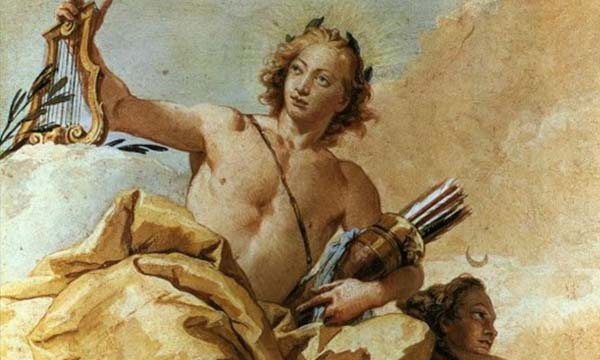
One of the most famous legends of the dolphin is about one of the most favored sons of Zeus was Apollo who in the guise of a delph AKA dolphin led a boat-load of Cretans to what is known in legend as Delphi.

The Homeric hymns show that Apollo himself is introduced conducting a band of Cretans, who came from the city of Gnosis – Knossos at his sanctuary at the foot of Parnassus, where he constitutes them his ministers ie: priests.

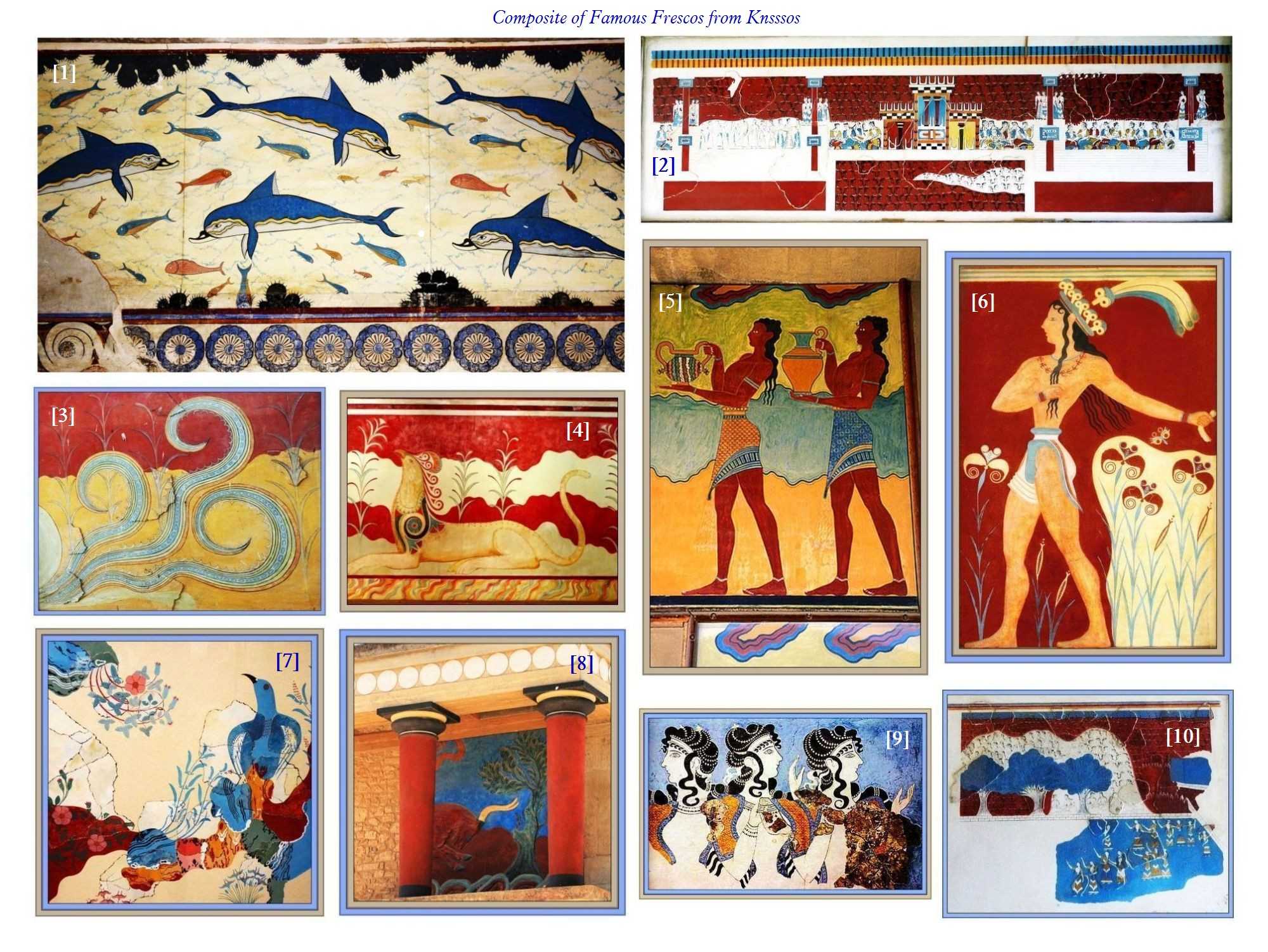
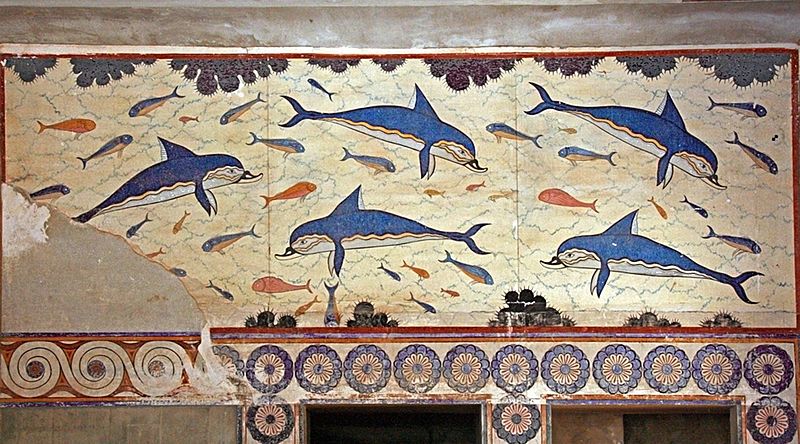
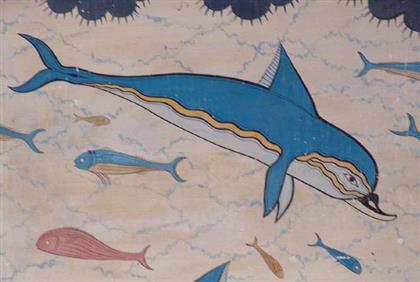
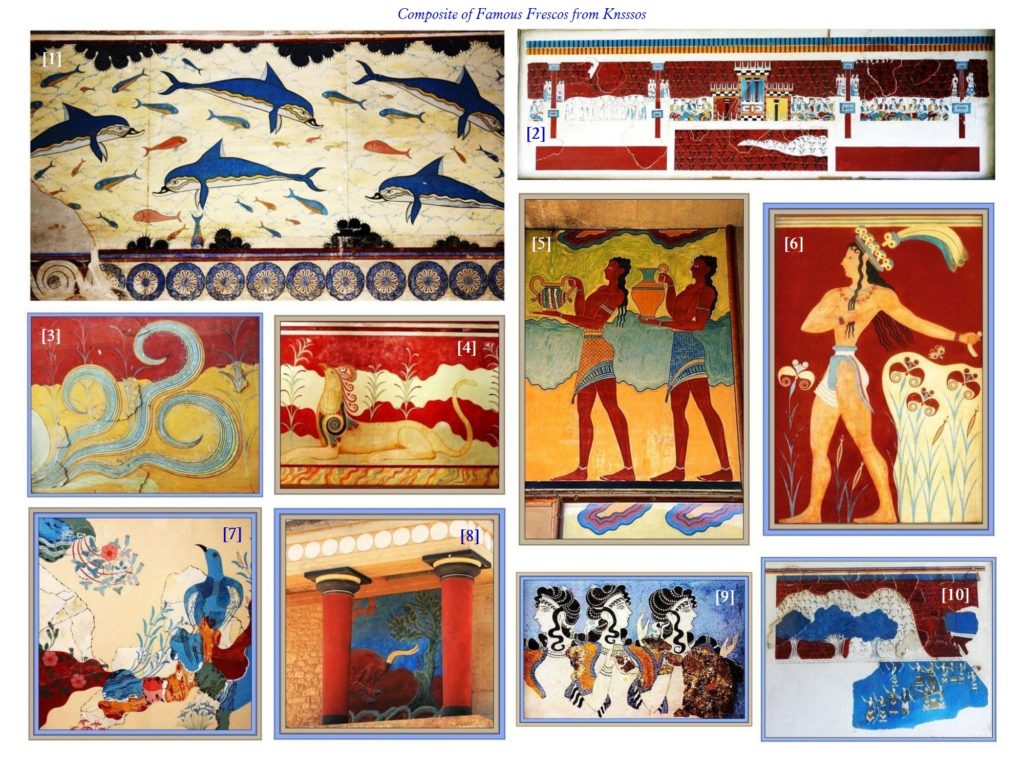
It is here at the palace of Gnosis at Knossos where you will find the Dolphins of Apollo in what is known as the famous “Dolphin Fresco.”

This is why Apollo’s most important name in the Cretan legends is Delphinius and his hereditary priests and priestesses of Pythia are the true oracles of Delphi.

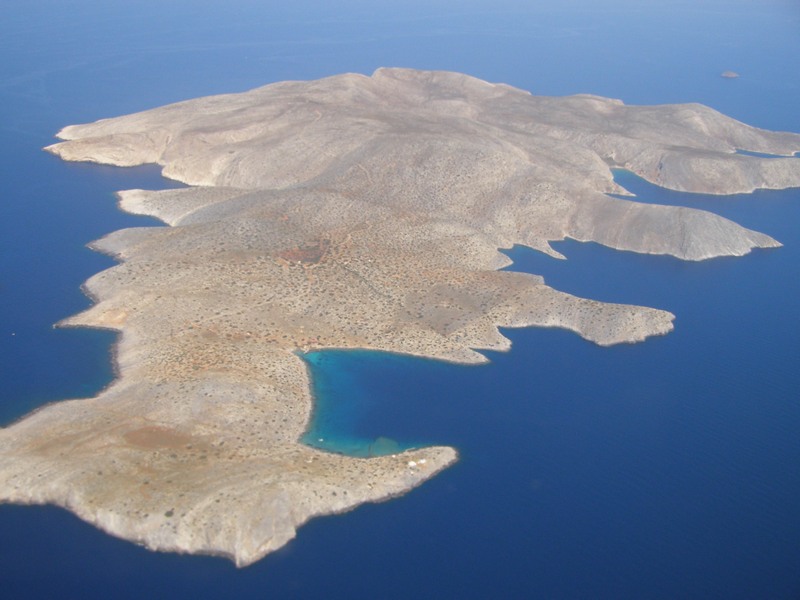
Traditionally, Apollo and his twin sister, Artemis who is the Roman Diana, were born just 7 miles from the Holy Island of Crete on the isle once known as Delos (Δήλος) and Kos, which today is called Dia.

This island is where the Kohanim Levites had hailed from with their temple of healing called The House of Asklepios (iEsculapius) which we know today was home to the Father of Medicine, Hippocrates  (Greek: Ἱπποκράτης; Hippokrátēs; c. 460 BC – c. 370 BC) and where he had operated his world-famous school of medicine.

A person who comes from the island Kos (Coos) is called a Koan in English, and a Cohen or Kohen (or Kohain; Hebrew: כֹּהֵן, “priest”, pl. כֹּהֲנִים Kohanim) which is simply the Hebrew word for priest. Hence, your last name does not have to be “Kohen or Cohen” to be a member of this biblical family.

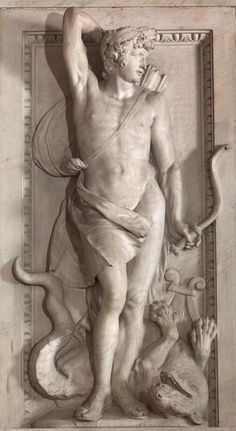
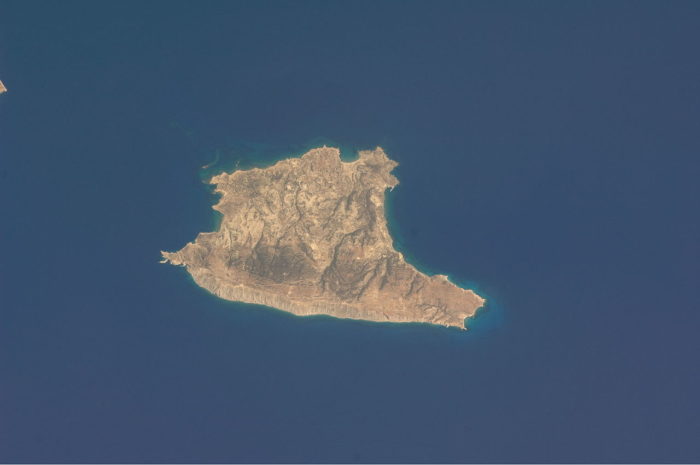
From this Dragon shaped island, Apollo went to Pytho (Delphi), where he slew Python, the dragon that guarded the area. He established his oracle by taking on the guise of a dolphin, leaping aboard a Cretan ship, and forcing the crew to serve him. From this point forward, Delos was one of the most sacred places of ancient Greece.

Further connections to Crete can be found in the story of the Labyrinth when Crete when Theseus dedicated to him the statue of Aphrodite which Ariadne had taken from Crete. On his return from Crete he danced about Apollo’s altar at Delos and instituted the cult of Apollo.

The lyre and bow are Apollos main instruments which are also bother credited to the development of the Cretans and also as their national symbols are more evidence of his origins with the Apollo of Crete.

It was said that in classical times, Delos now known as Dia was the center of an island confederation (Atlantis Legends), bound together by the common religion of Apollo, and only broken up by the overwhelming power of Athens.

It is very interesting to note how the Cretan Apollo is also connected with the U.S.A and how actual Cretan influence on the American Masonic Gnostic religion.

The Cretan City of Cutha

The Cretan City of Cutha

The Ancient Babylonian ie: Samaritan city of Cutha or Cuth (Heb. כּוּת, II Kings 17:30; כּוּתָה; II Kings 17:24) was the Capital for a people who we know today over the course of history by various names such as the Kush, Cush, Kish, Cuthites, Cushite, Cutheans, Chaldeans, Babylonians, and Samaritans – to name a few. However, in the Talmud, the name “Cutheans” referred to “all Samaritans” and the contract tablets found by Rassam at Tel-Ibrahim (Abraham) shows that the ancient name of Cuthah was also spelled, Gudua or Kutu (Kuta).

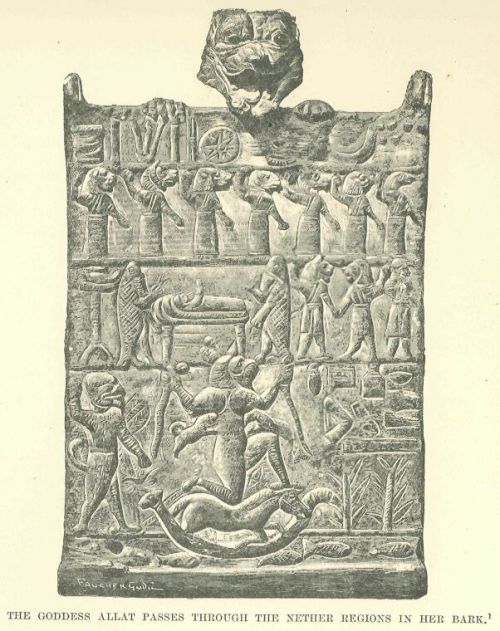
The city of Kutu AKA Cuthah was known as the Capital of the God of the underworld ie: Hell – Nergal with his central temple called É-MES-LAM (Meslam House), stood in Cuthah (cf. e.g., Laws of Hammurapi, Preamble, line 71), and the Cuthean colonists in the province of Samaria established this cult there (II Kings 17:30).

We find in a Sumerian text (IV R. 26, No. i) the city Gudua referred to the Nergal, where he is called here Un-Gudua, “Lord of Kutha,” this only confirms the familiar statement from II Kings 17, 30 that Kutha was the center for the cult of Nergal.

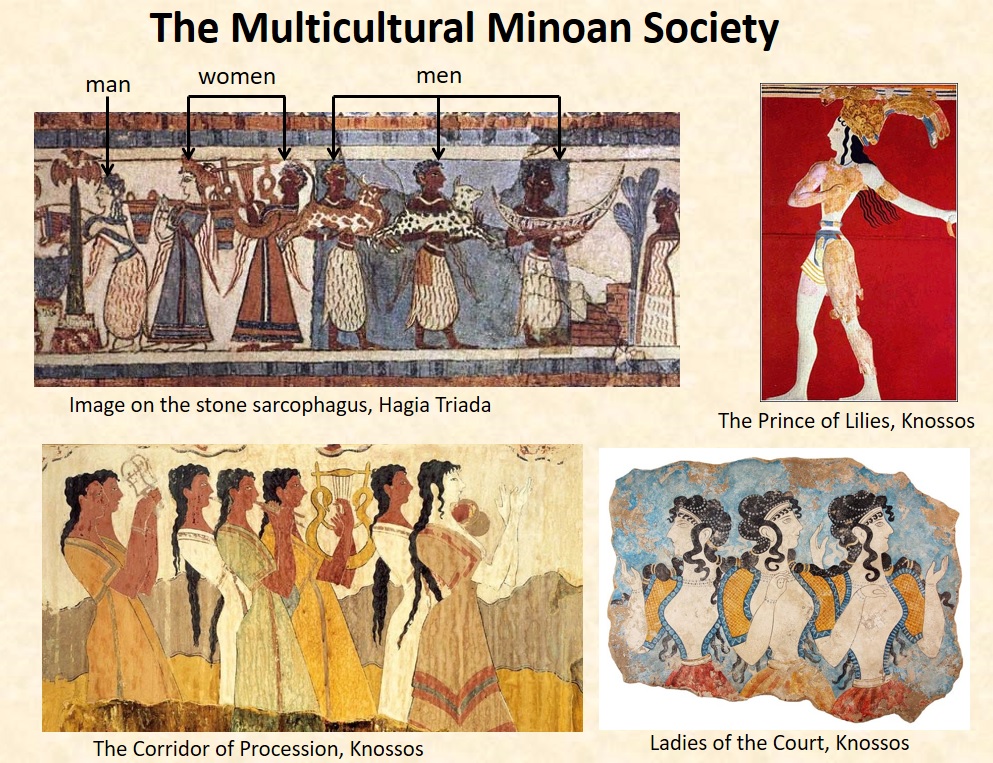
According to author Archibald Henry Sayce, Nergal was the local deity of the town called Gudua, “the resting-place,” by the Accadians — a name changed by the Semites into Kutu or Cutha — which is now represented by the mounds of Tel-Ibrahim. (Lectures on the Origin and Growth of Religion) These Semites I would assume are connected to the Cretans through the Tribe of the Samaritans with their priests being the Levites whose lion-headed god of the Underworld (Hell/Modernity) Nergal,’ the god of the great city of the dead called Gudua was the cemetery where all their (my) fathers were buried.

It is here at Kutu or Kutha, which is also the name of the capital of the Sumerian AKA Mesopotamian underworld where “Irkalla AKA Kur, Irkalla, Kukku, Arali, Kigal, and various other names, was a dark, dreary cavern located deep below the ground, where inhabitants were believed to continue “a shadowy version of life on earth”.

The only food or drink was dry dust, but family members of the deceased would pour libations for them to drink.”

What I have found interesting about this ancient story is that the underworld was also the abode of various demons such as the child-devourer demon known as Lamashtu, the fearsome wind demon and protector god Pazuzu, and the demons who drag people into the underworld to be tortured were called the “galla.”

We can connect this demon galla to the Samaritans, Galileans with their Holy Cocks and God Nergal.  Galla or Gal is where we get the English word cock or rooster which in Greek is ἀλέκτωρ, ορος, ὁ or alektór and in Latin is gallus or gallinaceous. The surname for Jesus being a Galilean (Cock/Rooster) from Gallillee and his Apostles like Simon who was surnamed Peter were Galileans as well. (Matthew 26:69; John 7:41)

Lest we not forget that the King of Demons in Judaism is named Asmodeus (Ashmedai) who according to the Kabbalah, is a cambion, born as the result of a union between King David, and the Queen of Demons named Agrat Bat Mahlat who was a succubus. David was the second king of the United Kingdom of Israel and Judah, and also an ancestor of Jesus.

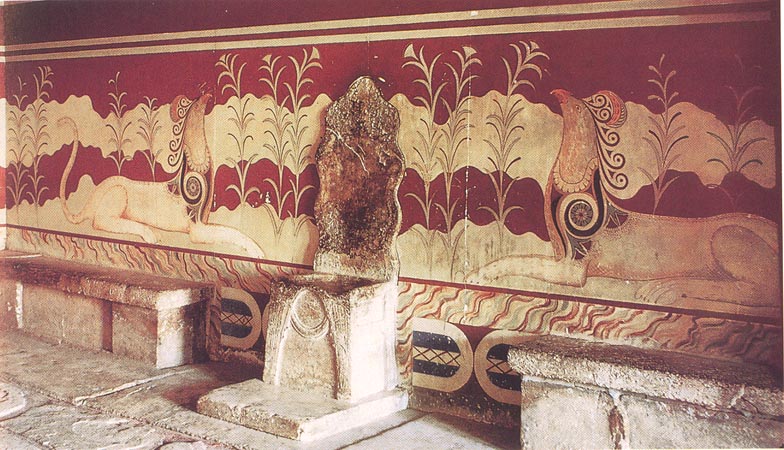
The 7th century Pope, Gregory the Great named Asmodeus as an angel of the Order of Thrones. The Order of Thrones is the most influential Christian angelic hierarchy. A throne is some type of ceremonial chair for a sovereign, bishop, or similar figure possibly like the one uncovered in the Palace of Gnosis AKA Knossos on Crete?

His mother and ancestor of the Lord – Agrat Bat Mahlat was a female demon who is referred to as succubus, and who appears in dreams and takes the form of a woman in order to seduce men, usually through sexual activity. The male counterpart is the incubus.

In the Tanakh, Cuthah was one of the five Syrian and Mesopotamian cities from which Sargon II, King of Assyria, brought settlers to take the places of the exiled Israelites (2 Kings 17:24-30). II Kings relates that these settlers were attacked by lions.

Another connection to these people we find in the Scripture being the Tribe of Gad – AKA Gadites (Gudua) who in Deuteronomy is the division of land was given the territory north of Aroer by the Arnon Gorge, including half the hill country of Gilead, together with its towns. Their tribe was said to be fierce and warlike; they were “strong men of might, men of war for the battle, that could handle shield and buckler, their faces the faces of lions, and like roes upon the mountains for swiftness” ( 1 Chronicles 12:8 ; 5:19-22 ).

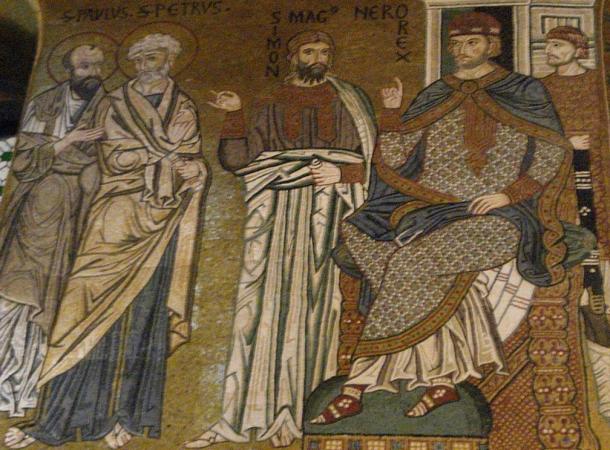
Please keep in mind that Satan who we know the Church Fathers had called Simon Magus was also a Samaritan and Galilean is associated with the symbology of the lion and the Lord Jesus as being a lion of the Tribe of Judah and also a Galilean.

In the Scripture, we find that the Reubenites, the Gadites and the half-tribe of Manasseh had 44,760 men ready for military service—able-bodied men who could handle shield and sword, who could use a bow, and who were trained for battle.  These references of being strong in war and also the ability to use the bow may be another connection to the ancient famous archers from the island of Crete who I mention often and would of at that time fit this description.

One of the most famous biblical prophets, Elijah was also from the Tribe of Gad or a Gadite according to Genesis Rabba 71, and in I Kings 17:1. There was also someone known as Gad the Seer who has a book after his namesake (I Chron. 29:29, I Sam. 22:5, II Sam. 24-11-19, I Chron. 21:9-19, II Chron. 29:25) who also is believed to be a Gadite.

Then the angel of the Lord commanded Gad to say to David, that David should go up, and set up an altar unto the Lord in the threshing-floor of Ornan the Jebusite. And David went up at the saying of Gad, which he spake in the name of the Lord… And he set the Levites in the house of the Lord with cymbals, with psalteries, and with harps, according to the commandment of David, and of Gad the king’s seer, and Nathan the prophet: for so was the commandment of the Lord by his prophets.(1 Chronicles 21:18)

As I have mentioned many times before, when researching history and ancient names, especially those after the creation of the Tower of Babble, you will find that they have a plethora of different spellings and or have been changed altogether depending on the language, royal patron, and or the ancient ax to grind of the historian.

For example, when researching the city of Cutha or Cuth, you will find that this name is also spelled “Gudua, Gaudo, Cauda, Ur and or Kutû(m).” The Talmud lists the City as Cutha or Cuth and the Roman-Jewish Historian Josephus working for his royal patron- Augustus Caesar said it was called Ur (Ant., 9:279) and was still known in their time, which was Abraham’s original homeland according to Genesis (11:31; 15:7).

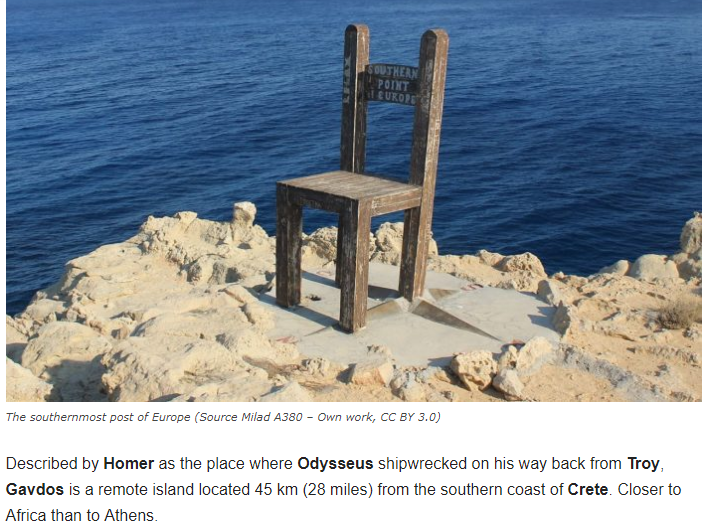
With that said, I was not surprised when I found that the name “Gudua, Gaudo, or Cauda” is mentioned in Acts as a small island where the Apostle Paul landed after leaving the Holy Island of Crete. You will find this island South of Crete that was once known in lost (covered) history as Gaudo and today is known as “Gavdos.”

It is the southernmost Greek island, located to the south of its much larger neighbor, Crete, of which it is administratively a part, in the regional unit of Chania. Gavdos is described by Homer as the place where Odysseus shipwrecked on his way to Troy.

This island later appears in the biblical account of Paul‘s journey to Rome in Acts 27 as “Clauda” (Κλαῦδα) or “Cauda” (Καῦδα). The island was also referred to as “Cauda” by Roman geographer Pomponius Mela, and as “Gaudos” by PlinyPtolemy called Gavdos “Claudos” (Κλαῦδος), the Venetians called it “Gotzo” and from the 17th to the 19th centuries, the island was known as “Gondzo”. A Turkish name of Godzo was “Bougadoz”. (Wikipedia)

Today on this island you will find what we may someday call “the beaches of the Prophets” such as “one of the most beautiful beaches in Europe,” called “Agios Ioannis” or Ioannes (Greek: Ιωάννης), shortened to Giannis or Yannis (Γιάννης), which is a Greek given name cognate with Johannes and John

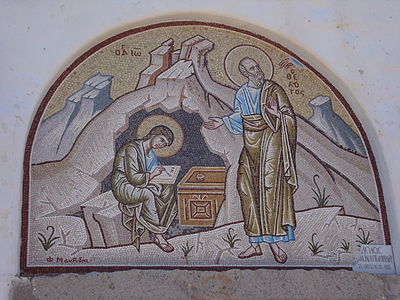
Interestingly, a name that would parallel the Biblical story of John as a possible connection to Crete and also this island of Gavdos is Potamos Beach. A name very similar and almost the exact spelling as Patmos, which some of you will know is the place where John had written the Revelation in The Cave of the Apocalypse said to be located about halfway up the mountain on the Aegean island of Patmos.

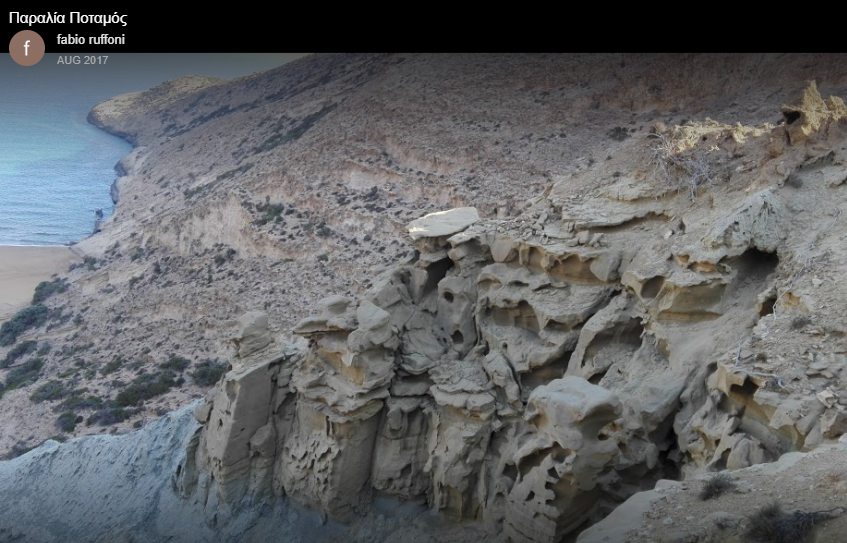
Furthering my own revelations in researching this idyllic Potamos Beach, I have discovered that not far from its sandy shores about halfway up the mountain are a series of mysterious caves.

Gnosis: The mystery which hath been hidden away from the ages and from the generations

Gnosis: The mystery which hath been hidden away from the ages and from the generations

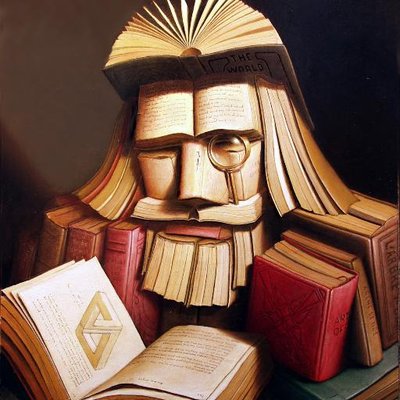
In the New Testament which was originally written in Greek, we find the Greek words gnôsis (knowledge) and sophia (wisdom) often written together and reoccurring many times in association with the words “treasure (Greek: thēsaurízō) and secret mysteries.”

St. Paul, who was then writing to the Greeks or Hellenistic Jews ie: Gnostics at the time would use phraseology that was familiar to the initiated such as when he calls the gospel “a mystery,” which is “hidden from the natural understanding and from the previous searchings of men” (1 Corinthians 2:6-16). He emphasizes the notion of secrecy in its proclamation (comp. 2 Corinthians 3:12-4:6); and “mystery is the correlate of revelation.”

Some of the early Christian Fathers who were collectively known as The Ante-Nicene Fathers had said that when Paul speaks of “treasures”, he is talking about knowledge (gnosis) and of hidden wisdom. In Volume 9, they proclaim;

“Apostles would have said this, too, as well as Paul. As for the text, “But we have this treasure in earthen vessels, that the excellency of the power may be of God and not of us,” we interpret it in this way.

By “treasures” we understand here, as in other passages, the treasure of knowledge (gnosis) and of hidden wisdom.”

The Ancient Gnostic mysteries were what can be called the Greek Athenian and Hellenistic Jewish mysteries that were secret religious doctrines and rites made known only to initiated persons, who formed various associations and schools. Some of the most sacred were the Gnostic mysteries near the city of Knossos on Crete and what is known as the Eleusis mysteries near Athens in Greece.

It was said that the mystical doctrines ascribed to Pythagoras were propagated by various secret societies, which were readily adopted by the Church of Alexandria whose goal was to expand Judaism using a secret symbolical and allegorizing method into a one world universal religious system.

The inner Gnostic mysteries would be veiled from the unenlightened (or uninitiated) fellow believers.

The English word mystery is derived from the Greek word μυστήριον, which means a “secret”, or knowledge (gnosis) kept hidden or covered ie: the unrevealed. Paul would have used the term to describe the secret doctrines of Gnosis that were to remain hidden until the apocalypse in order to uncover them.

In Colossians 1:26, Paul had said, “the mystery that has been kept hidden for ages and generations, but is now disclosed to the Lord’s people.” In his Epistles, he uses the term “mystery” 21 times such as “The mystery which hath been hidden away from the ages and from the generations (Ephesians 2:2, 3; Ephesians 3:5, 9; Romans 16:25, 26; Romans 11:25, 26, 33).

The word “mystery” plays a large part in Colossians and Ephesians and it occurs in 1 Corinthians, and twice in the Roman Epistle, written from Corinth. Its use in Romans 16:25 is identical with that of the passage before us. ”

“In whom (not as Alford, ‘in which’) mystery; Christ is Himself the ‘mystery’ (Col 2:2; 1Ti 3:16), and to Christ the relative refers) are all the treasures of wisdom and knowledge (Gnosis) hidden.

This is the wisdom of God in a mystery, a wisdom which is hidden.

This wisdom refers to how man’s redemption is truly accomplished which is through the secret doctrine of Gnosis.

In his Epistles to the Corinthians, Paul calls himself an idiot — a person unskilful in the Word, but not in the gnosis. Paul says, “We speak wisdom among the perfect or initiated. Not the wisdom of this world, nor of the archons of this world, but divine wisdom in a mystery, secret—which none of the Archons of this world knew.”

By revelation, Paul received the secret (μυστήριον) Gnosis.

Satan Was Baptized a Christian

Satan Was Baptized a Christian

Most Christians would be surprised to find out that who they have been told is one of the evilest angels to ever live, Satan was also a “Baptized Christian.”

Meaning, that he was a person and a Christian sinner just like you, me and the Christians you both love and hate.

As I have written before, we know that the Church Fathers had bestowed the title of Satan on a certain Samaritan man named Simon Magus by Church Fathers. In the Scripture, he is also known as a type of angel called a cherub and legal prosecutor for God who became the defacto God and Prince of this World.

Before the advent of Christianity and the first Apostilistic mission or the Church, Simon was well known in Samaria and all throughout the Roman Kingdom as a High Priest and he was even honored as a God. His religion was primarily that of Gnosticism, as the Church Fathers also labeled him the First Gnostic.

We find that Simon, who we also know as Satan was converted to Christianity in Acts he is portrayed as a famous sorcerer in Samaria who was “baptized by Philip the Evangelist” (Acts viii. 5-24) and “followed Philip everywhere.” (Acts 8:13)

We are told that Simon baptized with water and also added fire by lighting above the head of the baptized a light flame of naphtha from Lake Asphaltis, to fulfill the Baptist’s prediction of Christ’s baptism with the Holy Ghost and fire.

It was said that Simon’s speaking of “the power of the Holy Ghost” as ” purchasable commodities ” is subsequent to his baptism. Then it is written that “He then was an apostate from the faith on the profession of which he was baptized.”

Simon Magus was a magician who was later baptized as a Christian. In this passage, Luke does not explicitly say whether Simon Magus was a true convert or not. At the beginning of the narrative, Luke says that “Even Simon himself believed” (Acts 8:13).

But towards the end, Peter condemns Simon:

“May your silver perish with you, because you thought you could obtain the gift of God with money! You have neither part nor lot in this matter, for your heart is not right before God” (8:20 -21). After Simon Magus requests Peter to pray for him, the story of Simon Magus end and he is never mentioned in Scripture again.

The biblical account concludes with Simon’s/Satans repentance and apparent reconciliation with Christianity after his condemnation by St. Peter.

For the Apostle Paul had said, “For such men are false apostles, deceitful workers, disguising themselves as apostles of Christ. No wonder, for even Satan disguises himself as an angel of light.” (2 Corinthians 11:13-14)

“They went out from us, but were not of us;” and whom Peter (2 Pet. ii. 4, 14) charges with false doctrine and licentiousness. Next, we find Clement (i. 14), say to his readers to “follow God rather than those who, through pride and sedition, have become the leaders of a detestable emulation.”

Polycarp also (Ep. to Phil. ch. vii.) says, “Whosoever does not confess that Jesus Christ has come in the flesh (the Docetae holding the sentiments of Simon), is antichrist; and whosoever perverts the oracles of the Lord to his own lusts, is the first-born of Satan.” Hermas (Pash. ch. vi.) says, “The motheaten branches are the apostates and traitors of the church, who have blasphemed the Lord in their sins.”