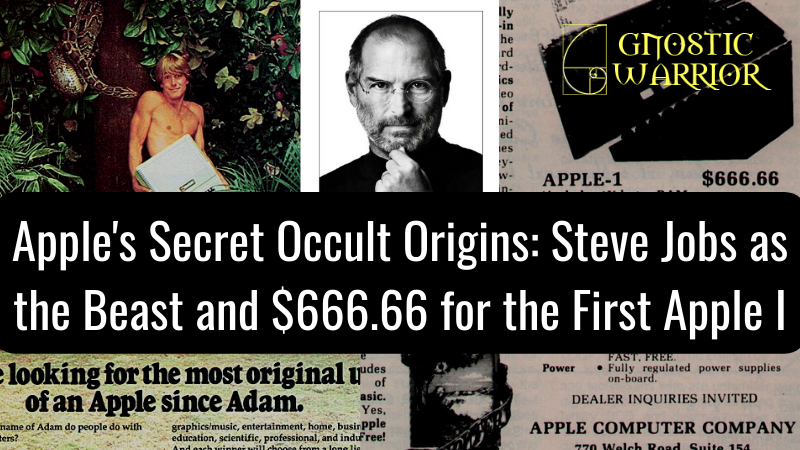
Apple is the most popular and recognizable brand in the world. Their computers and smartphone technology have both changed and taken over our lives. Today, approximately 45% of the U.S. population owns an Apple iPhone.
Almost everyone today recognizes the Apple logo. To me and other people, it looks like it represents the Biblical story of the Devil, serpent, and the apple from the Adam and Eve story.
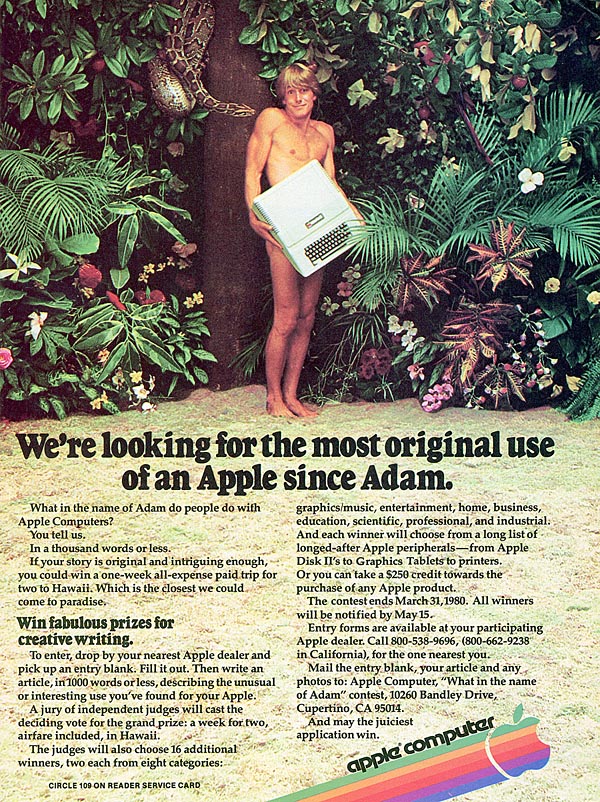
Apple even capitalized on the story with their first advertisements, such as this one.
Hell, maybe me and my tin-foil hat wearing conspiracy friends are not so crazy after all…
But the occult references and conspiracy clues do not end there.
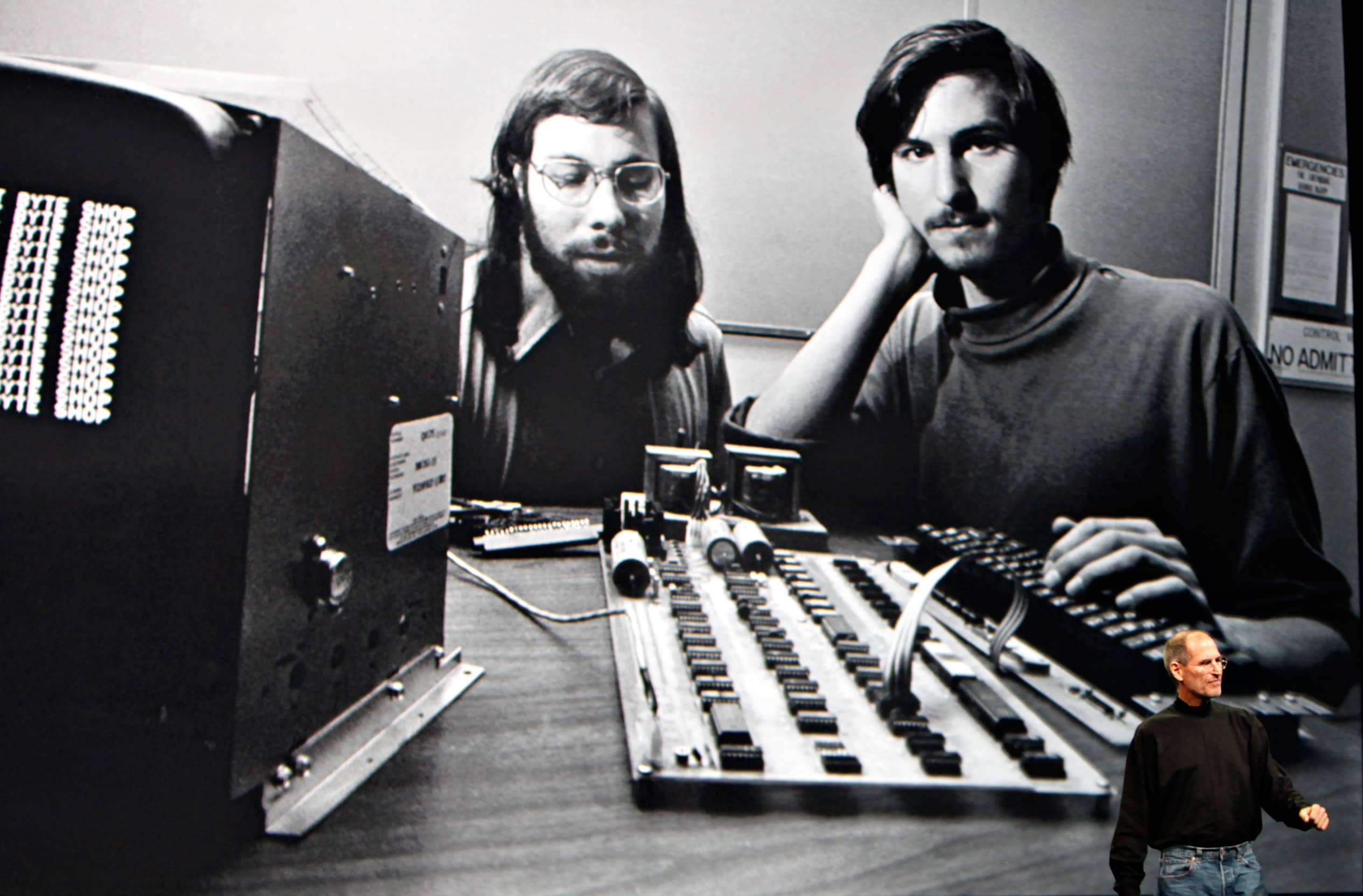
The original Apple I computers were hand built by Apple co-founder Steve Wozniak, Jobs and other friends in Wozniak’s garage with parts purchased from a local electronics store called The Byte Shop in Mountain View California (now called Fry’s Electronics) or scavenged from broken machines at their college dorms.
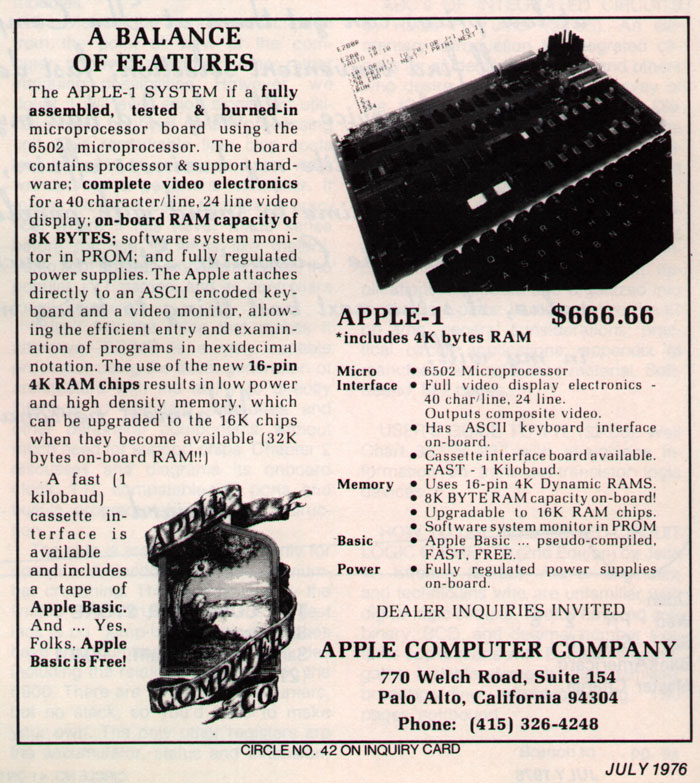
The first Apple 1 computer that cost about $1,533 to build, but Jobs and Wozniak decided to sell them for $666.66 each with the slogan “Byte into an Apple.”
Some people say that Jobs purposely chose the apples with a bite out of it and selling the first computers for $666.66 to honor the Mark of the Beast, and that it was Satanic because in the Bible, the Beast is identified with the number, 666.
In Revelation 13:18, it says, “This calls for wisdom. If anyone has insight, let him calculate the number of the beast, for it is man’s number. His number is 666.”
As if Jobs and Wozniak were summoning the Devil to ritualistically assist him in this new demonic venture, and this was the machine that would do it.
Then you have Apple’s slogan, “Think Different,” which glorifies the crazy ones, misfits, rebels and trouble makers.
“Here’s to the crazy ones. The misfits. The rebels. The troublemakers. The round pegs in the square holes. The ones who see things differently. They’re not fond of rules. And they have no respect for the status quo. You can quote them, disagree with them, glorify or vilify them.
About the only thing you can’t do is ignore them. Because they change things. They push the human race forward. And while some may see them as the crazy ones, we see genius. Because the people who are crazy enough to think they can change the world, are the ones who do.”
This can’t all be a coincidence, could it?
According to Steve Jobs, “Apple was so named because Jobs was coming back from an apple farm, and he was on a fruitarian diet. He thought the name was “fun, spirited and not intimidating.”
And as for the price of $666.66, Steve Wozniak says it became $666.66 because Wozniak “liked repeating digits” and because of a one-third markup on the $500 wholesale price.
Do you believe these stories or could there be something more occult going on here?
It seems to depend on who you ask.
For example, when Jean Louis Gassée, an executive at Apple Computer from 1981 to 1990, was asked about his thoughts on the Apple logo, he answered:
“One of the deep mysteries to me is our logo, the symbol of lust and knowledge, bitten into, all crossed with the colors of the rainbow in the wrong order. You couldn’t dream of a more appropriate logo: lust, knowledge, hope, and anarchy.”
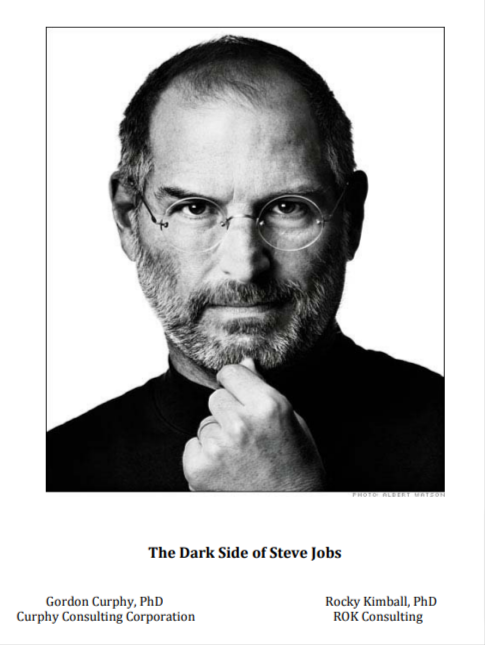
When it comes to Steve Jobs character, there’s the “Good Steve,” and then, there’s the “Bad Steve,” says biographer Walter Isaacson.
In other words, he had a dark (shadow/demon) and light (enlightened/angel) side to his character.
Steve Jobs has been described as an amazingly talented leader but a highly flawed individual. He was known to be a manipulative, excitable liar who was cold, mean, and vindictive. He was not very pleasant to be around and could change moods at the drop of a dime.
While working at Atari, Jobs recruited Wozniak to help him work on the game Pong. There was a big cash bonus involved if they finished the job fast and efficiently.
They did, but Jobs lied about how much money the bonus was, pocketing the majority of the money for himself.
This was how Jobs treated people. He could give a flying f*ck about friends, co-workers and even family members like his daughter who he refused to acknowledge or support and whose mother had to live on welfare.
And even his practice of Zen Buddhism could not save the man.
Jobs lacked self-reflection skills and acted sociopathic. His capacity to deceive others, distort reality, exhibit emotional outbursts, and inflict cruelty seemed to withstand the test of time.
In my personal opinion, Steve Jobs was a talented business man but also a human piece of shit, or what some people would accurately call a sociopath, and some religious folks, a demon or the Devil incarnate himself.
Even though I do not think that he worshiped Satan or summoned demons, he was a liar, thief and terrible person – just like the so-called Devil.
His mode of being was completely individualistic or what could be called Satanic.
Hell, many CEO’s and captains of industry of this Modern world act in a similar fashion to Jobs. In fact, I believe it is more common than uncommon in the world of business.
So, it is quite fitting that Jobs, the Beast of Apple Computers, had decided to sell their first computer for $666.66.
Remember, “This calls for wisdom. If anyone has insight, let him calculate the number of the beast, for it is man’s number. His number is 666.” – Revelation 13:18
Moe is the founder of GnosticWarrior.com. He is a father, husband, author, martial arts black belt, and an expert in Gnosticism, the occult, and esotericism.
The Grand Master proclaims, ” We come to complete the work and to consecrate it to the glory of the Grand Architect of the Universe, to truth, to virtue, and to light the fire of Freemasonry.”
Perhaps no other philosophical concept and symbol is more important in the history of Freemasonry than the Grand Architect of the Universe (initials T.G.A.O.T.U.), which is also sometimes referred to as the Great Architect of the Universe, The Sovereign Grand Architect of the Universe, or the All-Seeing Eye of God. The term itself has been used by Freemasons since at least 1723.
The name “Great Architect” comes from Greek words meaning “Great Artificer” or “Great Workman”; both terms refer to God’s creative powers and abilities to create anything out of nothing at all (Genesis 1:2). This idea seems very similar to what Albert Pike (1809-1891) said about God: “God is uncreated; all else is created.”
Pike claims that T.G.A.O.T.U. is invisible. He wrote, “The point is invisible as the grand architect of the universe of Freemasonry is invisible. But by singular substitution we have assembled to represent a visible sign of this invisible grace.”
In Freemasonry, there is a requirement that a Mason must believe in God, and the Grand Architect of the Universe would represent this deity.
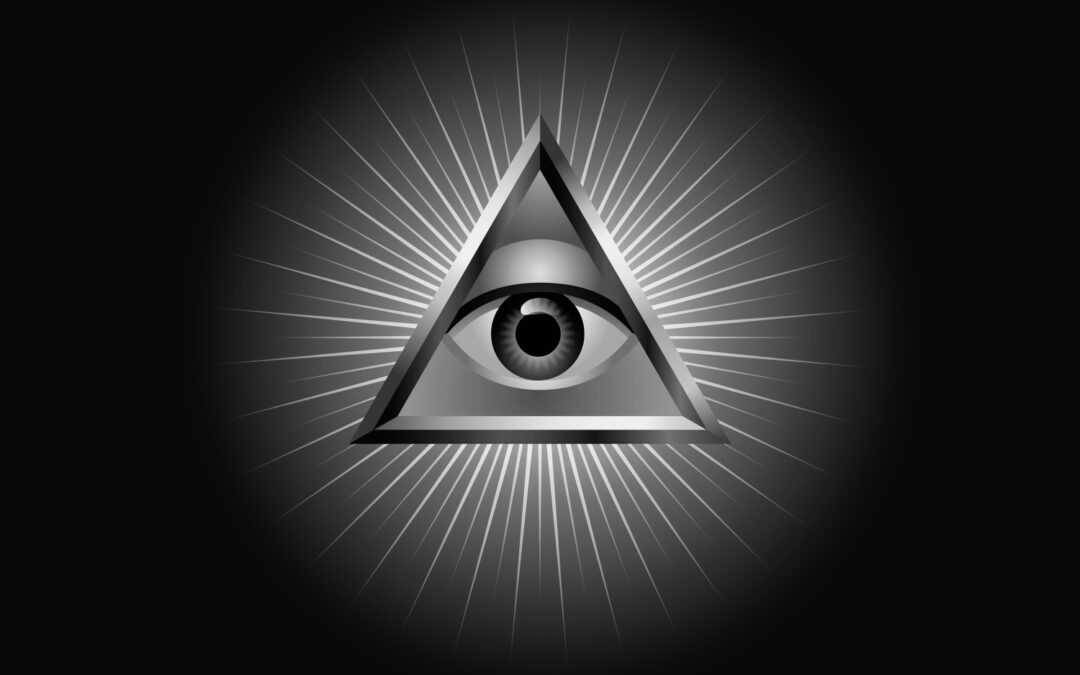
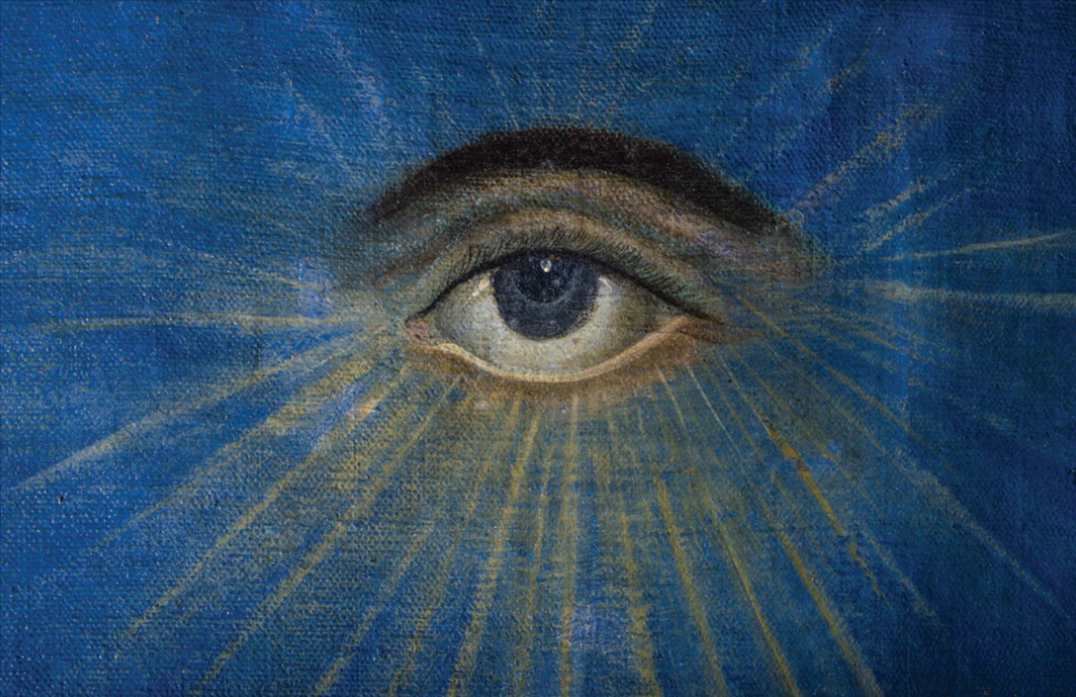
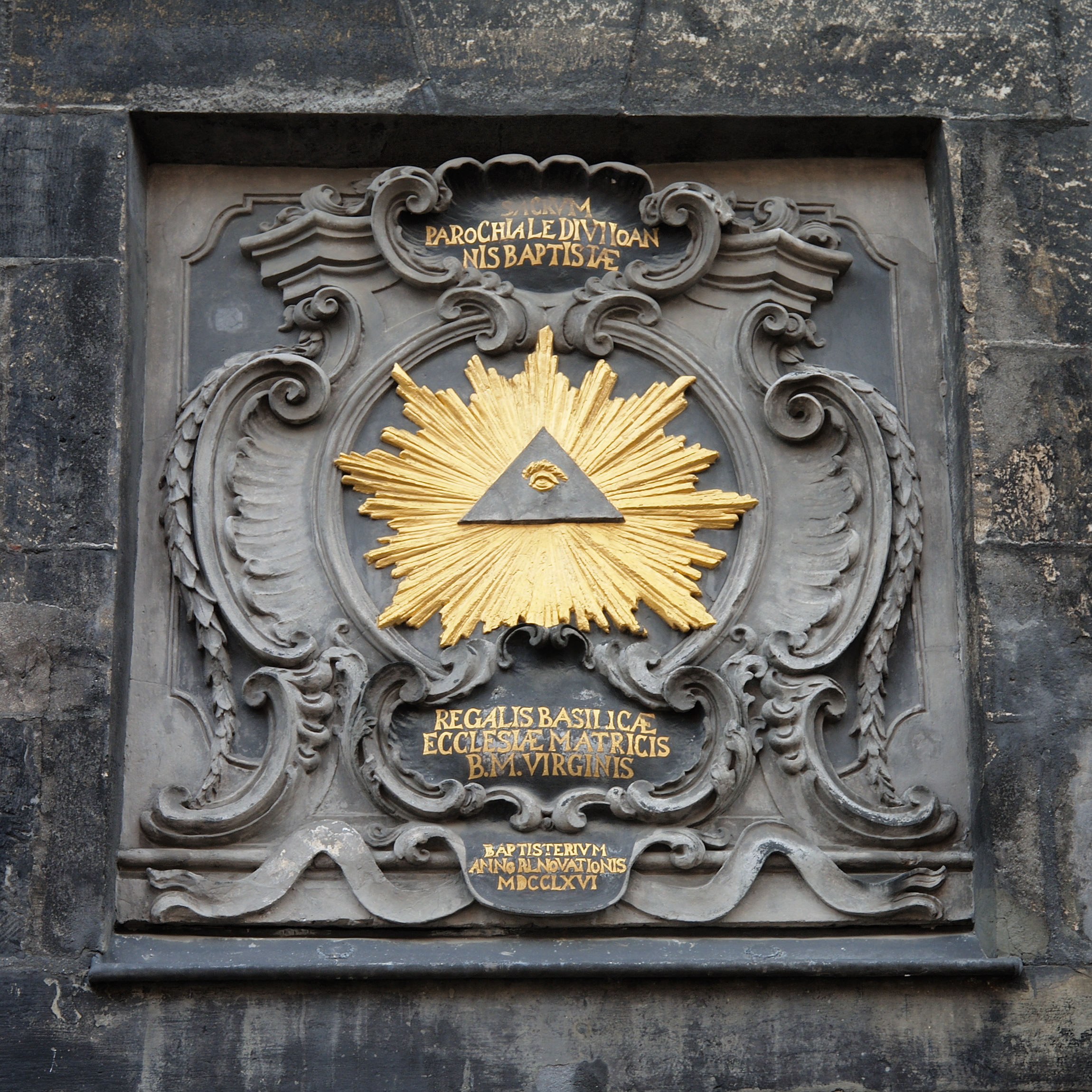
To Freemasons, T.G.A.O.T.U. is associated with light, fire, divinity, the divine wisdom of God, and sacred geometry, which is found symbolized in Lodges as the letter G, the Blazing Star (upright pentagram) or a single eye often enclosed within a triangle with rays of light emanating from it.
God is always associated with creation, light, truth and divine wisdom.
The Masonic philosophy is based on enlightened rationalism (beliefs based on reason rather than faith) and emphasizes goodness, charity, and brotherhood among people regardless of race, creed, or religion). Each Mason has his own unique function or purpose in life and must seek spiritual enlightenment through self-realization and self-development so that he may become a better person who contributes something meaningful to society at large.
The phrase “Grand Architect” appears in Masonic rituals in various forms, such as “Grand Geometrician of the Universe” (or some variant thereof), “Great Geometrician” and “Great Architect” (or some variant thereof). The word “Geometry” here refers to “sacred geometry”, which is a system of measuring and constructing the world and cosmos that was first developed by the Ancient Egyptians and Greeks but has been used by many cultures throughout history.
Thomas McKay wrote:
“We know, for instance, from the recent researches of the archaeologists, that in all the documents of the ancient Egyptians, written in the demotic or common character of the country, the names of the gods were invariably denoted by symbols; and I have already alluded to the different modes by which the Jews expressed the tetragrammaton.
A similar practice prevailed among the other nations of antiquity. Freemasonry has adopted the same expedient, and the Grand Architect of the Universe, whom it is the usage, even in ordinary writing, to designate by the initials G.A.O.T.U., is accordingly presented to us in a variety of symbols, three of which particularly require attention.
These are the letter G, the equilateral triangle, and the All-Seeing Eye.”
33rd Degree Freemason and author Manly P. Hall said it was an expression of a hidden reality. Hall wrote:
Freemasons have for centuries held the conception of the Universe as the material expression of a hidden reality, an invisible blueprint set down by the hand of the Grand Architect of the Universe [in his Spiritual, Moral and Masonic Trestle Board].
Hall also wrote:
“Let him never forget that the Master is near. Day and night let him feet the presence of the Supreme or Overshadowing One. The All-Seeing Eye is upon him. Day and night this great Orb measures his depths, seeing into his innermost soul of souls.”
The great duties that are inculcated by the lessons taught by the working-instruments of a Grand Master Architect, demanding so much of us, and taking for granted the capacity to perform them faithfully and fully, bring us at once to reflect upon the dignity of human nature, and the vast powers and capacities of the human soul; and to that theme we invite your attention in this Degree.
Let us begin to rise from earth toward the Stars.
Evermore the human soul struggles toward the light, toward God, and the Infinite. It is especially so in its afflictions. Words go but a little way into the depths of sorrow. The thoughts that writhe there in silence, that go into the stillness of Infinitude and Eternity, have no emblems.
Thoughts enough come there, such as no tongue ever uttered. They do not so much want human sympathy, as higher help. There is a loneliness in deep sorrow which the Deity alone can relieve. Alone, the mind wrestles with the great problem of calamity, and seeks the solution from the Infinite Providence of Heaven, and thus is led directly to God.”(Morals and Dogma Chapter 12)
HISTORY OF THE GRAND ARCHITECT
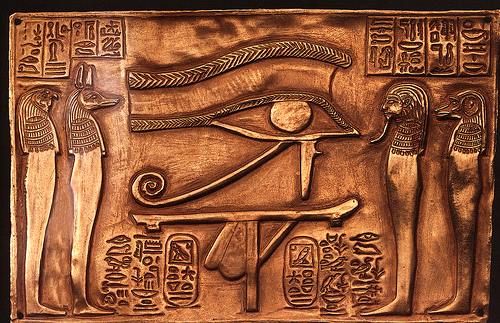
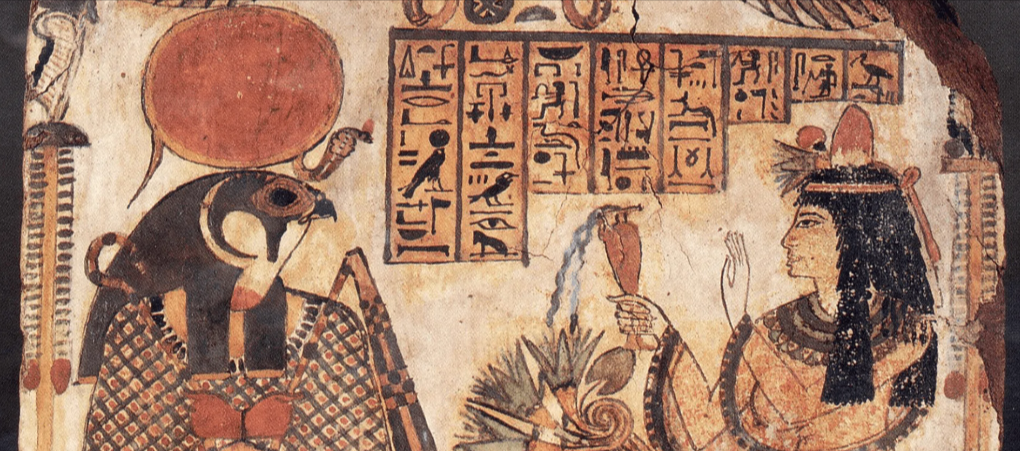
The concept of God, symbolized as an eye and being the creator or grand architect of the world, goes back thousands of years to Ancient Egypt, Greece, and Phoenicia. The Egyptians had the Eye of Ra and Horus for thousands of years.
The Greek concept of the Grand Architect was Plato’s Demiurge (Gk., dēmiourgos, ‘craftsman’) who formed and molded the visible world. In Christianity, we have God and the LORD with the Eye of Providence dating back well over 1,200 years ago.
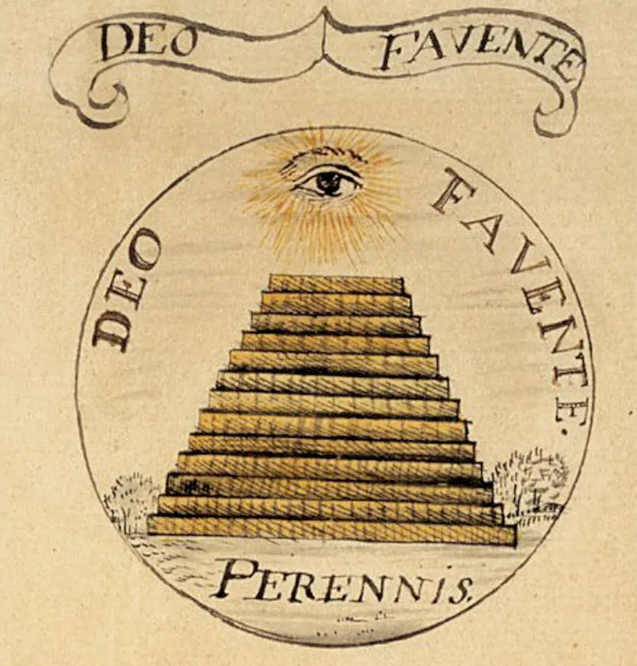
Many of us know the Eye of Providence from the back of our U.S. currency on the dollar bill showing an eye enclosed in a triangle and surrounded by rays of light. It was placed there by Masons to represent the eye of God, who watches over humanity, guiding us by the principles of divine providence.
It should be no surprise to some of us that many Masonic and Christain symbols adorn such important items as our currency, since many of our nation’s founders were Freemasons, including George Washington, Ben Franklin, Paul Revere, Joseph Warren, and John Hancock.
A Novus Ordo Seclorum – “A new order of the ages (is born).”
The original Great Seal of the United States of America was said to have been designed in 1782 by Charles Thomson, who, in collaboration with lawyer and artist William Barton, had originated the idea of a pyramid and Eye of Providence and other elements.
THE ANCIENT GREEK CONCEPT OF T.G.A.O.T.U. AS THE DEMIURGE
The Ancient Greek scientific concept of The Grand Architect of the Universe can be found in Plato’s Timaeus as the Demiurge, from the Greek dēmiourgos, which means craftsman. He uses the term dēmiourgos to refer both to an artisan and to an original arranger of the world.
In the opening speech, Timaeus (Timaeus 27d5-29b1) claims that the cosmos must be the product of what he calls the Demiurge, creating an eternal paradigm. Plato wrote, “To find the maker and father of this universe is a difficult task, and even once found, it’s impossible to declare him to all” (Timaeus 28c3–5).
Plato explains that it is impossible for something to come into being from nothing (27e2-28a4). The first premise is that here must be some source for motion for the universe as a whole, which is unchanging and indestructible. Plato says that an efficient cause is one that acts without being acted upon.
Meaning, the Demiurge does not receive its motion from something else. Instead, it is the first source of all motion in the universe as a whole. Timaeus states that this source must be an efficient cause (Timaeus 27d).
The Demiurge fashioned the world, people and the cosmos out of preexisting chaos which the Demiurge organized into the four elements — Earth, Water, Air and Fire. These formed the “body” of the cosmos, which was also endowed with a “soul”. The soul of the cosmos, which Plato considered as its better or more important part, was its principle of eternal and recurring circular motion, causing the circular motion of the planets, sun, moon, and stars.
Plato’s student, Aristotle added the fifth Platonoic element, aether as the prima matter of the heavenly bodies. He claimed that crystalline spheres were made of a fire like substance that was always moving, called aether. A substance that also filled the space between the celestial bodies.
According to Aristotle’s theories of motion, he believed that ether was a fire like substance that was always moving in a circular motion. But the other four elements tended to move in straight lines. The earth moved downward; fire moved upward, while water and air fell in between.
I believe that Plato’s philosophical explanation of the Demiurge and Aristotle’s aether are the closest scientific explanations of The Grand Architect of the Universe that have been posited to date. In a future essay, I will go into more detail on the Greek concept of the Demiurge and how it can be connected to modern science.
THE CHRISTIAN GRAND ARCHITECT OF THE UNIVERSE
In Christianity, the symbol of the eye of God may be found in the Book of Proverbs, which introduces the idea that “The eyes of the LORD preserve knowledge (Gnosis).”
The first known use of the symbol is in the Palatine Chapel, Aachen Cathedral, which was built by Charlemagne in 786. It was a fairly common symbol throughout the middle ages and well into the Enlightenment period.
Thomas Aquinas said in the Summa: “God, Who is the first principle of all things, may be compared to things created “as the architect is to things designed” (ut artifex ad artificiata).”
John Calvin (1509-1564) was a French reformer of the Church who calls the Christian God “the Architect of the Universe”, also referring to his works as “Architecture of the Universe”, and in his commentary on Psalm 19 refers to the Christian God as the “Great Architect” or “Architect of the Universe”. (Institutes of the Christian Religion – 1536)
In Scripture, God is the master or choirmaster of the heavens, and his handywork can be seen as the creator of the world. The firmament showeth his handywork. (Genesis 1:6, 20.) as the atmosphere enveloping the earth. Psalm 19 reads, “For the director of music. A psalm of David. The heavens declare the glory of God; the skies proclaim the work of his hands. Day after day they pour forth speech; night after night they reveal knowledge (Gnosis).”
THE GRAND ARCHITECT IN EGYPT AS RA
The ancient Egyptians believed that Ra was the one who created everything in their world as the father of all creation.
They believed that Ra created himself out of nothingness and then created everything else in their world by speaking it into existence. He was the patron of the heavens, light, the sun, power and royalty. He was said to govern the actions of the sun.
The Eye of Ra would be one of the earliest or the first representations of the The Grand Architect of the Universe, the Eye of Providence and All-Seeing Eye of God.
Ra was one of the oldest deities in the Egyptian pantheon and was later merged with Atum to become Atum-Ra, which means “the complete one.” He also merged with the God Amon to become Amon-Ra At Thebes, becoming the principal god of the pantheon, the “king of the gods,” and the patron of kings.
All Egyptian Pharoahs from the 4th Dynasty on held the title “Son of Ra” (Son of God or the Grand Architect). As the Sons of Ra, they were tasked with governing their kingdoms and people as God issuing justice via rewards and punishments.
Gnostic Warrior Conclusion
The Masonic Grand Architect of the Universe symbolizes creator God and the primeval creative force in both ancient and modern religions, particularly those of Islam, Judaism, and Christianity.
In the end, believing in the creator of the universe will always be a matter of faith and opinion.
It’s a fascinating subject with roots in Egyptian Mythology, Greek Philosophy, Christian theology and Freemasonry throughout history—and it’s one that every Mason should spend some time researching on his own in order to appreciate its many different facets.
But as you can see from the course of history, several ancient nations, religions, and secret societies such as Freemasonry believed in a creator God whom they honored and defied in their writings.
For the Masons, the idea of a Great Architect is dogmatic as with many other religions. It is a requirement to believe in God, and there are no acceptions.
An ancient tradition that is still followed to this day not only by Masons, but also by billions of people.
Moe is the founder of GnosticWarrior.com. He is a father, husband, author, martial arts black belt, and an expert in Gnosticism, the occult, and esotericism.
The Etheric Body is one of the various names given to what has also been called by various esoteric authors as the Astral Body, Light Body, Body of Light, Human Energy Field, or Aura, which all mean the same thing and can be used interchangeably.
The etheric body is part of the human constitution in the form of light energy or luminous fluid. It is considered the energetic template of the physical body that has the ability to act as a mediator between the soul and body and can also record and store information.
The etheric body is made of a material known as ether (aether) that comes from the heavens (cosmos or space). In a similar sense, the term astral body refers to the stars. Very similar descriptions and words such as the light body and aura have been used throughout traditional history to modernity.
This mysterious and luminous material has been described as the light or energy field of the body to be both liquid and gaseous in nature. It is not visible to the naked eye, and some people claim that it can only be seen with spiritual sight or when it interacts with physical matter in some way (i.e., through magnetism).
As I researched this subject, I found that we can use modern science to identify what exactly the etheric body is and I can provide examples of my studies. In this article, I will detail the various aspects of its history with various quotes from people who have written on the subject and also the results of my research. I also believe today that we can witness, measure and record this phenomenon with magnetic image resonance machines, which I will explain in my next article on the Science of the Etheric Body.
The first people to write about and debate what aether was were the Ancient Greeks through the writings of various philosophers such as Plato, Aristotle, and Proclus. This tradition continued among many of the world’s greatest thinkers, such as Descartes, Paracelsues John Dee, Eliphas Levi, Issac Newton, Rudolph Steiner, Albert Einstein, and Nikola Tesla, who have all written and or debated about its existence.
As I explained in my previous essay, according to the Greeks, aether (Greek αἰθήρ, aithēr), also spelled ether, is the fifth element that fills the region of the universe above the terrestrial sphere. It is a type of heavenly fire, light, or luminous substance that is always in motion. But they claimed that it is not to be compared to real fire, and is distinct from the other four classical elements (Platonic Solids), Earth, Water, Air, and Fire.
Both Plato and Aristotle also referred to ether as “Idea” (Greek ίδέα), or ίερόν, (Greek hieron “a divine thing”) because it was thought to be heavenly, i.e. not of the material world (matter) and have the power of life. Plato, in his Timaeus, described Aether as that “which God used in the delineation of the universe.”
As it relates to the Ancient Greek concept of the human and the etheric body, I have found that pneuma, topa, and vital heat were used interchangeably by fellow Platonists in the exoteric sense by some authors, such as Aristotle and Proculus. Today, as I mentioned above, we also have the terms Astral Body, Light Body, Body of Light, Human Energy Field, or Aura, which all represent the same phenomena of the creative fire within humans and all life.
In Aristotle’s biology, pneuma is mentioned in connection with the soul and a number of bodily functions. It is compared to ether, the fifth element from which the heavenly bodies are composed. In explaining the abilities of the soul within the context of functional transmission, he describes pneuma as analogous to ether (the upper fiery-air).
Aristotle states that the hot substance or vital heat included in the semen is a “natural principle in the breath [pneuma], being analogous to the element of the stars” (i.e., the Aether). He wrote;
“Now, so far as we can see, the faculty (δύναμις) of Soul of every kind has to do with some physical substance which
is different from the so-called ‘elements’ (στοιχεȋον) and more divine than they are …….
In all cases the semen contains within itself that which causes it to be fertile (γόνιμα)—what is known as ‘hot substance’ (θερμόν), which is not fire nor any similar substance, but the pneuma which is enclosed within the semen or foam-like stuff, and the natural substance which is in the pneuma; and this substance, is analogous to the element which belongs to the stars. (De generatione animalium, Book II, Peck 1949, p. 171, II 736b30-737al)
The next authority after Aristotle to speak on this subject, but using a different word than pneuma or aether was the Neoplatonist Proclus of Athens (412–485 C.E.). He was the most authoritative philosopher of his time and is said to have been the first person to speak of place (topos) as the intermediary between the soul and body, or what is also known as the “etheric body.”
Proclus had a theory that place (topos) was a three-dimensional extension, and it was a luminous body (soma). He believed that this place had life (empsukhos), which moved other bodies. Proclus said there were subtle “planes”, and these planes had two bodies or “carriers” (okhema) intermediate between the rational soul and the physical body. He claimed that topos as the medium between soul and body, and identified it with the luminous “vehicle” of the soul.
One of the last Neo-Platonists, Simplicius of Cilicia, tells us that Proclus’ hypothesis was novel and unique.
The Greek Stoics had called the divine creative fire by the names pneuma or aether. They believed that the cosmos was ruled by a divine mind (nous) and permeated by pneuma, an aether composed of fire and air.
Chrysippos took the lead in ascribing the generality of natural phenomena to tensions in the pneuma, an aether-like blending of air and fire that he held to pervade the cosmos.
The Greek term pneuma was later used in religious contexts and was associated with the spirit and the divine.
This opposition of theories led to many Greek philosophers to examine and comment upon the subject.
In the 17th century, René Descartes (1596-1650) said ether was the medium of space in Principia philosophiae (1644). His theory was in a similar line with the Anceint Greeks concept of ether as the 5th element that made up the World Soul or what is also called the Noosphere today.
Descartes’ was a French philosopher, mathematician, and scientist and is best known for his philosophical writings, which include several essays on optics, the philosophy of mathematics, and metaphysics.
He claimed that ether was the elements of vortices that transmitted forces between bodies at a distance, were also transmitted by direct contact. When two bodies were not touching each other, such as two magnets, or the moon’s influence upon the tides, he believed they were still in direct contact through intermediate contiguous matter I ether.
Descartes said that force is transmitted through ether by two agencies, pressure and impact. He believed that space was occupied by ether. Although it was imperceptible to the senses, it was capable of transmitting forces on the material bodies immersed in it.
Descartes said the ether particles are in constant spinning motions of closed chains of particles (vortices). He believed that matter is made up of extremely small particles called “corpuscles” and that these corpuscles are attracted to each other by ether.
The difference between Descartes’ theory and modern theories is that he believed that this attraction occurs because of the motion and rotation of matter, not because mass attracts mass.
Descartes also developed three laws of motion:
The law of inertia – objects at rest tend to stay at rest, and objects in motion tend to stay in motion unless acted upon by an outside force.
The law of action-and-reaction – every force has an equal counter-force, so if one body exerts a force on another body, then that body exerts a force back on the first body equal in magnitude but opposite in direction.
The third law – if one body exerts twice as much force on another body than it experiences from that
Descartes’ theory was never accepted by his contemporaries, who adhered to Newton’s theories of action at a distance. Descartes’ theory remained forgotten until James Clerk Maxwell rediscovered it in 1864, which I will discuss below.
Isaac Newton (1642 – 1727) dedicated much of his career to analyzing and developing further the ether theory. He called ether an elastic medium that carried vibrations and had pervaded the pores of all material bodies. Newton wrote:
All space is permeated by an elastic medium or aether, which is capable of propagating vibrations. This aether pervades the pores of all material bodies and is the cause of their cohesion; its density varies from one body to another, being greatest in the free interplanetary spaces.
One of Isaac Newton’s major theories was that ether played a major role in gravity and light in the Third Book of Opticks (1st ed. 1704; 2nd ed.) He described it as the medium that “flows” continually downward toward the Earth’s surface and is partially absorbed and partially diffused as an elastic, invisible, strong, and subtle matter that existed everywhere in different forms.
In the 19th century, James Clerk Maxwell showed that electricity and magnetism were related phenomena. He proposed that light waves were electric and magnetic waves traveling through an electromagnetic field called ether. This led to theories about a luminiferous (light-bearing) ether, which became popular during this period.
Maxwell developed a mathematical theory of electromagnetic waves that propagated through the luminiferous ether, which permeates all space. He had used ether to explain electric and magnetic phenomena, now called Maxwell’s equations, for the understanding that light is an electromagnetic wave.
Maxwell (1878) wrote:
“Aethers were invented for the planets to swim in, to constitute electric atmospheres and magnetic effluvia, to convey sensations from one part of our bodies to another, and so on, until all space had been filled three or four times over with aethers. The only aether which has survived is that which was invented by Huygens to explain the propagation of light.”
Rudolph Steiner (1861-1935) considered the etheric body as distinct from the physical material reality, being intermediate between the physical world and the astral world. He believed that it was formed as a result of thinking and contained a person’s thoughts.
Steiner said:
“Only if I could perceive how the percept of an object affects the percept of the subject, or–conversely–only if I could observe the construction of a perceptual form by the subject, would it be possible to speak like modern physiology and the critical idealism built upon it…The link between the subjective and the objective is not built…by any perceptible event. It is built by thinking alone.”
For Steiner, it was also part of the earth’s biofield and all living things—plants, animals, and humans. Without the etheric body, one only has left a dead physical body whose structure and organization are now subject only to entropic forces and decay. He often referred to the etheric body (Ätherleib or “Life Body”) in association with the etheric formative forces and the evolution of man and the cosmos.
According to Steiner;
“Memory is a subconscious reading activity. In memory remain the signs which the etheric body engraved upon the physical body. You may have lived through something years ago and gathered from it the necessary experience; what remains behind is the impression which the etheric body engraved upon the physical body, and when you remember this past experience your memory process is a subconscious act of reading.”
It is an energy field composed of millions of tiny particles called etheric cells that are constantly interacting with each other to create all the different structures and functions of the body. Each etheric cell contains information about how to build certain parts of the body, such as muscles, bones and organs.
The etheric cells are organized into groups called chakras that are responsible for different aspects of our health and well-being, such as digestion or sexual function. Each chakra has a specific purpose and role within our bodies, which is why we feel pain or discomfort when they aren’t functioning properly or if they become blocked by negative emotions or thoughts.
Its color varies from individual to individual, but ranges from bright white to deep purple depending on your state of being. When you’re healthy, your etheric body can be seen as an aura surrounding your physical form has a vibrant, colorful aura that reflects its energetic functioning.
According to Steiner, the etheric field can be perceived by a person gifted with clairvoyance as being of “peach-blossom color”.
If it’s damaged or unhealthy, it may appear dull, cloudy, gray or blackened in appearance due to disease or trauma.
Russian Esotericist, Madame Blavatsky
The etheric plane (see also Etheric body) is a term introduced into Theosophy by Charles Webster Leadbeater and Annie Besant to represent one of the planes
According to Max Heindel, the Grand Master of the American Rosicrucuans (AMORC), the etheric body, composed of four ethers, is called the “Vital Body” since the ether is the way of ingress for vital force from the Sun and the field of agencies in nature which promote such vital activities as assimilation, growth, and propagation.
It is an exact counterpart of our physical body, molecule for molecule, and organ for organ, but it is of the opposite polarity. It is slightly larger, extending about one and one-half inches beyond the periphery of the physical body.
It is a template that holds the knowledge (gnosis), information, and our memories, that allows the physical body to function and exist in the world, i.e., this dimension. It has been described as a “blueprint” for the physical body, and contains all the anatomical designs on a cellular level.
Freemason and author, Manly P. Hall calls ether the sacred 5th element, and says it represents the brain. Hall wrote;
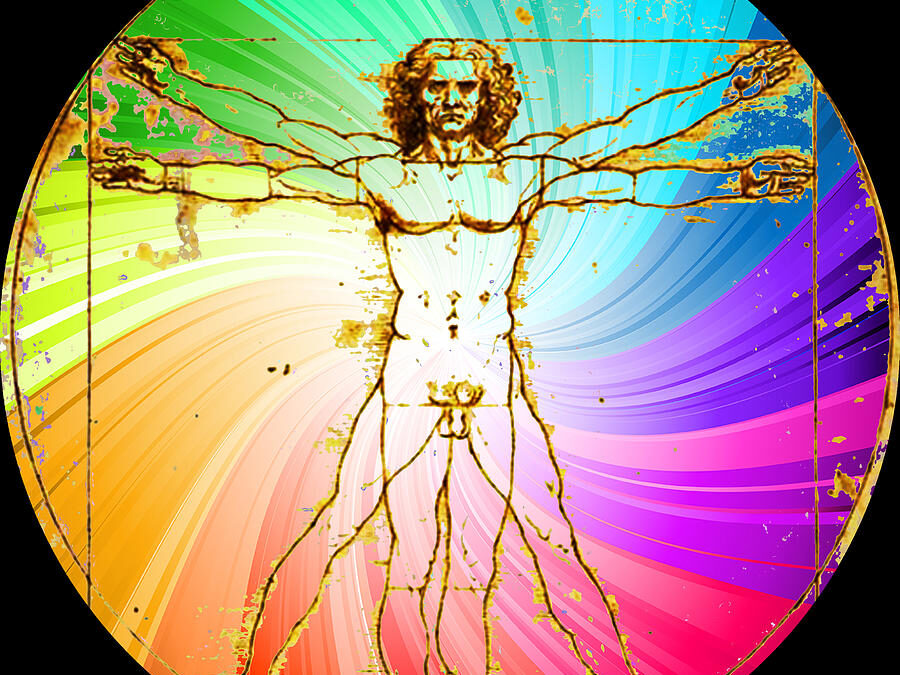
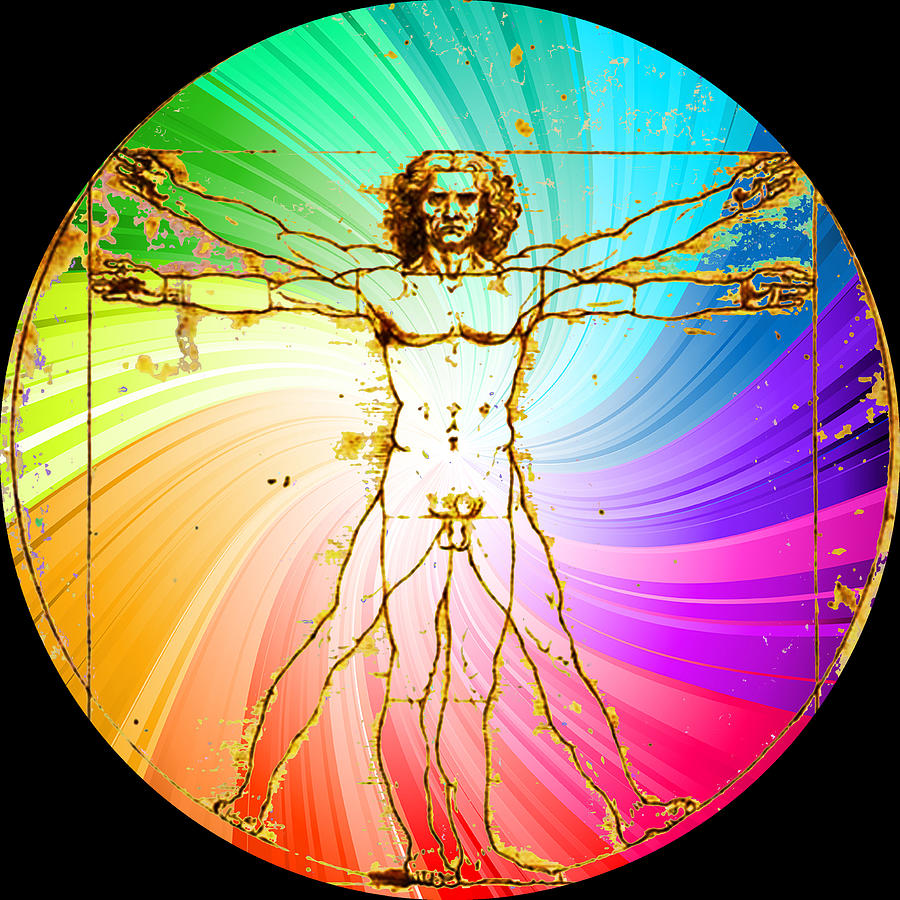
“As man’s physical body has five distinct and important extremities–two legs, two arms, and a head, of which the last governs the first four–the number 5 has been accepted as the symbol of man.
By its four corners the pyramid symbolizes the arms and legs, and by its apex the head, thus indicating that one rational power controls four irrational corners.
The hands and feet are used to represent the four elements, of which the two feet are earth and water, and the two hands fire and air.
The brain then symbolizes the sacred fifth element–æther–which controls and unites the other four. If the feet are placed together and the arms outspread, man then symbolizes the cross with the rational intellect as the head or upper limb.”
Moe is the founder of GnosticWarrior.com. He is a father, husband, author, martial arts black belt, and an expert in Gnosticism, the occult, and esotericism.
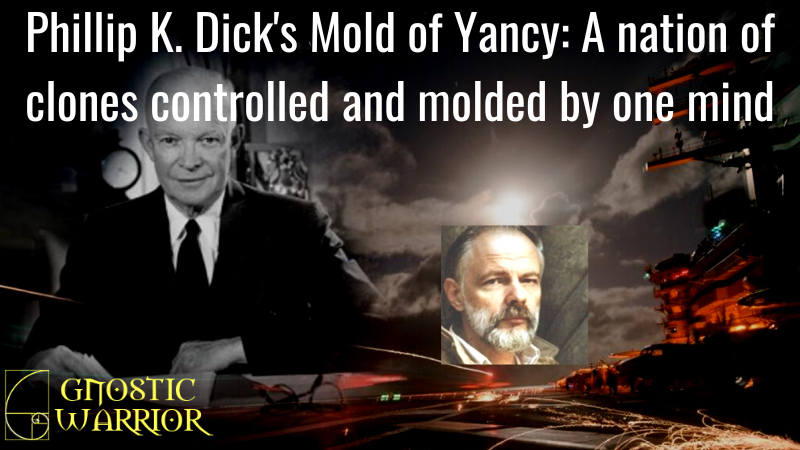
The Mold of Yancy by Phillip K. Dick is a science fiction story written in 1954 about mind control and subliminal messages, a cautionary tale of molding society. It later was adapted into his novel, The Penultimate Truth.
The story follows the life of Colony Callisto, a young woman who is the epitome of a model citizen of what looks like the perfect society that has emerged from the ashes of an off-Earth war on the planet, Jupiter. Her grandfather, John Edward Yancy, is the leader of the colony.
To the outside world, they live in what appears to be an idyllic society, but beneath the plastic façade lies a hidden world of secrets and deception.
It is a really totalitarian society that controls the populaces’ every thought and move through politics and the media.
Yancy, the colony’s leader, is a popular figure who uses his virtual persona to control all aspects of life for the colony’s inhabitants. ‘
Through broadcast shows and advertisements, Yancy dictates what the people of the colony should eat for breakfast, what music they should listen to, and even what political views they should hold.
The citizens seem to mold their thinking and behaviors exactly to whatever Yancy says, even though they seem to think their acting on their own accord.
He has the ability to speak on almost any subject by saying what people want to hear without really saying anything at all is what gives him power.
If Yancy delivered opinions on philosophy, art and culture, the plan would not work.
In this society, people are allowed to express their opinions freely without fear of repression. They enjoy life, reading, listening to music, and watching TV.
And even though they may complain about the government from time to time, they all ultimately subscribe to the same beliefs that Yancy gently suggests.
The result is a de-politicized, nonphilosophical and homogenized society of android like humans that follows Yancy’s every whim.
Analyst Peter Tavener works for the Niplan police, studying and creating reports on the political situation of Callisto.
He tells Police Director Kelleman that while Callisto they achieved a totalitarian society without an actual dictator, any elected Parliament has the potential to become totalitarian if they reach too deeply into people’s lives.
Tavener agrees to go undercover on Callisto, posing as one of their own who are increasingly looking alike.
Phillip K. Dick said that the Yancy character was roughly based on U.S. President Dwight D. Eisenhower.
Banal middle class culture has long been a source of inspiration for writers and filmmakers. In the 1950s, Dick saw this culture as a tool for conformity in the United States.
He used Eisenhower as an example of someone who was vapid and musing, yet still held immense power over the people through his broadcasts.
Of the story PKD had this to say:
“Obviously, Yancy is based on President Eisenhower. During his reign we all were worrying about the man-in-the-grey-flannel-suit problem; we feared that the entire country was turning into one person and a whole lot of clones. (Although in those days the word “clone” was unknown to us.)
I liked this story enough to use it as the basis for my novel THE PENULTIMATE TRUTH; in particular the part where everything the government tells you is a lie. I still like that part; I mean, I still believe it’s so.
Watergate, of course, bore the basic idea of this story out.”
Today, we can clearly see the hundreth-Yancy affect with political clones directing our thinking, as myself and others in the so-called middle class complain against many of these government policies, we still have to follow them and consume what is on the store shelves in order to survive.
Dick is correct in seeing the entry point of totalitarian conformity in consumerism.
While people may disagree on politics, they tend to find common ground when it comes to popular culture, which continues to move the population towards certain values.
Arguing against anti-intellectualism, it is often said that without intellectuals to question the status quo, fascism and other forms of totalitarianism can more easily take hold.
This is because intelligence and critical thinking are necessary to challenge authority and keep society free.
However, this argument presupposes that all opinions are equally valid, which is clearly not the case. Some opinions are simply better than others, and this is especially true when it comes to art, culture, and philosophy.
To be truly neutral on these matters would be impossible for anyone with a brain; one must either have an opinion or be dead inside or possibly a clone or android in Dick’s novels.
Thought and behavior control operating under the guise of social virtue is particularly invidious, easily capturing those of us suffering from the widespread malady of intellectual laziness.
The effort to mold a national way of thought can result only in a mouldering state of mind, a decay of initiative inviting totalitarianism to creep into every aspect of our lives.
I will leave you with Dwight D. Eiesenhower’s farewell speech to the colony, warning them about the danger of becoming captive to the military industrial complex and a technological elite.
The most famous quote from Eiesenhower came about halfway through the speech: “In the councils of government, we must guard against the acquisition of unwarranted influence, whether sought or unsought, by the military-industrial complex.”
Moe is the founder of GnosticWarrior.com. He is a father, husband, author, martial arts black belt, and an expert in Gnosticism, the occult, and esotericism.
The simulation hypothesis claims that we are living in a simulated reality.
A number of prominent figures, including Phillip K. Dick, Elon Musk, Neil deGrasse Tyson, Freeman Dyson, and Stephen Hawking, have expressed their belief that we may be living in a computer simulation.
The word to simulate means to give or assume the appearance or effect of often with the intent to deceive: to imitate, pretend, or counterfeit.
The computer simulation theory centers around humans being able to create computers that are so powerful they can simulate entire universes — maybe even entire universes full of sentient beings (us).
One way to do this would be by creating a computer program that runs on an extremely powerful machine and simulates an entire universe inside it.
In other words: if we can create such a program, then perhaps someone else has already done it.
It’s an idea that has been explored in science fiction for years — with writers such as Philip K. Dick and the hit movie, The Matrix being perhaps the most famous example.
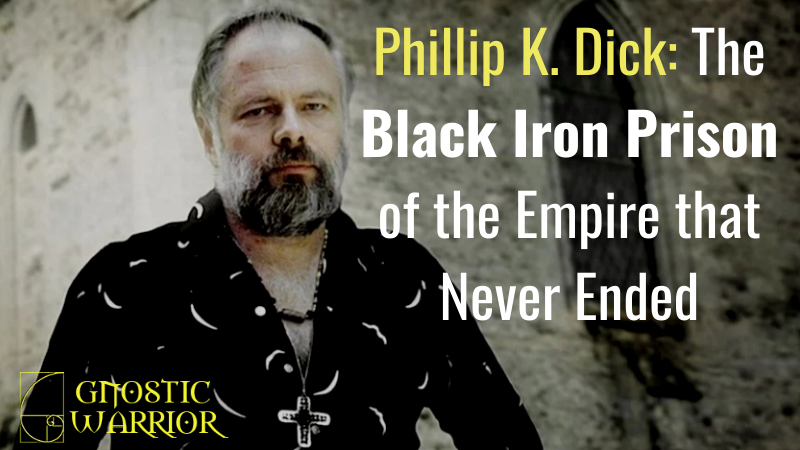
The first person to claim we were living in a simulated reality was the American writer Philip K. Dick.
Dick was also famous for describing that we live in a Black Iron Prison.
An oppressive society where people are controlled by machines. He believed that technological advances had created huge corporations which were run for profit rather than for people’s benefit. This made it difficult for ordinary people to make their voices heard when things went wrong.
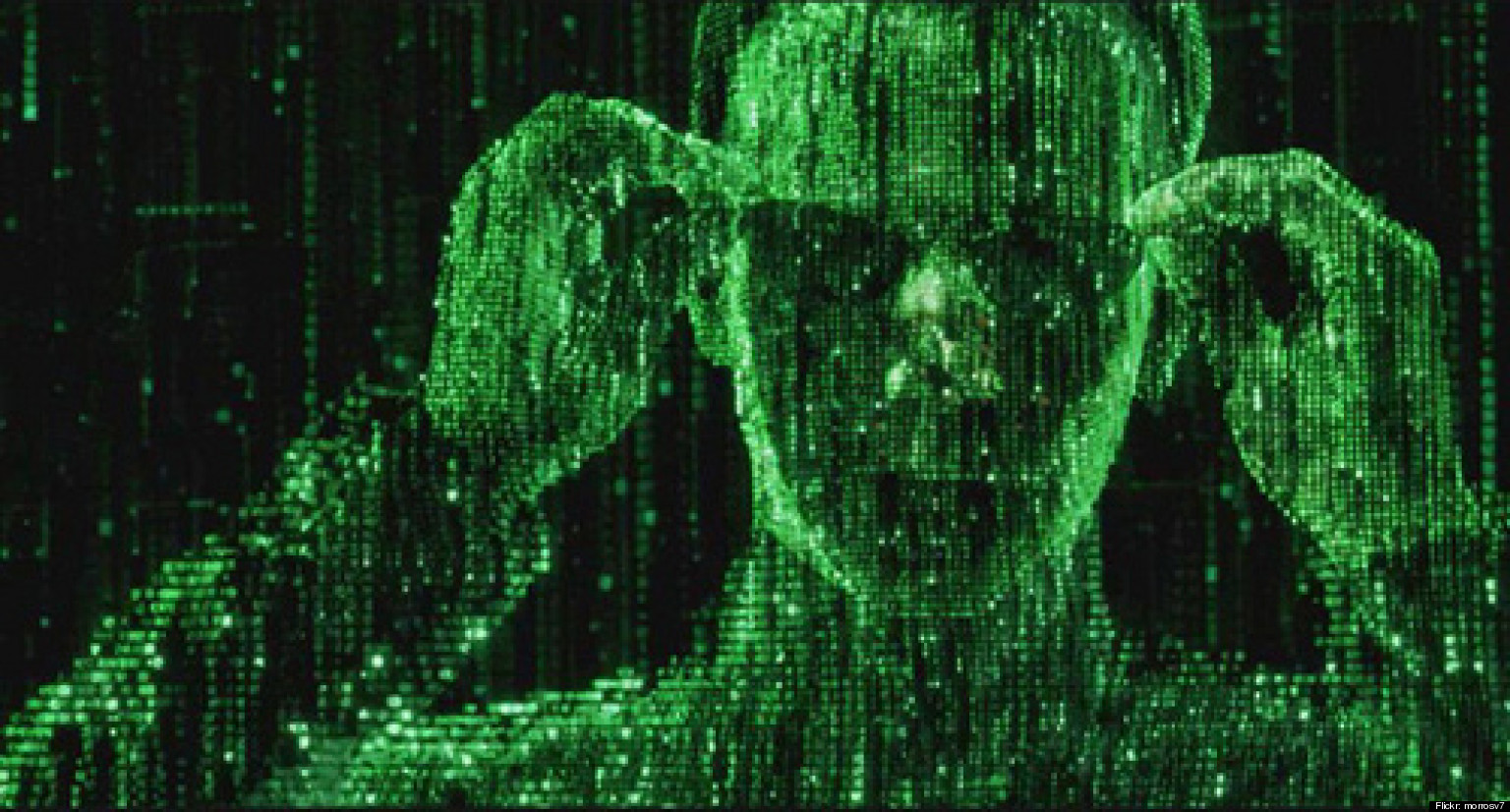
In The Matrix: Reloaded (2003) and The Matrix Revolutions (2003), the main character of the film, Neo (Keanu Reeves), discovers that he is actually living in a virtual reality simulation when he meets Morpheus (Laurence Fishburne), who introduces him to an alternative reality called “the real world.”
He learns that humanity is enslaved by sentient machines that used their control of human minds through computer technology to take over the world and keep humans docile in a virtual reality world called “the Matrix”.
Neo is a hacker who has been chosen to be a part of a resistance movement against intelligent machines that have enslaved humanity.
In this world, humans are connected to bio-electrical energy sources called “batteries” that keep them alive while their minds are trapped in virtual reality worlds created by machines.
Simulated realities are no longer a subject just for movies and has become a serious topic of discussion among philosophers and scientists.
A number of prominent figures, including Elon Musk, Neil deGrasse Tyson, Freeman Dyson and Stephen Hawking, have expressed their belief that we may be living in a computer simulation.
Stephen Hawking recently told the BBC:
“We are increasingly doing everything through computers. So it seems to me that’s very likely.”
Neil deGrasse Tyson said the odds of our universe being a simulated reality were 50/50. He used the large intelligence gap between chimpanzees and humans despite the fact we share 98 percent DNA, stating that a being many times our intelligence could both exist and potentially run simulations.
During a recent podcast interview with Joe Rogan, Elon Musk was asked if he thought we were living in a computer simulation. “Given the current acceleration of technology and innovation, I think it’s very likely,” Musk responded.
Musk said “If you assume any rate of improvement at all, games will eventually be indistinguishable from reality” before concluding “that it’s most likely we’re in a simulation.”[
Musk then went on to say that there could be millions — or even billions — of levels of reality above us, each with its own simulations. In other words, we could be living in one of the many simulations at this very moment.
“The strongest argument for us being in a simulation probably is the following,” Musk explained. “40 years ago we had Pong – two rectangles and a dot.” He continued:
“Now, 40 years later, we have photorealistic 3D simulations with millions of people playing simultaneously, and it’s getting better every year. And soon will be indistinguishable from reality,” he said.
In 2016, Oxford University philosopher and director of the Future of Humanity Institute, Nick Bostrom published a paper titled “Are You Living In a Computer Simulation?” arguing that we are more likely to be living in a simulation than not — and that we’ll know if this is the case by 2045.
Bostrom suggests that humans may be living in an artificial universe that was created by our descendants as a simulation.
He argues that simulations are an inevitable byproduct of technological advancement and could be used to study things like climate change or nuclear war without the risk to real people or property.
Bostrom also believes that human civilization will eventually reach a point where these simulations are indistinguishable from reality — an event he calls the “simulation singularity.”
He explains that there are four reasons to believe we live in a simulation:
1. “The fraction of human-level civilizations that reach a posthuman stage is very close to zero;”
2.”It is not impossible to run a great many such simulations;”
3.”We’re unlikely to be near the bottom of the curve; for example, when it comes to our current understanding of physics and cosmology, we have already reached quite high levels;”
4.”If we do live in a simulation, it will be far from unique. In fact, there will almost certainly be many simulated ‘trains’ running around in parallel universes right now.”
The reason for this increased interest is that many scientists believe we’re approaching an era when computers will be able to simulate reality so well that they will run simulations indistinguishable from the real world (something called “the technological singularity”).
If this happens, it would make sense that our reality could be just one of many simulated realities — and maybe not even the best one available.
These ideas come from a branch of physics called quantum mechanics, which deals with how subatomic particles behave at very small scales (for example, electrons can spin both clockwise and counterclockwise at once).
Quantum mechanics shows that our world is much stranger than we thought possible — there are many things happening at once that we cannot directly observe.
The Simulation Hypothesis by Rizwan Virk, a renowned MIT computer scientist and Silicon Valley video game designer, is the first serious book to explain one of the most daring and consequential theories of our time.
Virk argues that we are living in a simulated universe — a digital realm created by advanced posthumans. If true, this means we are living in a giant computer simulation, where our entire lives are just algorithms running on some advanced alien supercomputer.
He shows how the simulation hypothesis can be investigated using science, from quantum physics to neuroscience to artificial intelligence.
Virk explains how our universe could be a simulation running on a supercomputer in another universe or even another dimension; how we might detect such a simulation; and how humans could break out of it if it exists.
Gnostic Warrior Conclusion
What if we’re all living in a simulation?
It’s an interesting thought experiment to ask whether or not we live in a simulation.
If it’s possible to simulate a world that’s indistinguishable from reality, then, well, it’s likely we’re already inside one.
The idea is that right now or at some point in the future, our world and the events happening within it are controlled and manipulated by some type of secret cabal, aliens or computers.
As I said above, the word to simulate means to give or assume the appearance or effect of often with the intent to deceive: to imitate, pretend, or counterfeit.
Quite possibly everything we are taught is a script to control our feeble minds from birth to death, and our politicians and the media are just puppets who are given talking points to propagandize our thoughts.
In this simulated world, people who we think are our politicians and media are just well-paid liars who pretend to have our best interests at heart.
Counterfeits of the real thing manipulating our reality through our laws and media.
Many people we see on the street would copy the characteristics, looks and even the morals and ethics of their favorite celebrities, bands, and famous people.
Creating an entire new metaverse with hordes of clones, androids, and soulless people,
Vast swaths of the adult population will be hooked on alcohol and or using drugs (illegal and prescription) altering their personalities, and lives.
All the while, the youth would be immersed online in video games and mobile phone apps that took up all their attention and time.
Some of their parents would drug them to alter their reality and change their behaviors.
Moe is the founder of GnosticWarrior.com. He is a father, husband, author, martial arts black belt, and an expert in Gnosticism, the occult, and esotericism.