Welcome to the Gnostic Warrior Podcast. I’m your host Moe and today I have the pleasure of interviewing podcaster, author, and AI scientist, Alex Tsakiris.
To find out more about Alex Tsarkis and his great work, please click on this link.
[powerpress_subscribe]
Quotes from Alex during the show;
“I cut my teeth with Rupert Sheldrake, Cambridge biologist. Rupert Sheldrick knows his stuff. Dean Raden knows his stuff. You know, bell labs research out the Yazoo. Dr. Julie, spirit medium reading, they know their stuff.
I think that I’m so glad I started with that base with the people who were doing an intelligent, educated, scientific poll pushback on, uh, the materialistic science bullshit, what that, and what you’re alluding to.
That led me to kind of the conspiratorial part of it, not so much the esoteric occult cult side. Cause I was always kind of open to that, at least from the sense that Christianity seemed like a PSYOP – a social engineering project from the beginning.
So that also led me kind of into the conspiratorial thing and the conspiratorial thing as I’ve explored it over the last few years, I think has been really tremendous to me as well, because it’s given me this, this other lens through which I kind of look at all this stuff.
I love listening to the interview you did with Miguel because I feel like I know a little bit about your background and I’m very interested. Where this dialogue right now is going to go, because this could get really skeptical, really quick in a good way in a little bit.
One of the things I really enjoy is what I talk about getting to level three, you know, because level one is just like, oh, you know, uh, Gnosticism, you know, is there such a thing? Did people ever really study it? You know, or who were those who were the guys who wrote this crazy comic book, Christian kind of things.
So that’s, and then number two is what the conspiracy behind that is? You know why is there this kind of crazy, you know, this way, that way. And then third is okay, what does it mean on that deeper level? Once you get past what it is, this is the controversy behind it. Now let’s get to that next-level stuff.”
Alex on evil;
“You know, I go to the interview I had with the FBI agent, Bob hammer, who infiltrated the North American Man-Boy Love Association (NAMBLA). He’s undercover with these pedophiles who are looking at these little kids like at Toys r Us at the shopping mall and looking over the railing.
Not just talking about the sex they want to do with those seven and eight-year-olds, but how they want to hurt them and how they want to see the pain and the fear in their face.
And I go; “So still say there’s no evil? And everybody at that point breaks down and goes, no, that’s fucking evil!!!
You know, that is fucking evil. And I think that’s where we got to get to that. That was my point. Okay, so now you’re with me.
Now we can start talking about the history and all the rest of it, but let’s acknowledge that there is this force out there that is in this extended realm because these guys aren’t just dreaming it up in their head.”
Moe is the founder of GnosticWarrior.com. He is a father, husband, author, martial arts black belt, and an expert in Gnosticism, the occult, and esotericism.
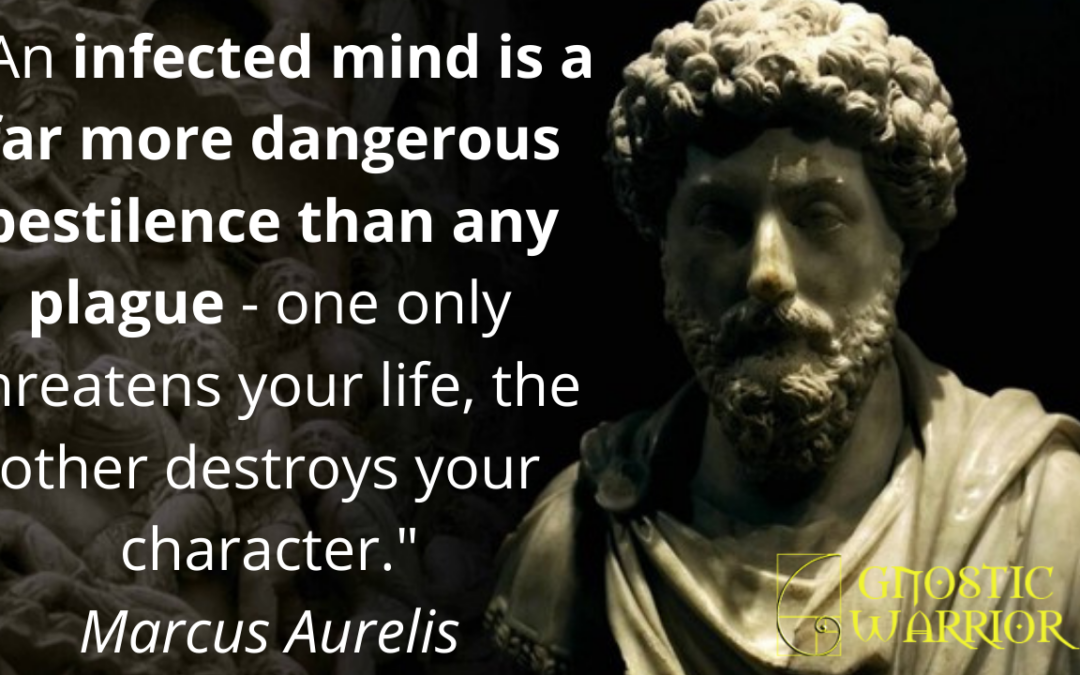
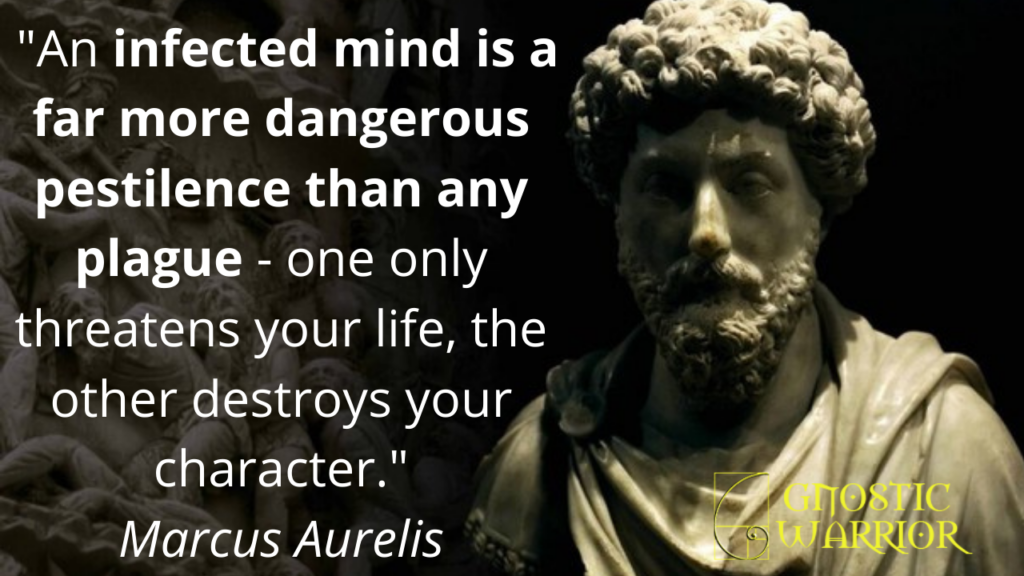
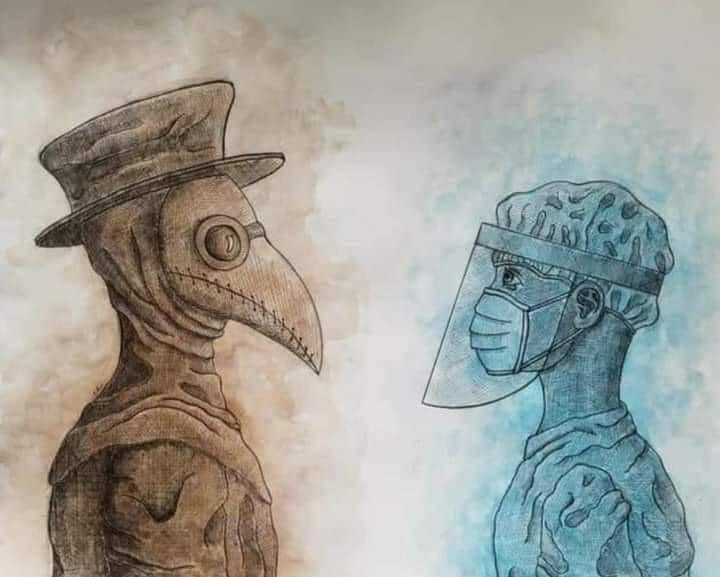
The stoic philosopher and Roman Emperor Marcus Aurelius once said, “An infected mind is a far more dangerous pestilence than any plague—one only threatens your life, the other destroys your character.”
Marcus Aurelius was one of Ancient Greece’s most famous philosopher-king who ruled the Roman Empire during one of the first major plagues called the Antonine Plague (165-180 AD) that changed the course of Roman history and may have changed human psychology. He was known as one of the last Five Good Emperors.
Aurelius had written that “destruction of knowledge” is more dangerous to oneself and others than the dangers of the physical world — even something so deadly as the Antonine Plague” (which he refers to as a pestilence). These quotes were part of his Meditations considered to be part of Stoic philosophy in which he puts forth the
The Historia Augusta claims that at the height of the plague, many thousands died, that their bodies had to be removed from the city of Rome by the cartload.
Marcus only refers to the plague once in his writings, noting moral corruption of the mind is a far more serious pestilence than the physical one that corrupts the body by, as the Romans realized, somehow contaminating the very air they were breathing (Meditations, 9.2).
The plague, he says, merely attacks us physically, whereas these vices attack our inner nature, destroying that which is essential to our very humanity.
Marcus says that even in severe illness, to remain committed to Stoicism and be mindful of how he is thinking and acting in response to his enduring pain and discomfort (9.41).
He mentions falsehood, pretense, indulgence in luxury, and pride as the sort of vices he considers particularly corrosive in this regard. The plague, he says, merely attacks us physically, whereas these vices attack our inner nature, destroying that which is essential to our very humanity.
Moe is the founder of GnosticWarrior.com. He is a father, husband, author, martial arts black belt, and an expert in Gnosticism, the occult, and esotericism.
The word leprosy is derived from the Greek lepra, which means spotted or stained and represents an ancient illness and disease known for millennia. Whole cities, houses, and even entire islands worldwide up until the 1900s were specifically designated by government and church authorities to segregate the sick lepers from the rest of the healthy population.
Not only people could get leprosy, but also their clothes and homes would become leprous via green, white (lepra alba), and red spots that they had to destroy if the stuff did not keep growing. I contend that this disease, medical practices, and remediation techniques have been carried out well over 2,000 years up until this very day.
In studying the etymology of leprosy before the Greeks had called this disease lepra, the Phoenician Hebrews (Canaanites) had called it by the name tsara or tsarath in the Old Testament/Tora. The Coptic name for leprosy is tseht and the disease is described in the Papyrus Ebers as ukhedu. It is also mentioned in ancient Indian and Japanese history.
The Hebrew Tzaraath describes disfigurative conditions of the skin, hair of the beard and head, clothing made of linen or wool, or stones of homes located in the land of Israel in chapters 13–14 of Leviticus.
The first Old Testament mention of this disease is a sign given by God to the Hebrew Lawgiver Moses (Exodus 4:6 (Jahwist)), who was not only a king and priest but also a sick man with Leprosy aka Mold/Fungi. In the third Book of Exodus xi chapter, 4th verse, we learn, “Whence one cannot but smile at those who say that Moses was himself afflicted with the leprosy when he fled out of Egypt.”
Hence, Moses was expelled from Heliopolis on account of his being a leper (see also I, 26 and Ant, III, xi, 4). The second case is that of Miriam (Numbers 12:10), where the disease is graphically described (EP2).
The word tsara’at appears approximately two dozen times in the Hebrew Bible, almost exclusively in Leviticus, describing how it infects people, clothes, and people.
We find in the Greek Septuagint, the translation of the Hebrew Bible, negac tsara’at was translated in Greek as aphe lepras, and later in the Latin Vulgate, this became plega leprae. The word Tsara’at has continued to be translated as “leprosy,” even though the word leprosy was not known in the Mediterranean when the Hebrew Bible was written.
Other scholars have suggested that the proper translation of tsara’at is “mold or fungi” and I agree.
There is now a tremendous amount of science and research we have showing that molds contaminate (defile) buildings and cause respiratory distress, memory loss, and spots in the form of rashes, pimples, ulcers, and cancer in humans, and the fact that mold has been present since the beginning of time, validate the translation of tsara’at and the later lepra as “molds/fungi.”
These modern references can be compared to the Scripture like in Leviticus 14:45 to mildew defiling a place to live in, so drastic measures had to be taken.
In Leviticus, we learn an all-out effort by the ruling class and priesthood to cleanse Isreal of mildew/mold and leprosy, which seem to go hand in hand. Drastic measures were taken to inspect homes, people and make judgments or final inspection reports on all reported cases. If the home and people were found to have mildew or to contain leprosy, they were officially pronounced unclean and set for destruction and/or banishment from the community.
We can compare COVID patients to the Leper because people who contracted this disease were officially pronounced unclean (COVID positive) and were isolated from the community. The word unclean was a word that did not just describe a person who was infected, but it was what they did and how they lived that caused the disease. The English word unclean is derived from the Greek akathartos; impurity (the quality), physically or morally — uncleanness.
Also, people who have COVID have similar symptoms in Leviticus 13; 14; Numbers 12:10-15 under which the disease might develop itself:
Without any apparent cause (Leviticus 13:2-8)
Its reappearance (9-17)
From inflammation (18-28)
On the head or chin (29-37)
In white polished spots (38, 39)
At the back or in the front of the head (40-44)
Like leprosy, COVID and certain pathogenic fungi also cause inflammation in victims, with the main feature being lung inflammation and respiratory failure caused by an overexuberant immune response. This may lead to “multisystem inflammatory syndrome in children (MIS-C) , which is a serious condition associated with COVID-19 where different body parts can become inflamed, including the heart, lungs, kidneys, brain, skin, eyes, or gastrointestinal organs.
COVID patients also get spots like lepers via red and white spots in the mouth and throat, and it also has the ability to reinfect people who have recovered from a previous illness. We are also treating modern COVID patients like we would the Lepers in the past. I assume soon, we may take this remediation program to the next level like they did back in the days of Moses when the Lepers were often banished to special cities and islands to be officially segregated from the rest of the world indefinitely.
You must distinguish between the unclean and the clean. – Leviticus 11:47
Moe is the founder of GnosticWarrior.com. He is a father, husband, author, martial arts black belt, and an expert in Gnosticism, the occult, and esotericism.
A new CDC press release is warning people of a possible new Pan-demic via a fungus/mold that seems to mimic the symptoms of Leprosy found in the Scripture. A mold that is transmissible from person to person and maybe the new global threat.
“This is really the first time we’ve started seeing clustering of resistance” in which patients seemed to be getting the infections from other patients, said the CDC’s Dr. Meghan Lyman, an author of the report.
A resistance that has been dubbed “pan-resistant” because like in Ancient Greece and Greco-Egypt, the God Pan had signified “all things.” Pan was often considered as the great principle of vegetable and animal life and his city was known as Panopolis.
It is resistant of all things but the secret old meaning of the name Pan is an old word denoting to close or join together.
“Surveillance, public health reporting, and infection control measures are critical to containing further spread,” the report said, while noting that “data are lacking” about how to treat cases that are resistant to all current drugs.
According to the CDC, “Candida auris is an emerging, often multidrug-resistant yeast that is highly transmissible, resulting in health care–associated outbreaks, especially in long-term care facilities. Skin colonization with C. auris allows spread and leads to invasive infections, including bloodstream infections, in 5%–10% of colonized patients (1).
Three major classes of antifungal medications exist for treating invasive infections: azoles (e.g., fluconazole), polyenes (e.g., amphotericin B), and echinocandins. Approximately 85% of C. auris isolates in the United States are resistant to azoles, 33% to amphotericin B, and 1% to echinocandins (2), based on tentative susceptibility breakpoints.*
Echinocandins are thus critical for treatment of C. auris infections and are recommended as first-line therapy for most invasive Candida infections (3). Echinocandin resistance is a concerning clinical and public health threat, particularly when coupled with resistance to azole and amphotericin B (pan-resistance).
Pan-resistant C. auris isolates have been reported previously, although rarely, from the United States (4) and other countries (5). Three pan-resistant C. auris cases reported in New York developed resistance following echinocandin treatment and lacked epidemiologic links or common health care (4), suggesting that resistance resulted from antifungal pressure rather than via person-to-person transmission. Since January 2021, however, the Antibiotic Resistance Laboratory Network has detected independent clusters of pan-resistant or echinocandin-resistant cases in Texas and the District of Columbia (DC). Each cluster involved common health care encounters and no known previous echinocandin exposure, suggesting transmission of pan- and echinocandin-resistant strains for the first time in the United States.
Among 101 clinical and screening cases of C. auris† in DC during January–April 2021, three had an isolate that was pan-resistant. All resistant isolates were identified through skin colonization screening at one long-term care facility for severely ill patients, including those requiring mechanical ventilation.
Among 22 clinical and screening cases of C. auris in Texas during the same period, two were pan-resistant and five were resistant to both echinocandins and fluconazole. These seven cases were identified in patients who were cared for at two facilities that share patients in the same city; two patients were at a long-term acute care hospital, three at a short-term acute care hospital, and two at both facilities. Among these cases, four were identified through colonization screening and three through clinical isolates (two blood isolates and one wound isolate).
No known epidemiologic links were identified between the Texas and DC clusters. No patients with pan- or echinocandin-resistant isolates in either cluster had received echinocandins before C. auris specimen collection. Thirty-day mortality in both outbreaks combined was 30%, but the relative contribution of C. auris was unclear.
These two simultaneous, independent clusters of pan- or echinocandin-resistant C. auris cases in patients with overlapping inpatient health care exposures and without previous echinocandin use provide the first evidence suggesting that pan- or echinocandin-resistant C. auris strains might have been transmitted in U.S. health care settings. Surveillance, public health reporting, and infection control measures are critical to containing further spread. Clinicians should consider early antifungal susceptibility testing in patients with C. auris infection, especially in those with treatment failure.
Data are lacking about the most appropriate therapy for pan-resistant infections. Combination and investigational antifungal treatments can be considered, but evidence in clinical settings is limited (6). More information is needed to evaluate patient outcomes and identify proper treatment for C. auris cases with pan-resistance or echinocandin resistance.”
Moe is the founder of GnosticWarrior.com. He is a father, husband, author, martial arts black belt, and an expert in Gnosticism, the occult, and esotericism.
Did you know that naturally occurring nano-magnets can go up your nose traveling into your brain?
You may not be born with a tinfoil hat, but there is a natural magnet in your head that can attract, repel, and even dance with outside forces within the earth, in humans, and the air.
Hidden within your brain is a gray-black mineral called magnetite, a mineral composed of iron ore oxide that is naturally magnetic. Studies have shown that the human brain contains magnetite, has been well established, and that brain cells respond to external magnetic fields.
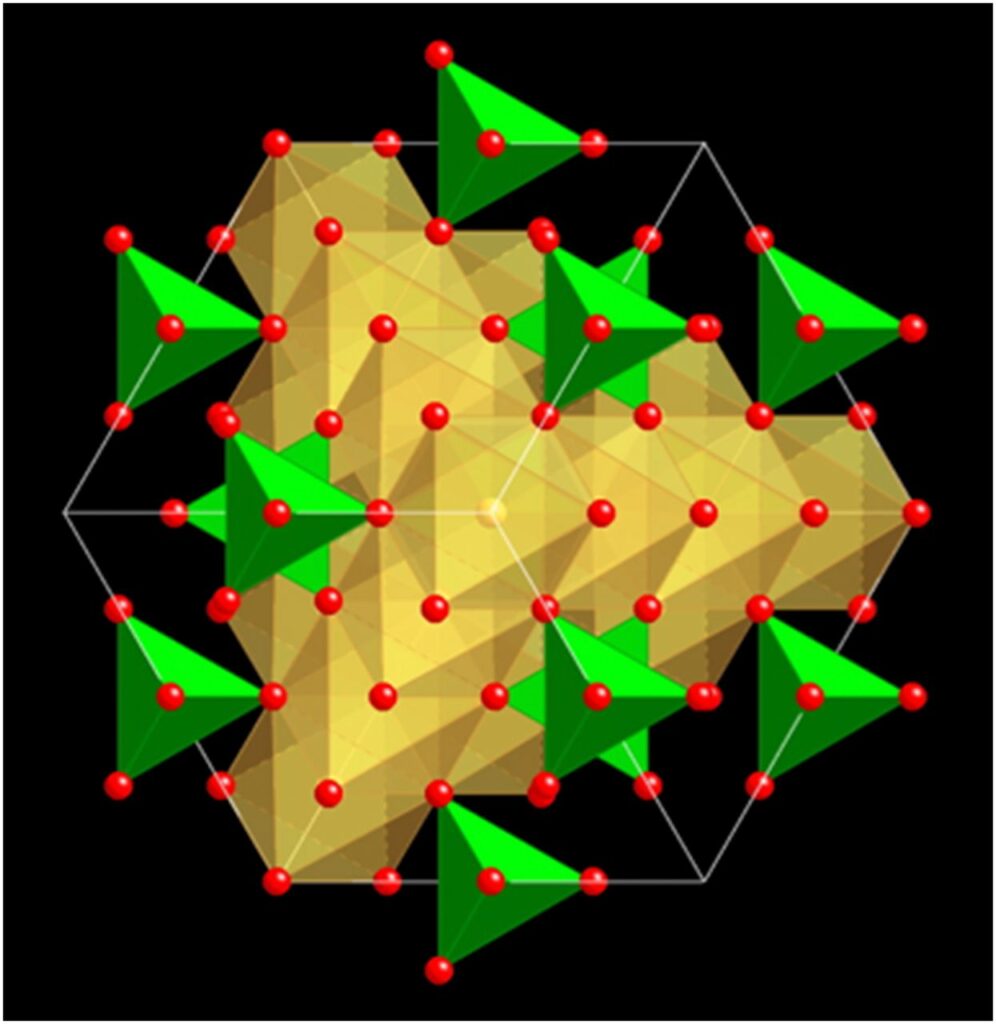
“Crystal structure of magnetite as viewed along the [111] direction (diagonal through the cube). Green tetrahedra contain ferrous iron (Fe2+), yellowish octahedra contain ferric iron (Fe3+), and oxygen is shown as red spheres.”
Science has found that magnetite has the ability to magnetize information and store memories in what are called nanospheres that I contend become part of what the Greeks called the World Soul and today is known as the Noosphere. However, elevated levels of magnetite in brain tissue have been found in neurodegenerative diseases like Alzheimer’s that cause us to lose our memories.
Meaning that magnetite may be the naturally occurring physical substance within the earth, and organisms such as humans use it to navigate and store information in the material world. Researchers have found that these brain magnetites show a strong similarity with the magnetite nanospheres formed by combustion, which is airborne particulate matter (PM) and the resulting global pollution.
This magnetite nanosphere pollution, I theorize can be both bad and good.
My theory of good ideas and bad ideas I discuss in my previous article, “War of Ideas: The Battle of the Neurosphere for the Noosphere,” where I contend that these good or Holy magnetic connections of human brains create a physical sphere of influence that then develops into our human social order or rank – Hierarchy.
The natural order of Logos (Noosphere).
Heraclitus (c. 535 – c. 475 BC) used the term Logos to represent the principle of order and knowledge. Isocrates’ believed that philosophy and logos generate an ethical, mindful polis or what we call a city today. This would go in line with Plato’s Theories of Forms. He made the distinction between imperfect matter and perfect Form.
People (philosophers) were necessary to bridge or should we say magnetize the enormous gap between God and the material world.
Philo called these words and ideas “the first-born of God when he had said, “the Logos of the living God is the bond of everything, holding all things together and binding all the parts, and prevents them from being dissolved and separated.”
In the Scripture, the Gospel of John identifies the Christian Logos, through which all things are made, as divine (theos). Further, he identifies Jesus Christ a the incarnate Logos or, in Plato’s theory, a bridge between God and the material world.
Hence, “In the beginning was the Word, and the Word was with God, and the Word was God.” – (John 1:1)
The word Lego comes from Logos. Humans who become bridges bringing us wisdom form an immortal chain of unbreakable Legos via the Logos.
The “beginning” is translated from the Greek, ἀρχῇ (archē or archomai) meaning a commencement, or chief as in the start of our Traditions and the philosophical chiefs who remain magnets via their good ideas.
Immortal by the legos of ideas – The Logos. Not by men.
The bad ideas also become part of the Logos via magnetization, but I contend they eventually die out. These are ideas, things, and information created by humans that I theorize enter the air and immediately start to ferment and decay like combustible carbon substances and humans.
Bad things and bad ideas are no Bueno. Both can kill us.
The Ancient Greek concept of pathos.
Ideas that encourage pathos or sadness and pity are considered pathetic by the Greeks. Hence, the word pathetic is derived from the etymology of pathos. In rhetoric, however, it means an appeal to the emotions in general and why pathos is used mainly by politicians and in advertising for the vast majority of the ordinary people like beast automatons who follow these pathetic people and their bad ideas.
Always leading them to pathos.
Hence, why we have a global suicide, murder, and health crisis today.
Back to the True or Divine Logos.
The Christian Logos or Noosphere is created by magnetic particles when the brain is engaged becomes part of what science calls the electron atmosphere. The magnetic field lines are created by the movement of these charges absorbed by the electron nucleus and then ejected in a cycle of vortex movement explained in the image below.
The good nanosphere would be the good pollution in the air, which creates the earth’s biomagnetic fields that organisms use to navigate and, for humans, the World Soul/Noosphere. What we use to navigate back to our roots and Traditions.
The bad ideas I speak of above are nanospheres, AKA tiny magnetic charged particles that are eventually ejected from our world because other people mostly reject them. As a result, they do not receive any more electric charges from other minds who feed the idea with their energies; thus, the life cycle in the Noosphere is short before it is eventually aborted.
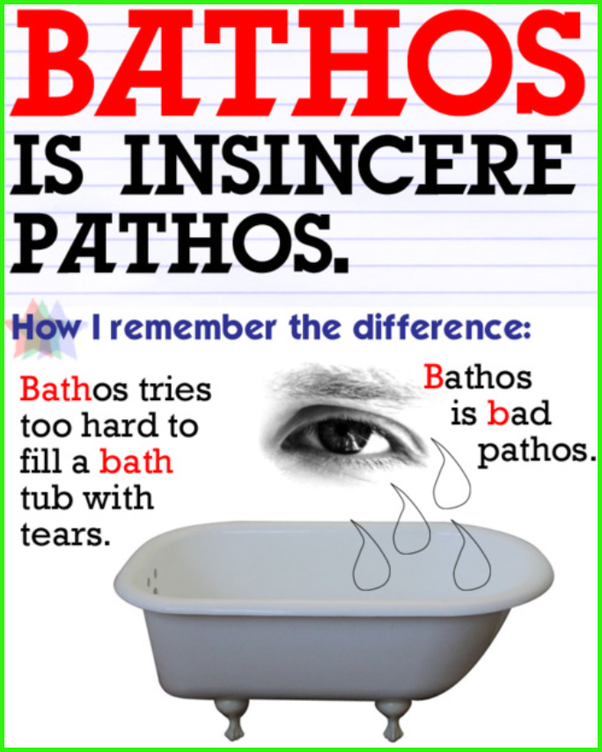
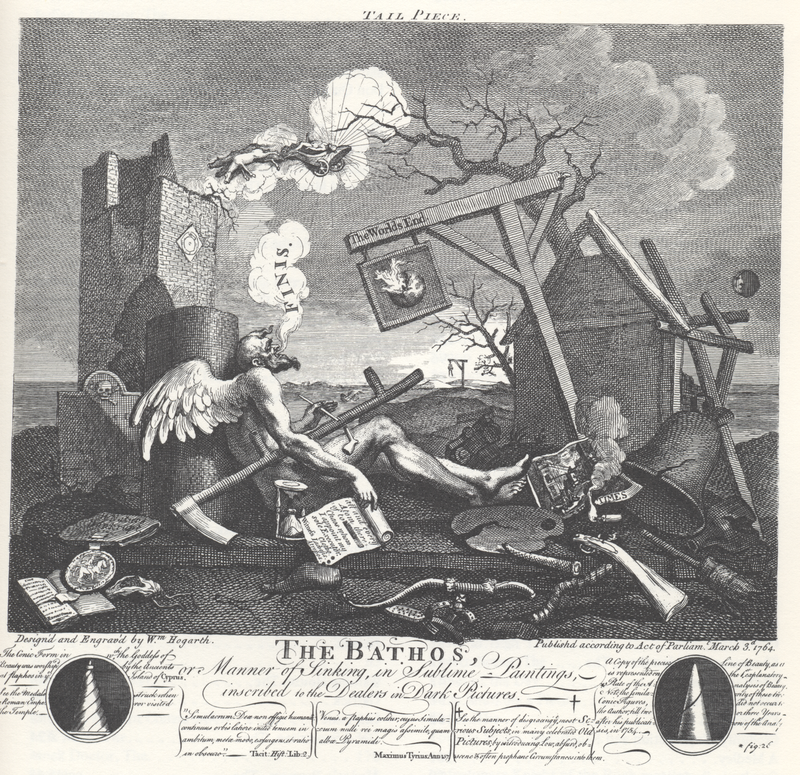
Bad ideas become like aborted babies thrown out with the bathwater via Bathos (from Greek baths, “deep”).
Alexander Pope coined the term “Bathos” in his 1727 essay “Peri Bathous”, to describe an amusingly failed attempt at presenting artistic greatness. It is used to identify anticlimactic and trivial (intentionally or otherwise) figures of speech, any intentional deviation from literal statement or common usage that emphasizes, clarifies, or embellishes both written and spoken language.
Hence, these Batho’s ideas come mainly from selfish people who present themselves as wise and use emotional language to magnetize people to their cause. But, unfortunately, these same said people often have ulterior motives that do not follow our ancient Traditions and ethics in philosophy, so they embellish their trivial teachings and wish to mislead others with lies.
In the Scripture, the job of misleading people and lying is given to Satan, who also becomes their persecutor of those who lie, sin, and do bad ie evil. That is why he is considered the Father of Lies (Liars) and Prince of the World.
The followers of bad ideas always seem to lead them to decay, destruction, and eventually death. A type of hell on earth.
GOOD KNOWLEDGE AND INFORMATION DANCES TOGETHER FORMING THE NOOSPHERE
According to a recent paper published in Nature Physics, an international team of researchers discovered what drives a transition in magnetite. Using an ultrashort laser pulse, the researchers confirmed the existence of electronic waves that are frozen at the transition temperature and start “dancing together” in a collective oscillating motion as the temperature is lowered.
This is known as the Verwey transition in magnetite (Fe3O4), the first metal-insulator transition ever observed and involves a concomitant structural rearrangement and charge–orbital ordering. The fundamental building blocks of the charge-ordered structure are three-site small polarons called trimerons which create spectroscopic signatures of the low-energy electronic excitations of the trimeron network.
The researchers said that “By driving these modes coherently with an ultrashort laser pulse, we reveal their critical softening and hence demonstrate their direct involvement in the Verwey transition. These findings shed new light on the cooperative mechanism at the origin of magnetite’s exotic ground state.”
“We were investigating the mechanism behind the Verwey transition, and we suddenly found anomalous waves freezing at the transition temperature,” said MIT physics postdoc Edoardo Baldini, one of the lead authors on the paper. “They are waves made of electrons that displace the surrounding atoms and move collectively as fluctuations in space and time.”
This work, led by MIT professor of physics Nuh Gedik, was made possible by the use of “ultrafast terahertz spectroscopy,” an advanced laser apparatus based on ultrashort pulses in the extreme infrared. Gedik says, “These laser pulses are as short as one millionth of one millionth of a second and allow us to take fast photographs of the microscopic world. Our goal now is to apply this approach to discover new classes of collective waves in other quantum materials.”
This discovery is significant because no frozen waves of any kind had ever been found in magnetite. “We immediately understood that these were interesting objects that conspire in triggering this very complex phase transition,” says MIT physics Ph.D. student Carina Belvin, the paper’s other lead author.
I contend that these waves of electrons conspire with one another and move collectively; creating multiverses is how we can measure the Noosphere.
For example, a new study shows that the reproducible magnetization patterns of magnetite are preferentially partitioned in the human brain, specifically in the cerebellum and brain stem.
Prion diseases like Crutzfeld-Jacobs disease and neurodegenerative diseases like Alzheimer’s and ALS share a common theme, dysfunctional prions and excessive magnetite. In addition, researchers have found that the rapid formation of magnetite is causing the dysfunctional prions to act as if they become pathogenic.
As I have explained before, a 2015 study titled, “Different Brain Regions are Infected with Fungi in Alzheimer’s Disease (AD),” researchers had shown the possibility that Alzheimer’s Disease may be a fungal disease, or that fungal infection is a risk factor for the disease. The researchers provided evidence in the study that tissue from the central nervous system (CNS) of AD patients contains fungal cells and hyphae.
In fact, 100% of the AD patients analyzed in the study had fungal cells and fungal material in brain sections. ”
It is believed that when our prions are working properly, they function to “write” memory onto our brain. Still, when excess iron/magnetite builds up between the neurons, they become unreadable.
Dementia and Alzheimers via the natural laws of the fungi world take care of the Human Pathos.
Just within a few weeks or months, people who have been deemed unfit by the creator experience memory loss, mood changes, and apathy. They become clumsy and confused and slurred speech.
Their symptoms are likely to progress to jerky movements, stiff limbs, incontinence, and the loss of the ability to move or speak.
They no longer have Logos to contribute to the Noosphere.
Moe is the founder of GnosticWarrior.com. He is a father, husband, author, martial arts black belt, and an expert in Gnosticism, the occult, and esotericism.